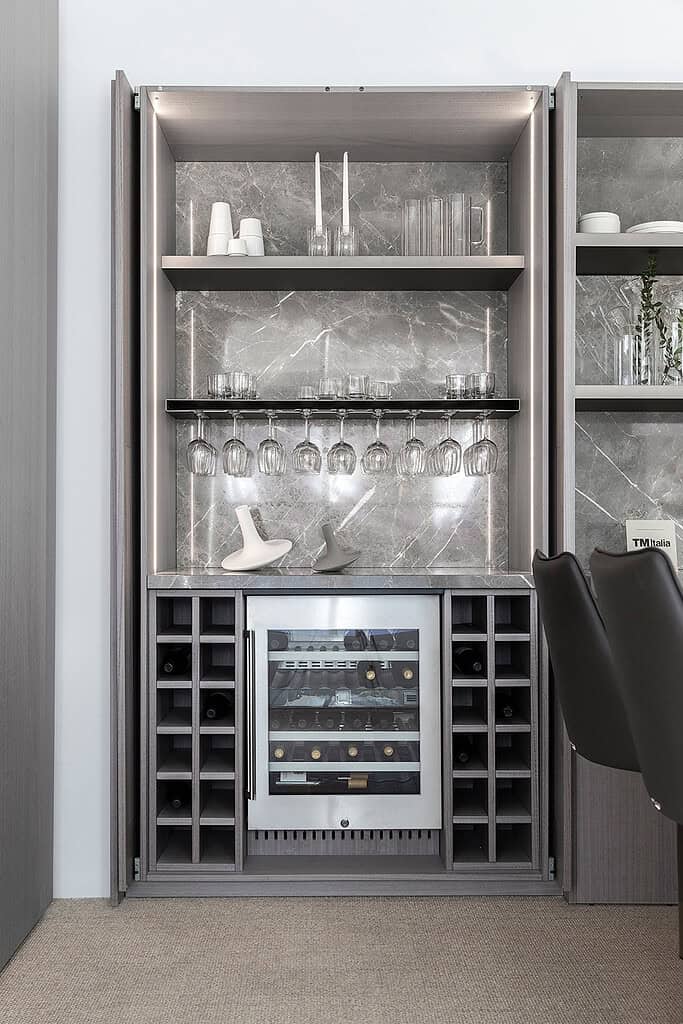
A home bar can be a beautiful feature, but its success depends less on how it looks when it is empty and more on how well it functions when people are actually using it.
Bottles need appropriate storage. Glassware needs to be accessible. Refrigeration needs ventilation. Ice needs to be convenient. If there is a sink, plumbing affects the cabinetry beneath it. If wine is part of the collection, storage temperature may matter more than display.
There is also the question of location. A bar serving a formal dining room has different requirements from one designed for a game room, media room or large living area.
This is why custom home bar cabinetry should begin with how the homeowner entertains rather than with a photograph of a bar they like.
For Houston homeowners planning a new residence or adding a bar during a renovation, cabinetry, appliances, plumbing, lighting and electrical requirements should ideally be developed together.
This guide explains the major decisions to consider before designing a custom home bar.
1. Start With How You Entertain
Before determining dimensions or finishes, establish what the bar needs to do.
Some homeowners primarily need a place to store wine and prepare a drink before dinner. Others regularly entertain larger groups and need refrigeration, ice, glassware, serving space and cleanup facilities.
Consider what you typically serve:
- Wine
- Cocktails
- Beer
- Champagne
- Nonalcoholic drinks
- Coffee
- Tea
Then consider the number of people you normally entertain.
A bar designed for two people preparing an evening drink requires considerably less working space than one intended to support a large gathering.
The bar should be developed around these habits.
2. Where Should a Home Bar Be Located?
A home bar is most useful when it is located near the area where drinks are consumed.
Potential locations include:
- Living rooms
- Dining rooms
- Game rooms
- Media rooms
- Libraries
- Entertainment rooms
- Areas adjoining outdoor living spaces
The location should reduce unnecessary trips to the kitchen.
This is particularly important during entertaining. If every glass, bottle and bucket of ice still needs to come from the kitchen, the bar is providing appearance without fully providing function.
In larger Houston homes, a secondary beverage area can also reduce traffic through the primary kitchen when guests are present.
3. Wet Bar vs. Dry Bar
The principal difference is plumbing.
A wet bar includes a sink. A dry bar does not.
A dry bar may be entirely appropriate when the kitchen is nearby or when the bar is used primarily for wine and simple beverage service.
A wet bar becomes more useful when homeowners regularly prepare cocktails, wash glassware, use an ice maker or entertain farther from the kitchen.
Adding plumbing increases project complexity, so the sink should serve a clear purpose.
A wet bar should not automatically be considered superior simply because it contains more equipment.
4. How Much Space Does a Home Bar Need?
A useful home bar does not necessarily require a separate room.
A compact wall of cabinetry can provide substantial beverage storage when carefully organized.
The required size depends on whether the bar includes:
- A sink
- Refrigeration
- Wine storage
- Ice maker
- Dishwasher
- Glassware
- Bottle storage
- Seating
The objective should be to accommodate the required functions without making the bar larger than necessary.
In some homes, a highly organized eight-foot cabinet elevation can be more useful than a much larger room with poorly planned storage.
5. What Should Home Bar Cabinetry Store?
Begin with an inventory, just as you would when planning a kitchen or walk-in closet.
The cabinetry may need to accommodate:
- Wine bottles
- Spirits
- Mixers
- Glassware
- Cocktail equipment
- Napkins and coasters
- Serving trays
- Coffee supplies
- Small appliances
- Backup beverages
Frequently used items should remain within comfortable reach.
Backup supplies and less frequently used glassware can occupy upper or secondary storage.
The internal cabinet configuration should be determined by these contents rather than simply repeating identical doors and shelves.
6. How Much Countertop Space Do You Need?
A bar needs enough clear counter for preparing and serving drinks.
This can become difficult when appliances occupy much of the available surface.
A sink, coffee machine and countertop equipment can quickly divide a small bar into several unusable fragments.
Try to preserve an uninterrupted preparation area where possible.
Also consider temporary landing space for bottles, glassware and serving trays during a gathering.
Countertop dimensions should be developed alongside the appliance plan rather than after appliances have already been selected.
7. Planning Bar Refrigeration
Dedicated refrigeration can prevent guests and family members from repeatedly entering the kitchen for drinks.
Options may include:
- Undercounter beverage refrigerators
- Refrigerator drawers
- Wine refrigerators
- Specialty beverage storage
The correct equipment depends on what is being stored.
Before cabinetry is finalized, appliance specifications should be confirmed. Different models require different openings, electrical connections and ventilation clearances.
Cabinetry should be designed around the selected appliance rather than assuming that every undercounter refrigerator uses the same dimensions.
8. Wine Storage and Wine Refrigeration
Wine storage should begin with how the homeowner actually purchases and consumes wine.
A modest collection intended for regular consumption has different requirements from a substantial collection intended for longer-term storage.
Display racks can be appropriate for certain bottles, but decorative bottle storage should not automatically be treated as long-term wine storage.
Homeowners maintaining a significant collection should consider appropriate environmental conditions and dedicated wine refrigeration where required.
The bar cabinetry can then provide accessible storage for bottles intended for near-term serving.
This separates practical wine storage from decorative display.
9. Should You Add an Ice Maker?
For homeowners who prepare cocktails or entertain frequently, a dedicated ice maker can be one of the most useful bar appliances.
It eliminates repeated trips to the kitchen and reduces reliance on refrigerator ice production.
However, ice makers introduce installation and maintenance requirements.
Depending on the equipment, the project may need:
- Water supply
- Drainage
- Electrical service
- Ventilation clearance
The selected appliance should therefore be specified early enough for these requirements to be coordinated.
10. Does a Home Bar Need a Sink?
A sink can make a bar considerably more self-contained.
It can be useful for:
- Rinsing glassware
- Preparing drinks
- Cleaning bar tools
- Filling water containers
The sink does not necessarily need to be large.
However, extremely small decorative sinks can be frustrating if they cannot comfortably accommodate the items being washed.
Plumbing also reduces storage beneath the sink, so the surrounding cabinetry should be designed accordingly.
11. Does a Home Bar Need a Dishwasher?
A dishwasher may be worthwhile when the bar is far from the kitchen or frequently serves larger gatherings.
It allows used glassware to remain in the entertaining area rather than being carried through the house.
For a smaller bar close to the kitchen, the appliance may consume valuable cabinet space without providing enough benefit.
Consider how many glasses are normally used and where they are stored after washing.
A dishwasher is most convenient when clean glassware can be returned directly to nearby cabinets.
12. Planning Glassware Storage
Glassware can occupy more space than expected because different beverages may use different glass shapes and heights.
Before establishing shelf spacing, consider the collection of:
- Wine glasses
- Champagne glasses
- Cocktail glasses
- Highball glasses
- Lowball glasses
- Everyday beverage glasses
Adjustable shelves can provide flexibility.
Glass-front upper cabinetry can display attractive glassware while protecting it from dust.
Closed cabinetry may be preferable when the homeowner wants the bar to appear visually quieter.
13. Bottle Storage and Display
Not every bottle needs to be displayed.
Displaying an entire collection can make the bar visually busy and may consume storage that would be more useful for other purposes.
A combination of accessible display and concealed storage can work well.
Frequently used bottles can remain visible while backup bottles occupy closed cabinets or drawers designed for appropriate loads.
Tall bottles also need to be considered. Shelf spacing designed around standard bottles may not accommodate larger-format or unusually shaped containers.
14. Why Drawers Matter in a Home Bar
Bar storage is not exclusively about bottles and glasses.
Many of the smaller items used during entertaining are easier to organize in drawers.
These may include:
- Openers
- Cocktail tools
- Napkins
- Coasters
- Straws
- Serving utensils
- Wine accessories
Shallow drawers are particularly effective because small tools remain visible rather than accumulating at the bottom of a deep cabinet.
Deeper drawers can accommodate linens, trays and backup supplies.
15. Can a Home Bar Double as a Coffee Bar?
Yes, and for many households this makes the cabinetry useful throughout the day rather than only during entertaining.
A combined beverage center may include:
- Espresso machine
- Coffee maker
- Grinder
- Cups and mugs
- Tea storage
- Refrigerated milk or cream
- Water access
If coffee equipment will remain permanently on the counter, adequate working space should be preserved beside it.
Electrical outlets should also be positioned according to the equipment rather than added generically after the cabinetry has been designed.
16. Should a Home Bar Have Seating?
Bar seating can be appropriate when the room is intended to function as a social destination.
It is less important when the cabinetry primarily serves drinks to an adjacent living or dining area.
Adding stools requires enough space for:
- Comfortable seating
- Knee clearance
- Movement behind occupied stools
- Circulation between the bar and surrounding furniture
A narrow room should not be forced to accommodate bar seating simply because stools are associated with the idea of a home bar.
Sometimes a beverage cabinet serving nearby lounge seating is the better arrangement.
17. Lighting a Home Bar
Lighting can contribute substantially to the character of a home bar, but it should also make the cabinetry practical to use.
A complete lighting plan may include:
- General room lighting
- Under-cabinet task lighting
- Interior cabinet lighting
- Illuminated display shelving
- Decorative pendants or sconces
Integrated lighting should be coordinated before cabinetry is manufactured.
Wiring, drivers and channels can then be incorporated more cleanly rather than added after installation.
Lighting can also be used selectively. Illuminating every shelf and cabinet can create unnecessary visual activity.
18. Electrical Planning
A home bar can require more electrical service than homeowners initially expect.
Potential equipment includes:
- Beverage refrigeration
- Wine refrigeration
- Ice maker
- Dishwasher
- Coffee machine
- Lighting
- Small appliances
Appliance specifications should be reviewed before electrical locations are finalized.
Visible outlets should also be considered as part of the cabinet elevation so they do not unnecessarily interrupt an otherwise carefully detailed backsplash.
The cabinetry designer, electrician and other appropriate project professionals should coordinate these requirements.
19. Choosing Cabinet Materials
A home bar provides an opportunity to use cabinetry materials differently from the primary kitchen.
Depending on the architecture of the home, possibilities might include:
- Wood veneer
- Lacquered cabinetry
- Textured surfaces
- Glass-front cabinetry
- Metal detailing
- Integrated lighting
Because the bar is often smaller than the kitchen, a more distinctive material can sometimes be used without overwhelming the room.
However, the materials should still relate to the surrounding architecture.
The goal is to create a deliberate part of the home rather than a freestanding decorative installation that feels disconnected from everything around it.
20. Choosing the Bar Countertop
A bar countertop needs to withstand spills, citrus, water, coffee and frequent cleaning.
Potential materials include:
- Natural stone
- Quartz
- Porcelain
- Other appropriate engineered surfaces
Homeowners should understand the maintenance requirements and characteristics of the selected material.
Natural stones vary considerably in porosity and sensitivity to acidic substances.
The countertop edge and thickness should also be coordinated with the cabinetry rather than selected independently.
21. Open Shelves vs. Closed Cabinetry
Open shelving can make bottles and glassware immediately accessible while creating a strong display.
It also means that everything remains visible.
Closed cabinetry provides a calmer appearance and protects less frequently used glassware from dust.
A combination often works particularly well.
Selected glassware or bottles can be displayed while backup supplies, miscellaneous accessories and less decorative items remain concealed.
Glass-front cabinets offer another option by providing visibility with some enclosure.
22. Should the Bar Be Concealed?
Not every homeowner wants a bar to remain visually prominent at all times.
Cabinetry can sometimes be designed so the beverage center becomes less visible when it is not in use.
Depending on the room, this might involve:
- Pocket doors
- Retracting cabinet doors
- Full-height panels
- Integrated cabinetry fronts
A concealed bar can be particularly effective in a formal living area or multipurpose room.
When opened, the interior can provide a contrasting material, lighting or backsplash that gives the bar a distinct identity.
The hardware and door operation should be selected carefully so the cabinetry remains convenient to use.
23. Should the Bar Match the Kitchen?
No.
A home bar can relate to the kitchen without duplicating it.
For example, the two spaces might share:
- A wood species
- A metal finish
- A countertop material
- A consistent cabinet proportion
The bar can then introduce another finish or detailing approach that gives it a separate identity.
This is particularly useful in open-plan homes where multiple cabinetry installations may be visible from connected rooms.
Consistency does not require repetition.
24. Home Bars in New Construction
In a new custom home, the bar should ideally be planned before plumbing and electrical rough-in.
Early planning allows coordination of:
- Cabinet dimensions
- Appliance specifications
- Water supply
- Drainage
- Electrical outlets
- Lighting
- Ventilation requirements
The location can also be evaluated as part of the home’s overall entertaining plan.
A bar placed between indoor and outdoor entertaining areas may serve both. A bar near the dining room may support dinners. A beverage center in a game room may need a completely different appliance package.
Determining that function early can improve both the cabinetry and the architectural plan.
25. Adding a Home Bar During a Renovation
A home bar can often be incorporated into an existing room without requiring a major addition.
Possible locations include:
- An underused wall
- A former built-in entertainment center
- An alcove
- An area adjoining a dining room
- A game or media room
A dry bar is generally easier to incorporate because it does not require new plumbing.
A wet bar requires investigation of water and drainage access.
Electrical capacity and appliance ventilation also need to be evaluated before the cabinetry is designed.
26. Common Home Bar Design Mistakes
Starting with appearance instead of function
The cabinetry may look impressive while lacking enough space for the equipment and supplies actually used.
Not selecting appliances early enough
Refrigerators, ice makers and wine units have specific dimensions, ventilation and utility requirements.
Too little clear countertop
Appliances, sinks and decorative objects can consume the entire preparation surface.
Insufficient glassware storage
Different glass shapes require more shelf space than many homeowners anticipate.
Displaying everything
A combination of open and concealed storage generally provides greater flexibility than making every bottle and glass part of the display.
Adding seating without enough room
Stools can compromise circulation when the room was not designed to accommodate them.
Ignoring cleanup
A bar used for frequent entertaining needs a practical plan for used glasses, spills and waste.
Poor lighting
Decorative lighting alone may leave the actual preparation surface too dark.
Designing the bar independently from the room
The cabinetry should relate to the architecture, furniture and circulation around it.
27. Questions to Answer Before Designing Your Home Bar
Before cabinetry design begins, consider:
- Where do you normally entertain?
- How many people do you typically host?
- What beverages do you serve most frequently?
- Do you need wine refrigeration?
- Do you need beverage refrigeration?
- Would a dedicated ice maker be useful?
- Do you need a sink?
- Would a dishwasher actually be used?
- How much glassware needs storage?
- How much bottle storage is required?
- Do you want bottles displayed or concealed?
- Will the bar also function as a coffee station?
- Do you need seating?
- Would you prefer the bar to disappear when not in use?
- Should the materials relate directly to the kitchen?
- What needs to remain on the countertop?
Answering these questions creates a functional program for the bar before aesthetic decisions begin.
28. Custom Home Bar Cabinetry With Foscari Interiors
Foscari Interiors designs custom cabinetry for Houston homes with an emphasis on how each space is actually used.
Our approach to custom home bar cabinets in Houston considers entertaining habits, refrigeration, glassware, bottle storage, appliances, sinks, lighting and the relationship between the bar and the surrounding room.
Cabinetry can be developed for compact beverage centers, wet bars, wine storage, coffee bars or more extensive entertaining spaces.
For new construction, early cabinetry planning allows appliances, plumbing, electrical service and lighting to be coordinated before construction progresses.
For renovations, an existing wall, alcove or underused area can be evaluated to determine whether it can accommodate a functional beverage center without unnecessarily altering the entire room.
Foscari Interiors can also coordinate the home bar with cabinetry elsewhere in the residence, including kitchens, sculleries, bathroom vanities, walk-in closets and living spaces.
The result can feel connected to the rest of the home without simply repeating the same cabinetry from room to room.
Planning a custom home bar for a Houston residence? Contact Foscari Interiors to discuss your entertaining needs, appliances, storage and whole-home cabinetry project.
Frequently Asked Questions About Custom Home Bars
What is the difference between a wet bar and a dry bar?
A wet bar includes a sink and plumbing. A dry bar does not. A wet bar can provide greater independence from the kitchen, while a dry bar may be sufficient when the kitchen is nearby or the space is primarily used for beverage storage.
Does a home bar need a sink?
No. A sink can be useful for drink preparation and rinsing glassware, but it is not necessary for every home bar. The decision should depend on location, entertaining habits and access to the kitchen.
Should I put a refrigerator in my home bar?
Dedicated beverage refrigeration can be useful when the bar is located away from the kitchen or used frequently for entertaining. Appliance type should be selected according to the beverages being stored.
Is a wine refrigerator the same as a beverage refrigerator?
No. Wine refrigeration is designed around conditions appropriate for wine, while beverage refrigerators are generally intended for other chilled drinks. Homeowners should select equipment according to what they intend to store.
Is an ice maker worth adding to a home bar?
For homeowners who prepare cocktails or entertain frequently, a dedicated ice maker can be very convenient. Installation requirements such as water, drainage, power and ventilation should be evaluated before cabinetry is finalized.
Can a home bar also be used as a coffee bar?
Yes. A beverage center can incorporate coffee equipment, cups, tea, refrigeration and other supplies, making the cabinetry useful throughout the day.
Should home bar cabinets match kitchen cabinets?
They do not need to match. The spaces can share selected materials, proportions or details while using different finishes to give the bar its own identity.
Can a home bar be hidden behind cabinet doors?
Depending on the cabinetry and room, a bar can be designed with pocket, retracting or integrated doors that conceal the working area when it is not in use.
When should a home bar be designed in a new custom home?
Ideally, before plumbing, electrical and lighting locations are finalized. Early appliance selection and cabinetry planning allow utility requirements and cabinet dimensions to be coordinated.
Does Foscari Interiors design custom home bars in Houston?
Foscari Interiors provides custom cabinetry design for Houston residences, including home bars, kitchens, sculleries, bathroom vanities, walk-in closets and other whole-home cabinetry applications.
Planning more entertaining space? Read Scullery Kitchen Design: What Should Go in a Scullery? and Modern Kitchen Design for Entertaining for Houston Homes. If the bar is part of a larger build, see Planning Whole-Home Cabinetry for a Houston Custom Home.
Visit the Foscari Interiors Houston showroom to see cabinetry finishes, glass, lighting and hardware in person.
Foscari Interiors
2226 Richmond Ave.
Houston, TX 77098
Schedule a consultation to begin planning your home bar.