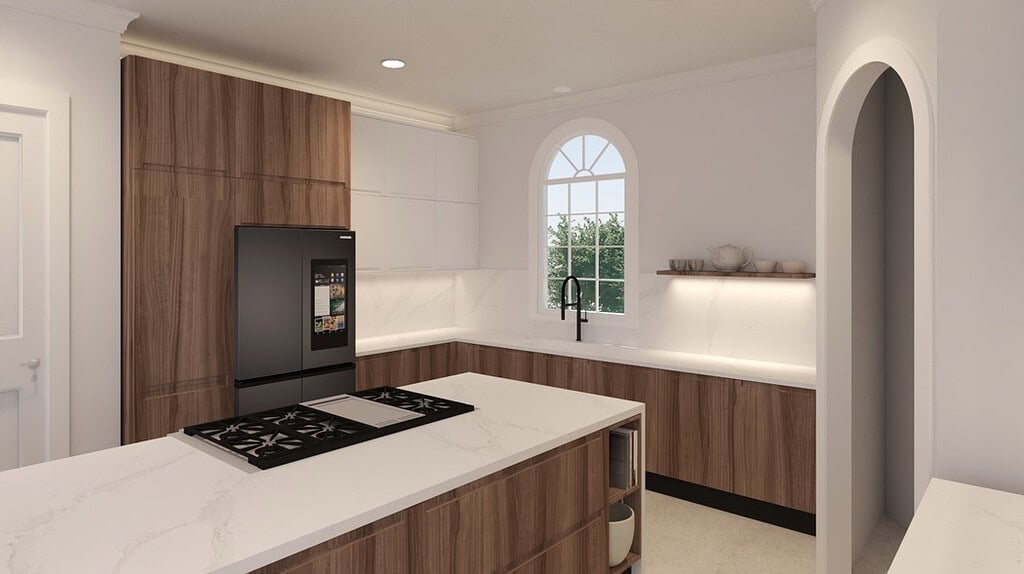
Walk through almost any newly built luxury home in Houston and you are likely to see the same thing in the kitchen: clean, uninterrupted cabinet fronts, appliances that disappear behind panels, and storage that feels built into the architecture rather than added to it. That look comes from European kitchen design, and it has become the reference point for modern luxury kitchens.
Foscari Interiors has specialized in European kitchen cabinets since 2007, when we opened as Houston’s first showroom for accessible, high-end European custom cabinetry. This guide explains what makes European cabinetry different, how it compares with traditional American cabinets, and how to choose the right line for your home.
What Makes European Kitchen Cabinets Different?
“European” describes a way of building and designing cabinetry more than a country of origin. European style kitchen cabinets share a few defining traits:
- Frameless box construction that maximizes interior space and creates tight, even reveals between doors.
- System-based engineering, with standardized hole patterns, concealed hinges and full-extension drawer runners designed to work together.
- Minimal visible hardware, using integrated channels, push-to-open mechanisms or slim pulls.
- Material-led design, where lacquer, wood veneer, stone, glass and metal carry the look rather than decorative mouldings.
- Integration of appliances, lighting and storage into a single, continuous composition.
Frameless Construction and the Beauty of Clean Architectural Lines
Traditional American cabinets are usually built with a face frame: a solid wood frame attached to the front of the cabinet box, with doors mounted on or inside it. Frameless cabinets, the foundation of modern European kitchens, eliminate that frame. Doors attach directly to the cabinet sides and cover the box almost entirely.
The result is a cleaner façade with narrow, consistent gaps that line up across the entire room. It also produces more usable space. Without a frame narrowing every opening, drawers can be wider and deeper, and large items slide in and out more easily. For a deeper comparison, see our guide to frameless vs. face-frame cabinets.
Premium Materials, Sophisticated Finishes and Craftsmanship
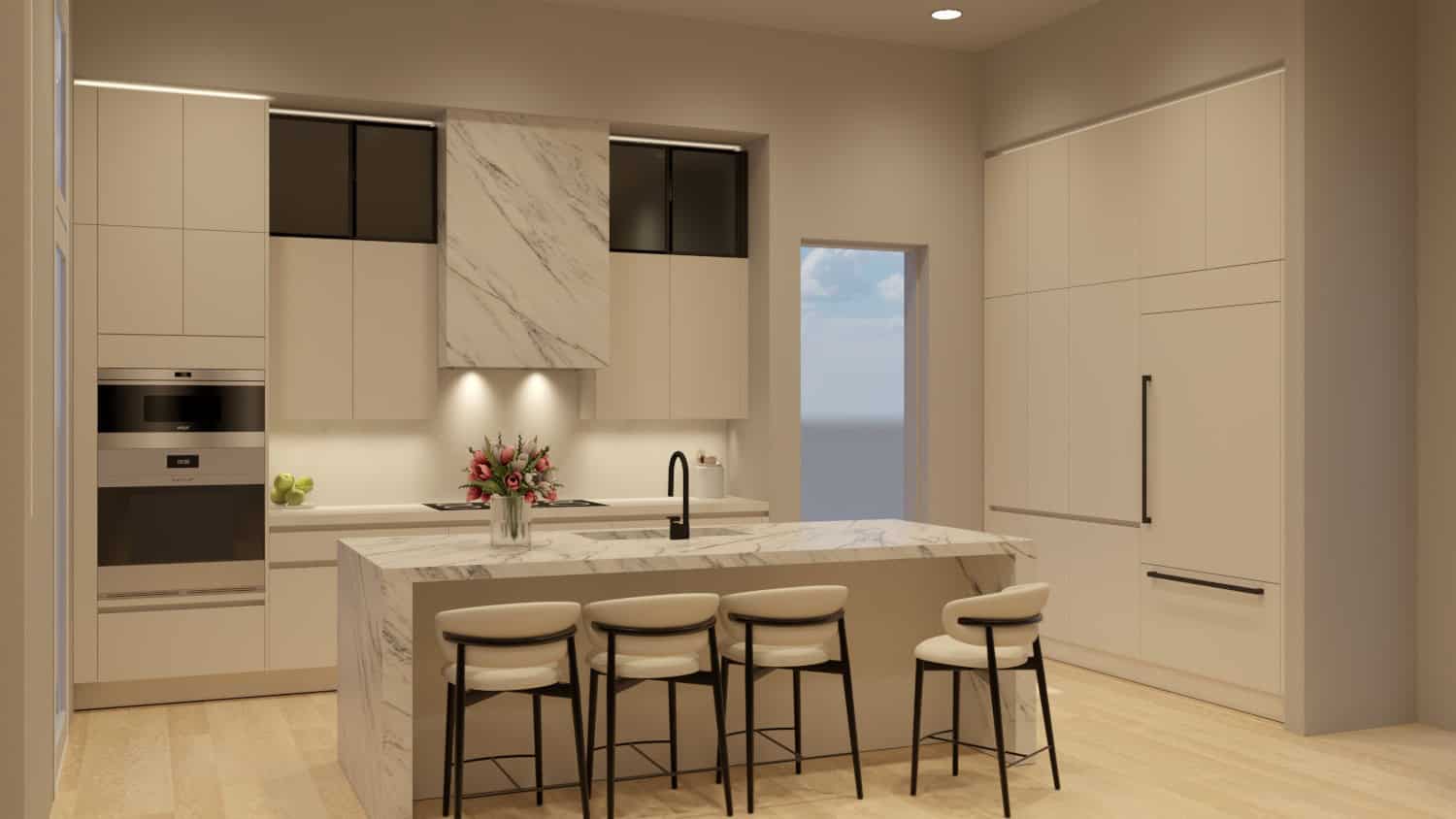
Because European kitchens rely on surfaces rather than ornament, the quality of materials matters a great deal. Luxury kitchen cabinets from European manufacturers are known for:
- Lacquers in matte, satin, high-gloss and pearlescent finishes, often available in custom colors.
- Wood veneers with book-matched or continuous grain that flows from one door to the next.
- Textured and fluted fronts that add depth while keeping the design restrained.
- Stone, ceramic, glass and metal used as door fronts, not just countertops.
Across the collections we carry, there are more than 2,000 finish options. Seeing physical samples side by side in our showroom is usually the fastest way to narrow them down.
Innovative Storage Solutions That Maximize Functionality
European cabinetry tends to favor drawers over doors in base cabinets. Deep drawers with full-extension, soft-close runners bring everything forward so nothing gets lost at the back of a shelf. Common features include:
- Inner drawers concealed behind a single large drawer front
- Dedicated organizers for cutlery, knives, spices and utensils
- Tall pull-out pantry units
- Corner solutions that use otherwise dead space
- Integrated waste and recycling systems
- Appliance garages that hide small appliances behind lift-up or pocket doors
Handleless Cabinetry and Integrated Appliances
Handleless cabinetry is one of the clearest signatures of modern European kitchens. Instead of pulls, a recessed channel runs along the top of each door or drawer, or the handle is carved directly into the edge of the front. TM Italia’s Gola collection, for example, builds the groove into the door itself for a seamless surface.
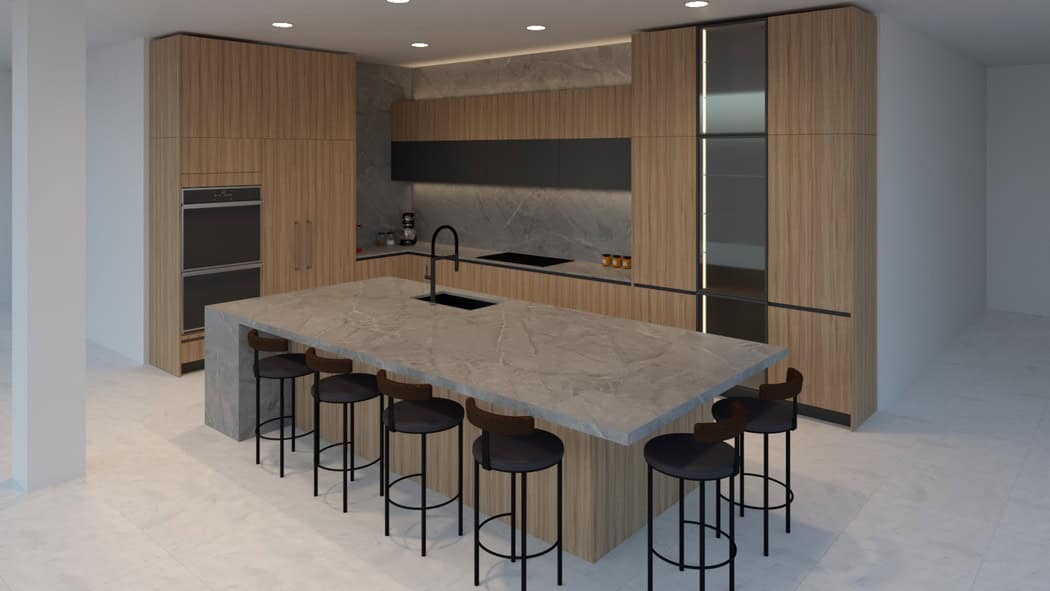
Integrated appliances complete the effect. Refrigerators, freezers, dishwashers and wine units sit behind cabinet panels that match the rest of the kitchen, while ovens and coffee machines are set into tall cabinet walls at a comfortable working height. The kitchen reads as furniture, not equipment.
European Cabinets vs. Traditional American Cabinets
| European cabinets | Traditional American cabinets | |
|---|---|---|
| Construction | Frameless box | Usually face-frame |
| Door style | Full overlay, flat or minimal fronts | Often inset or partial overlay, raised or recessed panels |
| Hardware | Integrated channels, push-to-open or slim pulls | Knobs and pulls as decorative elements |
| Storage | Drawer-focused, full-extension | More doors and shelves |
| Appliances | Typically fully integrated | Often freestanding or partially paneled |
| Aesthetic | Architectural and minimal | Traditional or transitional |
Neither approach is better for every home. But for homeowners who want a clean, modern look with maximum storage efficiency, European cabinetry is the natural choice. Our earlier article, European Kitchen Cabinets: What Makes Them Different From American Cabinetry?, goes further into the details.
How to Select European Cabinetry for Your Home’s Architectural Style
European cabinets are not limited to stark, ultra-modern homes. The right selection depends on the architecture around the kitchen:
- Contemporary homes: handleless lacquer, full-height cabinet walls and stone or metal accents.
- Transitional homes: fine-frame or shaker-inspired fronts in wood veneer, with slim pulls.
- Warm modern homes: textured oak, walnut or fluted fronts paired with natural stone.
- Older homes being updated: European construction with softer colors and wood tones that respect the existing architecture.
Budget and timeline also matter. At Foscari, options range from made-to-measure Italian kitchens such as TM Italia and Cucinesse to European-style lines like Johnson and Artcraft. Our guide to kitchen cabinets in Houston by style, budget and timeline compares them.
Frequently Asked Questions
Are European kitchen cabinets more expensive?
It depends on the line and specification. Made-to-measure Italian kitchens sit at the premium end, but European-style frameless cabinetry is available across a range of budgets.
How long do European cabinets take?
Lead times vary by manufacturer. Many of our lines run roughly 10 to 18 weeks after design approval, and exact timing is confirmed with your proposal.
Can European cabinets be customized?
Yes. Sizes, finishes, interior fittings and configurations are selected for each project, and made-to-measure lines are built to your room’s dimensions.
Investing in Timeless Design and Exceptional Craftsmanship
European kitchen cabinets offer clean architectural lines, efficient storage and materials that age well. The look has lasted because it is built on proportion and quality rather than passing decoration. Seeing the cabinetry in person, opening drawers and handling finishes, is the best way to understand the difference. Explore our European kitchen cabinets in Houston to see the collections we offer.
Related reading: Italian Kitchen Cabinets in Houston, Luxury Kitchen Cabinets in Houston and TM Italia in Houston.
Foscari Interiors
2226 Richmond Ave.
Houston, TX 77098