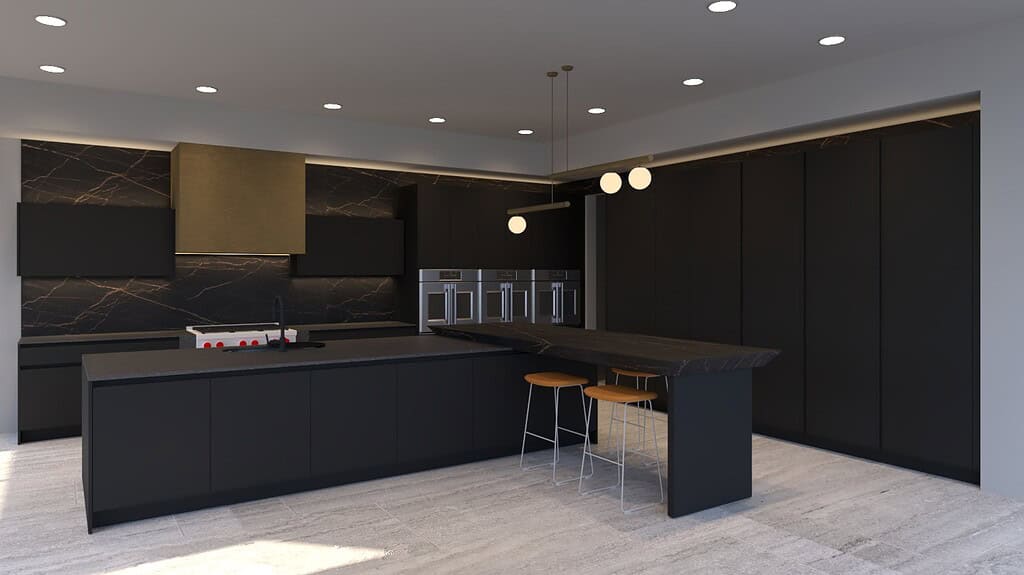
Stainless steel has long been the material of professional kitchens, prized by chefs for its durability and hygiene. In recent years, it has moved from the restaurant into the luxury residence, not as an industrial statement but as a refined, architectural material with a quiet strength.
Used thoughtfully, stainless steel kitchen cabinets can bring precision and light to a modern kitchen. Used carelessly, they can feel cold. This guide covers what to know before choosing metal kitchen cabinets: their strengths, the finishes available, how to pair them with other materials and the trade-offs to weigh.
Why Stainless Steel Appeals in Luxury Kitchens
- Durability: stainless steel does not swell, warp or rot with moisture, which makes it well suited to sink areas and humid climates.
- Hygiene: its non-porous surface is easy to clean and does not absorb spills or odors.
- Heat resistance: it tolerates heat near cooking zones better than many finishes.
- Light and reflection: brushed steel catches light softly, brightening a room without the glare of gloss.
- Architectural character: steel brings a precise, engineered quality that complements contemporary architecture.
- Longevity: a well-made stainless kitchen can last for decades, developing a subtle patina rather than looking worn.
Understanding Stainless Steel Grades
Not all stainless steel is the same. Two grades are most often discussed for kitchens:
- Type 304: the most common grade for kitchen use, offering good corrosion resistance for indoor applications.
- Type 316: contains molybdenum for greater resistance to salt and chlorides. It is often recommended for outdoor kitchens and coastal environments, such as homes near Galveston Bay.
Ask your designer which grade is used for both the fronts and, if applicable, the cabinet boxes.
Finishes: Steel Is More Varied Than You Think
Brushed or Satin
The most popular finish. Fine directional lines soften reflections and help disguise fingerprints and minor scratches.
Textured and Patterned
Embossed, linen-textured or vibration finishes give steel a more tactile, less clinical appearance and are even better at hiding marks.
Mirror or Polished
Highly reflective and dramatic. Best used sparingly, since it shows every fingerprint.
Colored and PVD Finishes
Physical vapor deposition (PVD) coatings can give stainless steel tones such as bronze, champagne, gold or graphite while keeping the durability of the base metal. These finishes bring warmth to a modern stainless steel kitchen.
Metallic-Effect Alternatives
Some cabinet lines offer lacquers, laminates or veneers with a metallic appearance. These can deliver a similar aesthetic with different performance characteristics, and are worth comparing side by side.
Full Stainless vs. Stainless Fronts
- All-stainless cabinetry: both box and fronts are steel. Maximum moisture resistance, common in professional and outdoor kitchens.
- Steel fronts on conventional boxes: steel-clad doors and drawer fronts on standard cabinet construction. Delivers the look with a broader range of interior options.
- Steel accents: steel used selectively, on an island, a tall appliance wall, open shelving or a countertop, within a kitchen of other materials.
For many homes, accents or a single steel element provide the most balanced result.
Designing a Warm Stainless Steel Kitchen
The key to a sophisticated stainless kitchen is balance. Steel looks its best when paired with materials that bring warmth and texture.
- Wood: walnut, oak or smoked veneers soften steel and make the kitchen feel residential.
- Natural stone: a richly veined marble or quartzite countertop adds depth and movement.
- Matte lacquer: deep or warm-toned lacquer complements steel without competing.
- Warm lighting: warm-white LEDs keep steel from feeling clinical.
- Texture: fluted fronts, textured stone or woven seating add tactile interest.
One effective approach is a stainless steel island set against wood or lacquered perimeter cabinetry. Another is a steel cooking wall framed by tall wood cabinets.
The Trade-Offs to Weigh
- Fingerprints: brushed and textured finishes help, but steel still benefits from regular wiping.
- Scratches and dents: steel can scratch and, in thinner gauges, dent. Many owners accept this as patina.
- Visual temperature: an all-steel kitchen can feel cold without warm materials and lighting.
- Cost: quality stainless cabinetry is typically a premium option.
- Acoustics: steel doors can sound more metallic when closed; soft-close hardware mitigates this.
Caring for Stainless Steel
- Clean with a soft cloth, warm water and mild soap, wiping with the grain
- Dry to avoid water spots
- Avoid steel wool, abrasive pads and chlorine-based cleaners
- Use a stainless-steel cleaner occasionally if recommended by the manufacturer
- Rinse off salt and chlorine exposure promptly in outdoor kitchens
Where Stainless Steel Works Best
- Serious cooks’ kitchens that value professional performance
- Sculleries and prep kitchens, where durability matters more than display
- Outdoor kitchens, where weather resistance is essential
- Contemporary and industrial-modern homes with concrete, glass and steel architecture
- Accent elements such as islands, open shelving or appliance walls in otherwise warm kitchens
Stainless Steel and Contemporary Kitchen Cabinets at Foscari
Foscari Interiors works with Italian and European cabinet lines that offer a wide range of materials, including metallic and metallic-effect finishes. Availability of specific stainless steel options depends on the line and the application, so our designers will review what is possible for your project and help you compare steel with alternatives in our Houston showroom. For exterior projects, see our outdoor kitchens page, and explore our luxury kitchen cabinets for interior options.
Frequently Asked Questions
Are stainless steel kitchen cabinets worth it?
For homeowners who value durability, hygiene and a contemporary aesthetic, they can be an excellent investment. They are especially well suited to sculleries, outdoor kitchens and accent islands.
Do stainless steel cabinets show fingerprints?
Polished steel shows fingerprints readily. Brushed and textured finishes disguise them much better.
Can stainless steel cabinets look warm?
Yes, especially when paired with wood, natural stone, warm lighting or PVD finishes in bronze or champagne tones.
What grade of stainless steel is best for outdoor kitchens?
Type 316 is often recommended for exterior and coastal environments because of its greater resistance to corrosion.
Related reading: Outdoor Kitchen Cabinets in Houston, Cabinet Door Styles, Finishes and Hardware and Countertop Materials for Modern Cabinets.
Explore Materials With Our Designers
Choosing materials is easiest in person, where you can see how steel, wood, lacquer and stone work together. Request a design consultation and our team will guide you through the options.
Foscari Interiors
2226 Richmond Ave.
Houston, TX 77098