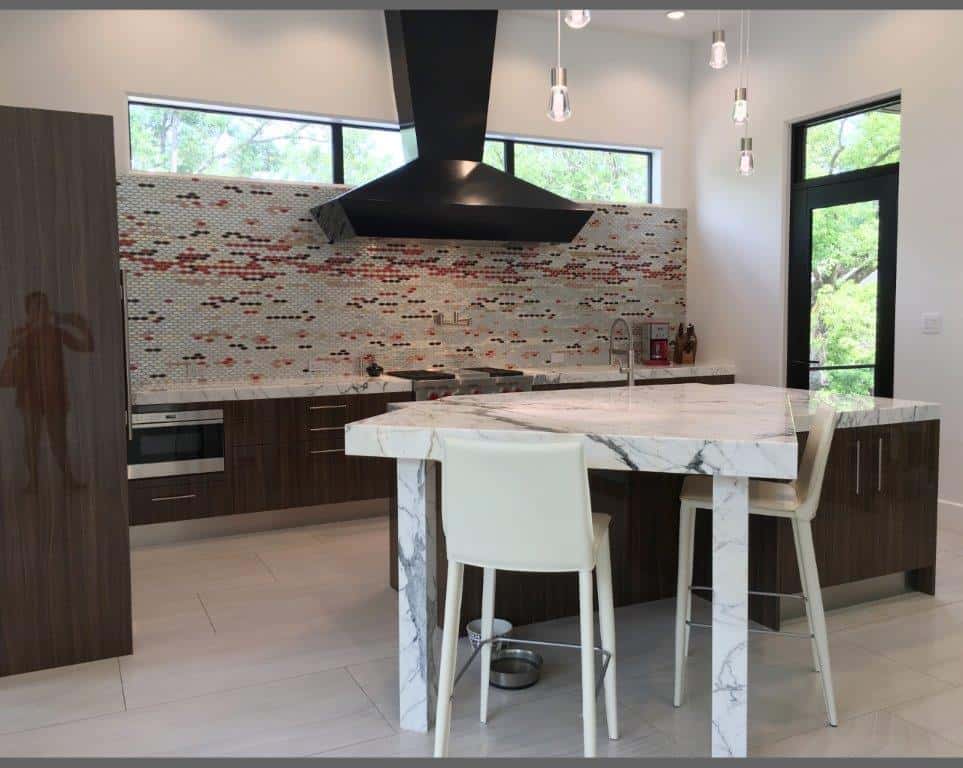
The countertop materials that best complement modern cabinets are those that reinforce the cabinetry’s clean lines while adding depth, texture, and enduring functionality. Natural stone, quartz, porcelain, stainless steel, solid surface, concrete-inspired finishes, and select wood countertops can all work beautifully in a modern kitchen when their color, pattern, thickness, and finish are carefully coordinated with the cabinetry.
In a refined modern kitchen, the countertop should not be chosen as an isolated surface. It forms part of a larger architectural composition that includes cabinet finishes, flooring, backsplashes, appliances, lighting, and surrounding living spaces.
The most successful pairing may create quiet continuity or deliberate contrast. A softly veined stone can add movement to matte cabinetry, while a restrained porcelain surface can balance highly textured wood. Stainless steel can introduce professional precision, and warm timber can soften a minimal palette.
Understanding how each material interacts with modern cabinetry helps homeowners create a kitchen that feels cohesive, luxurious, and suited to everyday life.
How Should Countertops Be Paired With Modern Cabinets?
Countertops and cabinets occupy much of the visible surface area in a kitchen. Their relationship therefore has a powerful influence on whether the room feels calm, balanced, and architecturally resolved.
Modern cabinetry is often characterized by flat-panel doors, precise alignment, minimal hardware, and uninterrupted surfaces. A countertop can reinforce this simplicity or introduce a carefully controlled layer of contrast.
Before selecting a material, consider the visual character of the cabinets:
- Are the cabinets smooth or highly textured?
- Is the finish matte, satin, glossy, metallic, or natural?
- Does the cabinetry have a warm or cool undertone?
- Is the cabinet color light, dark, or highly saturated?
- Should the countertop blend into the cabinetry or become a focal point?
A highly figured wood cabinet may benefit from a quieter countertop. Conversely, simple matte cabinetry can provide the ideal foundation for expressive marble or another stone with visible movement.
The goal is not necessarily to match every finish. It is to create a deliberate relationship between color, texture, reflectivity, and scale.
Natural Stone Countertops
Natural stone is one of the most compelling countertop choices for luxury modern cabinets. Marble, quartzite, granite, soapstone, and other natural materials introduce depth and individuality into a streamlined interior.
Every slab has its own color variation, veining, and mineral character. This natural movement can soften the precision of modern cabinetry and prevent the kitchen from feeling overly uniform.
Marble
Marble creates an elegant contrast with minimal cabinet fronts. White or pale marble can brighten dark cabinetry, while richly colored stone can become a dramatic centerpiece in a neutral kitchen.
A marble countertop and matching backsplash can create the appearance of one continuous architectural surface. This treatment is particularly effective with matte lacquer, natural wood, or metallic cabinet finishes.
Quartzite
Quartzite offers the expressive beauty associated with natural stone and is frequently considered for homeowners who want visible movement with a strong, substantial appearance.
It pairs especially well with warm wood cabinets, soft neutrals, and deeply saturated matte finishes.
Granite and Soapstone
Granite can complement modern cabinetry when the slab has a restrained pattern or a distinctive texture. Soapstone provides a softer, quieter appearance that works particularly well with wood, black cabinetry, and understated architectural palettes.
Because natural stone varies from slab to slab, homeowners should view and approve the actual material whenever possible rather than relying only on a small sample.
Engineered Quartz Countertops
Engineered quartz is a popular companion to modern kitchen cabinets because it offers a controlled, consistent appearance.
Surfaces are available in quiet solid colors, concrete-inspired tones, and designs that interpret the movement of natural stone. This variety allows the countertop to coordinate closely with painted, lacquered, wood, or laminate cabinetry.
A nearly solid quartz surface can create a highly minimal look when paired with handleless cabinets. A softly veined selection can introduce visual movement without overwhelming the cabinetry.
Quartz is especially useful when consistency is important across a large island, long perimeter run, or multiple connected surfaces.
When selecting quartz for a luxury modern kitchen, subtlety is often more effective than an overly repetitive pattern. The countertop should feel integrated with the surrounding materials rather than applied as a decorative layer.
Porcelain and Sintered Stone
Porcelain and sintered surfaces are particularly well suited to modern cabinetry because they can create thin, precise, and visually continuous planes.
These materials are offered in interpretations of marble, natural stone, metal, concrete, and solid color. This makes them adaptable to a wide range of cabinet finishes.
A thin porcelain countertop can emphasize the horizontal geometry of a floating cabinet run or streamlined island. The same material may also be carried up the wall as a backsplash or used on the sides of an island to form a cohesive monolithic feature.
Porcelain with a subtle concrete or metallic appearance can complement industrial modern kitchens, while marble-inspired surfaces can bring a more polished character to matte or wood cabinetry.
Large-format surfaces also reduce the number of visible seams, contributing to the clean visual language associated with modern interiors.
Stainless-Steel Countertops
Stainless steel brings a precise, professional quality to modern kitchens. Its clean appearance and subtle reflectivity pair naturally with streamlined cabinetry and integrated appliances.
Steel is especially effective when combined with warm or textured cabinet finishes. Blackened wood, oak, walnut, and matte lacquer can offset the material’s cooler character and produce a sophisticated balance.
A stainless-steel worktop may incorporate a welded sink or cooking surface, creating a highly continuous preparation zone with fewer visual interruptions.
The surface can also contribute to an industrial-inspired palette when paired with concrete-effect cabinetry, dark finishes, glass, and architectural metal details.
Homeowners should understand that stainless steel develops character through use. Fine scratches and changes in its surface appearance may become part of the material’s natural patina.
In the right setting, this evolving finish contributes authenticity rather than diminishing the design.
Solid-Surface Countertops
Solid-surface materials can provide a quiet, seamless appearance that complements highly minimal cabinetry.
Depending on the product and fabrication, sinks and backsplashes may be integrated with limited visible transitions. This allows the countertop to read as one continuous plane.
Solid-surface countertops are often most effective in soft white, warm gray, taupe, charcoal, or another restrained tone. These colors can blend gently with the cabinets or create a subtle contrast.
The understated quality of the material makes it a useful counterpoint to dramatic wood grain, metallic lacquer, textured cabinets, or visually expressive flooring.
It can also help create a furniture-like kitchen in which the functional worktop does not dominate the overall composition.
Concrete and Concrete-Inspired Surfaces
Concrete and concrete-inspired countertops bring texture and architectural weight to modern cabinetry.
Their quiet variation works well with black, charcoal, metallic, and natural wood cabinet finishes. The combination can feel urban and industrial or warm and organic, depending on the surrounding materials.
Authentic concrete may display tonal variation and changes in appearance over time. Homeowners who prefer greater consistency may consider porcelain, quartz, or other engineered surfaces with a concrete effect.
A concrete-inspired countertop can be especially effective with cabinetry in a similar tonal family. Layering slightly different shades and textures creates depth while preserving a restrained monochromatic palette.
Alternatively, concrete can form a strong contrast with pale oak or another warm wood finish.
Wood Countertops and Integrated Tables
Wood introduces warmth and a tactile quality that can soften the crisp geometry of modern cabinets.
Rather than covering every work surface in timber, many modern kitchens use wood selectively. It may appear on a breakfast bar, integrated dining table, raised island section, or furniture-like preparation area.
This creates a layered composition in which the primary stone, porcelain, or stainless-steel worktop addresses practical kitchen tasks while the wood surface creates a warmer setting for dining and conversation.
Wood countertops can coordinate with matching cabinetry or introduce contrast. For example, a warm timber table may soften matte black cabinets, while a darker wood can add depth to pale lacquered cabinetry.
Grain direction, edge profile, finish, and species should be coordinated carefully with nearby cabinet veneers. A close but imperfect match may appear accidental, while a deliberate contrast can feel more sophisticated.
Matching Countertops to Cabinet Finishes
The best countertop material depends not only on performance requirements but also on the finish of the modern cabinets.
Natural Wood Cabinets
Wood cabinets pair beautifully with softly veined marble, restrained quartzite, pale porcelain, stainless steel, and quiet solid-color surfaces.
Because wood already contains visible grain and tonal variation, a more subdued countertop often creates the most balanced result. Expressive stone can still work, but the undertones should relate to the wood.
Matte Lacquer Cabinets
Matte lacquer provides a smooth, controlled background for natural stone, porcelain, quartz, or metal. A dramatic slab can become the focal point, while a tonal countertop can create a calm, monolithic appearance.
Deep blue, charcoal, black, and earthy matte finishes can be particularly striking with pale marble or warm metal details.
Glossy Cabinets
Glossy cabinets already reflect light, so they often benefit from a honed, matte, or subtly textured countertop. Combining too many highly reflective surfaces may make the room feel visually unsettled.
Metallic Cabinet Finishes
Metallic lacquers and metal-fronted cabinets can be paired with stone, wood, or concrete-inspired surfaces to create contrast. Repeating metal on the countertop may also work when the tones and levels of reflectivity are intentionally coordinated.
Textured or Concrete-Effect Cabinets
Textured cabinets pair well with restrained porcelain, stainless steel, solid surface, and quiet natural stone. When both cabinets and countertops are highly tactile, the palette should remain controlled to prevent visual competition.
Black Modern Cabinets
Matte black kitchen cabinets can be complemented by white or gray stone, warm wood, stainless steel, dark soapstone, or a tonal black surface.
A pale countertop creates definition and contrast. A dark countertop creates a more immersive, architectural effect. Warm lighting and natural materials can prevent an all-dark palette from feeling severe.
Honed, Polished, Matte, or Textured?
The finish of the countertop can be just as important as the material itself. It determines how the surface reflects light, reveals texture, and interacts with the cabinetry.
Honed and Matte Finishes
Honed and matte countertops produce softer reflections and often feel especially compatible with contemporary cabinetry. They can create a calm, understated composition and allow the material’s color and texture to become more prominent.
Polished Finishes
A polished surface can brighten the kitchen and emphasize the depth of natural stone. It may provide an effective contrast with matte cabinets, particularly in kitchens with limited natural light.
Textured Finishes
Brushed, leathered, flamed, or otherwise textured surfaces can add tactile richness. These finishes work well in material-focused interiors but should be evaluated for cleaning and practical use in the intended area.
A balanced kitchen often combines different levels of sheen rather than repeating the same finish everywhere. Matte cabinets, lightly reflective stone, glass, and metal can create a sophisticated layered effect.
How Countertop Thickness Affects the Design
Countertop thickness changes the perceived weight and proportion of modern cabinetry.
A thin countertop creates a precise, lightweight appearance and emphasizes the horizontal lines of the cabinets. This can be especially effective on floating cabinet runs and streamlined islands.
A thicker slab creates greater visual weight and may give the island a sculptural presence. Waterfall ends can extend the countertop material down the sides, creating the appearance of a single architectural volume.
Mitered edges can produce a substantial look without requiring the entire slab to have the same thickness. In other settings, a deliberately exposed thin edge may better express the technical quality of porcelain or stainless steel.
The correct proportion depends on the cabinet height, island dimensions, room scale, and desired visual effect.
Creating Continuity With the Backsplash
Extending the countertop material onto the backsplash can strengthen the clean appearance of modern cabinetry.
A full-height stone or porcelain backsplash reduces visual fragmentation and allows the natural pattern or tonal variation of the material to become a significant design feature.
Book-matched or carefully aligned slabs can create a dramatic focal point. Quieter surfaces can blend into the cabinetry and produce a more restrained architectural backdrop.
The same material may also continue along an island side, into a recessed work area, or around an integrated shelf. Repetition helps connect individual elements into one cohesive composition.
Continuity does not require using one material everywhere. A secondary backsplash finish may be introduced when it has a clear relationship to the cabinets, countertops, and surrounding architecture.
Practical Considerations Before Choosing
A countertop must complement modern cabinets visually, but it must also support the way the kitchen is used.
Before making a final selection, homeowners should consider:
- Resistance to heat, staining, scratching, and impact
- Sealing and ongoing maintenance requirements
- Visibility of fingerprints, water marks, and daily wear
- Suitability for integrated sinks or drainage details
- Available slab dimensions and likely seam locations
- Edge-profile and thickness options
- Compatibility with cooktops and other appliances
- Indoor or outdoor placement
- How the surface feels during daily use
Samples should be viewed alongside the actual cabinet finish, flooring, metal details, and lighting whenever possible. A material can appear significantly different under warm artificial light than it does in a showroom or outdoors.
For natural stone, viewing the complete slab is particularly important because a small sample cannot represent the full pattern or range of variation.
Fabrication and installation quality should also be considered. Precise seams, edge details, cutouts, and alignment are essential in a modern kitchen where every junction is highly visible.
Which Countertop Is Best for Your Modern Kitchen?
There is no single countertop material that complements every modern cabinet design. The best choice is the one that creates the right relationship between visual character, practical performance, and the architecture of the home.
Natural stone brings individuality and luxury. Quartz provides visual consistency. Porcelain can create thin, continuous surfaces. Stainless steel adds professional precision. Solid surface supports seamless minimalism, while concrete-inspired finishes contribute architectural texture. Wood can introduce warmth in selected dining or preparation areas.
The strongest modern kitchens often use materials in a carefully considered combination. A stone island may be paired with a stainless-steel work zone, or a porcelain countertop may transition into an integrated wood dining table. These combinations allow each material to serve both a functional and aesthetic purpose.
At Foscari Interiors, countertop selection can be considered as part of the complete cabinetry design. Cabinet finishes, work surfaces, backsplashes, appliances, lighting, and surrounding architecture are coordinated to create a unified and highly personalized interior.
Through thoughtful material selection and precise detailing, the countertop becomes more than a practical surface. It becomes an essential part of the kitchen’s architectural identity.
Contact Foscari Interiors to explore modern cabinetry and countertop combinations tailored to your home.