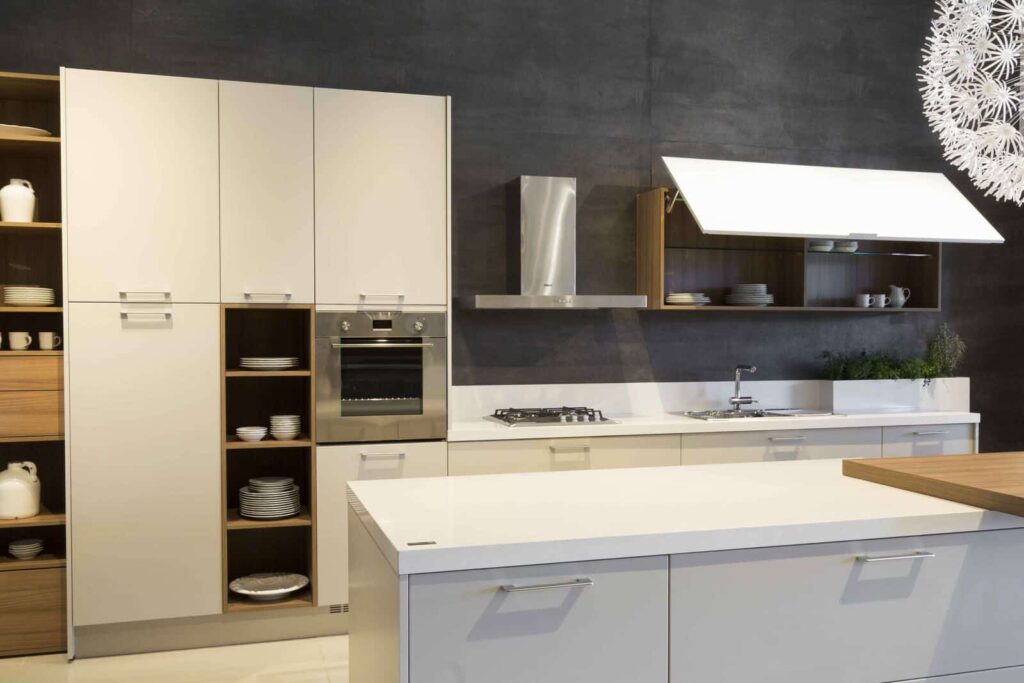
Italian cabinetry brings together refined design, precise engineering, beautiful materials, and highly personalized function. Rather than treating cabinets as simple storage, Italian design approaches them as an integral part of the home’s architecture.
Clean lines, carefully balanced proportions, concealed organization, and sophisticated finishes allow Italian cabinets to create interiors that feel calm, cohesive, and distinctly luxurious. These qualities make them especially appealing for homeowners who want a kitchen or living space that looks exceptional while supporting daily life with ease.
At Foscari Interiors, homeowners can explore modern Italian cabinetry locally at an established Houston showroom. Since 2007, Foscari has helped homeowners, designers, architects, and builders bring European cabinetry into kitchens, closets, bathrooms, bars, offices, and other refined interior spaces.
What Is Italian Cabinetry?
Italian cabinetry refers to cabinet systems shaped by Italy’s longstanding traditions of design, craftsmanship, material innovation, and precision manufacturing.
Although Italian cabinets are often associated with sleek kitchens, their defining qualities extend beyond a minimalist appearance. They are designed as complete systems in which exterior finishes, cabinet proportions, storage interiors, appliances, lighting, and architectural details work together.
Common characteristics of modern Italian cabinetry include:
- Frameless cabinet construction
- Clean, precisely aligned doors and drawers
- Handleless or subtly integrated opening systems
- Full-height architectural cabinet walls
- Custom dimensions and configurations
- Integrated appliances
- Highly organized cabinet interiors
- Premium wood, lacquer, glass, metal, and stone finishes
- Furniture-like proportions and detailing
- Coordinated cabinetry throughout the home
The result is cabinetry that can feel visually simple while providing significant complexity and functionality behind its surfaces.
Why Do Homeowners Choose Italian Cabinetry?
Homeowners choose Italian cabinetry because it offers an uncommon balance of beauty, personalization, and practical performance.
Its streamlined appearance can make a kitchen feel calmer and more spacious. Integrated storage helps keep countertops clear, while custom dimensions allow the cabinets to respond closely to the architecture of the room.
Italian cabinetry also gives homeowners considerable freedom in selecting materials. A kitchen may feature warm oak, deeply grained walnut, soft matte lacquer, expressive natural stone, architectural glass, or metallic surfaces. These materials can be used individually or layered into a carefully controlled composition.
The appeal is not based on decoration alone. Every cabinet can be considered in relation to daily routines, including how homeowners prepare meals, entertain, store appliances, organize groceries, and move through the kitchen.
This combination allows the finished room to feel highly personal without becoming visually complicated.
The Principles Behind Italian Cabinet Design
Italian cabinet design is often guided by proportion, materiality, precision, flexibility, and visual continuity.
Proportion
Cabinet heights, widths, reveals, and alignments are carefully considered in relation to the room. Tall units may align with ceilings and doorways, while long horizontal drawer runs can emphasize the width of an island or wall.
Materiality
Instead of relying on applied ornamentation, Italian cabinetry often creates character through wood grain, color, sheen, texture, stone, metal, and glass.
Precision
Modern cabinet fronts expose alignment more clearly than heavily detailed traditional doors. Consistent spacing and smooth operation are therefore essential to the finished appearance.
Flexibility
Cabinet systems can be adapted to different homes, lifestyles, appliance selections, and architectural conditions. This flexibility supports both minimal interiors and richer, more layered material palettes.
Continuity
The kitchen may visually connect with dining, living, and entertaining areas. Repeating cabinet materials across adjacent spaces helps the interior feel unified rather than divided into unrelated rooms.
Italian Cabinet Materials and Finishes
Material selection is central to Italian cabinetry. Because door profiles are often clean and restrained, the finish itself becomes an important expression of the design.
Natural Wood
Oak, walnut, ebony-inspired veneers, and other wood finishes can introduce warmth, depth, and natural variation. Grain direction may be carefully aligned across multiple cabinet fronts to preserve visual continuity.
Matte and Velvet-Like Finishes
Soft matte finishes create a refined, understated appearance. They pair well with natural stone, warm wood, metal, and architectural lighting.
Glossy Lacquer
Glossy lacquer can reflect light and introduce greater visual energy. It is often most effective when balanced with quieter surfaces, such as honed stone or textured wood.
Metal and Metallic Finishes
Stainless steel, bronze-inspired finishes, copper tones, champagne lacquer, and other metallic effects can add an architectural or sculptural quality to the kitchen.
Glass
Clear, smoked, tinted, or textured glass can be used for display cabinets, illuminated storage, open shelving systems, and furniture-like compositions.
Stone and Stone-Inspired Surfaces
Marble, quartzite, porcelain, and other durable surfaces may be used for countertops, backsplashes, islands, and selected cabinet fronts. Carrying one material across several surfaces can create a monolithic architectural effect.
The strongest palettes usually balance contrast and continuity. A visually expressive stone may be paired with understated cabinets, while richly grained wood may benefit from a quieter countertop.
Made-to-Measure Customization
One of the most valuable qualities of Italian cabinetry is its ability to respond to the individual home.
Cabinet dimensions and configurations can be developed around ceiling heights, wall conditions, windows, appliances, plumbing, electrical requirements, and circulation paths.
This allows designers to create:
- Floor-to-ceiling cabinet walls
- Oversized kitchen islands
- Hidden walk-in pantries
- Integrated breakfast and coffee stations
- Retractable preparation areas
- Custom bars and wine storage
- Built-in dining tables
- Cabinetry around unusual architectural conditions
- Coordinated storage across several rooms
Made-to-measure design also helps eliminate awkward fillers and unresolved spaces. Instead of appearing added to the room, the cabinetry can feel integrated into its architecture.
This level of customization is particularly valuable in new custom homes, substantial renovations, luxury high-rise residences, and architecturally distinctive properties.
Intelligent Storage Behind a Minimal Exterior
Italian cabinetry may look quiet and minimal from the outside, but its interiors can be highly organized.
Rather than simply creating large empty cabinet boxes, storage can be assigned according to the objects being stored and the homeowner’s daily habits.
Interior features may include:
- Full-extension drawers
- Custom utensil and knife organizers
- Pull-out pantry systems
- Integrated spice storage
- Plate and cookware organizers
- Concealed waste and recycling centers
- Tray and cutting-board storage
- Interior cabinet lighting
- Hidden charging stations
- Retractable doors and pocket systems
Careful storage planning helps reduce visible clutter and makes the kitchen easier to use. Frequently needed items can be placed close to the zones where they are used, while less frequently accessed pieces can be stored higher or farther away.
This relationship between a calm exterior and an organized interior is one of the defining advantages of Italian cabinetry.
Seamless Appliance Integration
Modern appliances can occupy a significant amount of visual space. Italian cabinetry helps integrate them into a more cohesive architectural composition.
Panel-ready refrigerators and dishwashers can disappear behind fronts that match the surrounding cabinets. Ovens, coffee machines, and wine refrigeration can be positioned within full-height cabinet walls and aligned with nearby doors and drawers.
Small appliances can be stored inside appliance garages or concealed work zones. Retractable doors can open to reveal a coffee station, breakfast area, or preparation surface, then close to restore a clean appearance.
Ventilation systems may also be integrated into cabinetry or coordinated with sculptural ceiling elements.
Early appliance selection is essential. Exact specifications affect cabinet dimensions, ventilation, electrical planning, plumbing, and installation. Coordinating these details before production protects both the functionality and visual integrity of the kitchen.
Sculptural Kitchen Islands
In Italian kitchen design, the island can become both a functional workspace and a sculptural centerpiece.
Clean cabinet fronts allow the island’s form, materials, and proportions to take visual priority. Stone may wrap the top and sides to create a monolithic volume, while wood or metal can be introduced to provide contrast.
The island may combine:
- Food preparation
- Cooking
- Cleaning
- Storage
- Casual dining
- Entertaining
- Wine refrigeration
- Integrated electrical access
A dining table or breakfast surface may be incorporated into the island at a different height or in a contrasting material. This can soften the appearance of stone or lacquer while creating a more inviting setting for conversation.
The size of the island should respond to the room rather than follow a trend. Proper clearances and balanced proportions are essential to preserving comfortable movement.
Integrated Lighting and Italian Cabinetry
Lighting can reveal the materials, depth, and precision of Italian cabinetry while making the kitchen easier to use.
Under-cabinet lighting provides direct illumination for countertops. Interior lighting can improve visibility inside tall cabinets, pantries, and appliance zones. Illuminated shelves and niches can highlight glassware, artwork, or decorative objects.
Lighting may also be incorporated beneath floating cabinets or along toe kicks to create a subtle sense of depth.
The most refined installations conceal light sources, channels, wires, and technical components. The illumination should feel integrated into the cabinetry rather than attached afterward.
Cabinet materials influence the lighting strategy. Matte finishes absorb light, glossy surfaces reflect it, and textured materials may be emphasized with directional illumination.
Planning lighting and cabinetry together allows electrical connections, switches, sensors, and dimming controls to be coordinated before fabrication.
Italian Cabinetry Beyond the Kitchen
Italian cabinetry can establish a consistent design language throughout the residence.
Closets and Wardrobes
Wardrobe systems may combine hanging storage, drawers, shoe shelves, glass doors, integrated lighting, mirrors, and accessory organizers. Each section can be tailored to the homeowner’s clothing and routine.
Bathrooms
Floating vanities and full-height storage can bring architectural clarity to the bathroom while coordinating with stone, tile, lighting, and plumbing fixtures.
Living Rooms
Cabinetry can integrate televisions, books, art, sound systems, and concealed storage into a refined media wall or furniture-like composition.
Home Offices
Modern cabinets can conceal printers, files, cables, charging equipment, and work surfaces. Pocket doors may allow the office to disappear when it is not in use.
Bars and Entertaining Spaces
Italian cabinetry can incorporate beverage refrigeration, wine storage, glassware, sinks, coffee systems, and illuminated display areas.
Repeating selected finishes across these spaces helps the home feel intentional and visually connected.
Italian Cabinetry Compared With Standard Cabinets
Standard cabinets can be appropriate for straightforward projects, but Italian cabinetry offers a different level of design integration and personalization.
Important distinctions may include:
- Greater flexibility in dimensions and configurations
- More extensive material and finish options
- Precisely coordinated cabinet fronts
- Advanced interior storage systems
- Handleless and retractable opening options
- More seamless appliance integration
- Furniture-like detailing
- Continuity between kitchens and adjoining rooms
- Closer coordination with the architecture
The distinction is not simply Italian style versus another visual style. It is the difference between treating cabinetry as a collection of individual storage boxes and treating it as a complete interior system.
This system-based approach is particularly valuable for homeowners who want a highly resolved kitchen or coordinated cabinetry throughout the residence.
Is Italian Cabinetry a Worthwhile Investment?
Italian cabinetry can be one of the most meaningful investments homeowners make in their interiors because it improves appearance, organization, and daily function at the same time.
Cabinetry occupies a large portion of the visible kitchen and is used repeatedly throughout every day. Thoughtful storage, smooth operating systems, durable finishes, and a carefully planned layout can influence the homeowner’s experience for many years.
High-quality cabinetry can also provide a lasting architectural foundation. Clean lines, balanced proportions, natural materials, and refined neutral finishes can remain relevant as lighting, seating, accessories, and surrounding decor evolve.
The greatest value comes from considering the complete project rather than the cabinet price alone. Design expertise, material quality, appliance coordination, technical drawings, installation, and long-term functionality all contribute to the investment.
When cabinetry is tailored to the home and the people who use it, its value is experienced every day rather than only when the project is completed.
What to Consider Before Choosing Italian Cabinets
Before selecting Italian cabinetry, homeowners should think carefully about how they want the room to look, function, and connect with the rest of the home.
Important considerations include:
- The architectural character of the residence
- The desired cabinet materials and finishes
- Current and future storage requirements
- Appliance dimensions and specifications
- Kitchen lighting and natural light
- Countertop and backsplash materials
- Island size and circulation clearances
- Construction or renovation schedules
- Installation responsibilities
- Coordination with architects, builders, and designers
Homeowners should also ask about cabinet construction, operating hardware, available interior accessories, finish care, technical support, installation, and warranty coverage.
Visiting a showroom is an important part of this process. Materials, textures, door movements, drawer systems, and construction details are easier to evaluate in person than through photographs alone.
Explore Italian Cabinetry at Foscari in Houston
Foscari Interiors provides Houston homeowners with a local destination for exploring modern Italian and European cabinetry.
Since opening its Houston showroom in 2007, Foscari has helped make high-end European cabinetry accessible to homeowners, architects, interior designers, builders, and developers throughout the region.
The showroom experience allows clients to examine cabinet displays, compare finishes, operate interior mechanisms, and discuss how different systems may work within their homes.
Foscari’s cabinetry process can include:
- Initial design consultation
- Review of plans and architectural conditions
- Cabinet layouts and design development
- Three-dimensional visualization
- Material and finish selection
- Appliance and lighting coordination
- Technical and construction drawings
- Collaboration with architects and builders
- Cabinet sourcing and project coordination
- Professional installation
Whether the project involves a modern Italian kitchen, a custom wardrobe, an architectural media wall, or cabinetry throughout the residence, the design begins with understanding the home and the people who will use it.
Schedule a consultation with Foscari Interiors or visit the showroom at 2226 Richmond Avenue in Houston to explore Italian cabinetry for your home.