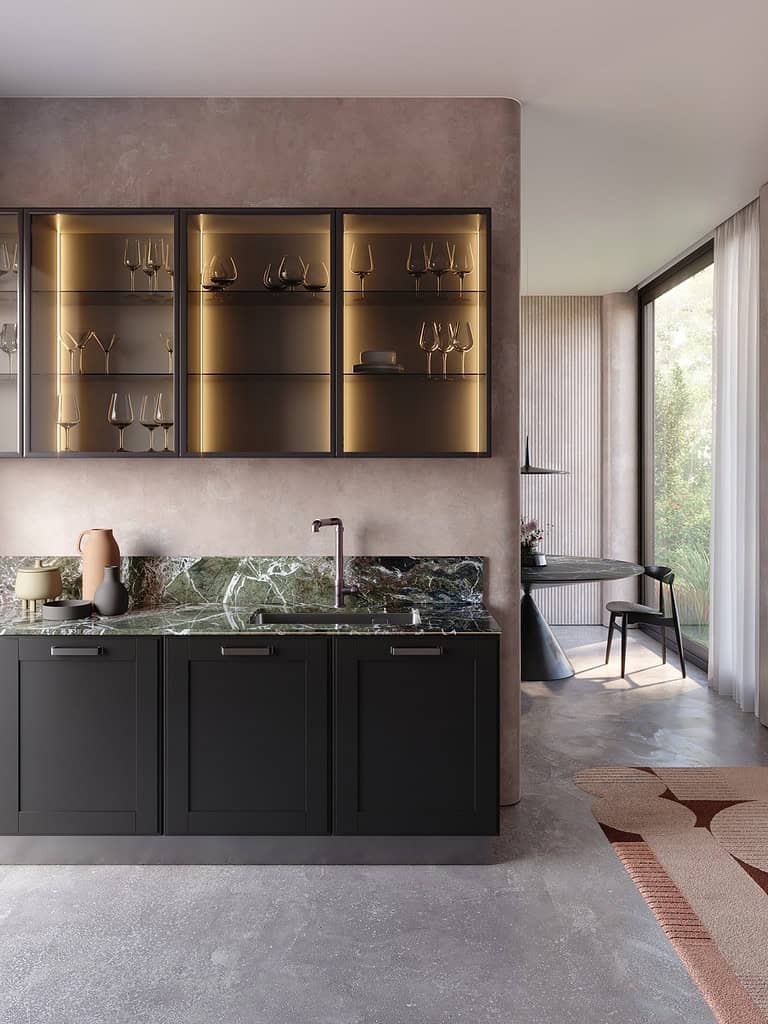
When planning a kitchen renovation or designing a custom home, cabinetry is one of the most important decisions you’ll make. Cabinets influence everything from storage and functionality to the overall aesthetic of your space. Yet many homeowners are unaware that there are two distinct approaches to cabinet construction and design: European cabinets and American cabinets.
While both styles offer advantages, the differences between them can significantly impact how your kitchen looks and performs. Understanding these distinctions can help you choose the right cabinetry for your lifestyle, architectural style, and design goals.
At Foscari Interiors, we work with homeowners seeking sophisticated, modern kitchen designs that blend beauty and functionality. As contemporary homes continue to evolve, many clients are discovering that European cabinetry offers unique advantages for today’s way of living.
What Are European Cabinets?
European cabinets, often called frameless cabinets, originated in Europe and have become increasingly popular in modern kitchen design throughout North America.
Unlike traditional cabinet construction, European cabinets eliminate the face frame that is typically attached to the front of the cabinet box. Instead, doors and drawers are mounted directly to the cabinet structure, creating a clean and streamlined appearance.
This construction method provides several benefits:
- More usable interior storage space
- Sleek, contemporary aesthetics
- Precise door and drawer alignment
- Improved accessibility
- Greater design flexibility
European cabinetry is especially popular in modern homes, contemporary residences, urban lofts, and custom architectural projects where simplicity and functionality are priorities.
What Are American Cabinets?
American cabinets traditionally use a face-frame construction method. A wooden frame is attached to the front of the cabinet box, providing additional structural support and creating a more traditional appearance.
This style has been widely used in American homes for generations and remains a popular choice for classic and transitional interiors.
Common characteristics of American cabinetry include:
- Framed cabinet construction
- Decorative molding and trim
- Raised-panel or Shaker cabinet doors
- Exposed hardware
- Traditional craftsmanship details
American cabinets often complement farmhouse, Colonial, Craftsman, and traditional architectural styles where decorative elements play a larger role in the overall design.
Frameless vs. Framed Construction
One of the biggest differences between European and American cabinets is how they are built.
European Frameless Cabinets
Because there is no face frame, the cabinet opening is larger and more accessible. This creates a seamless appearance across an entire wall of cabinetry while maximizing storage capacity.
The frameless design allows for:
- Wider drawers
- Larger cabinet openings
- Better storage efficiency
- Cleaner visual lines
Many homeowners are surprised by how much additional storage can be gained simply by eliminating the face frame.
American Framed Cabinets
Framed cabinets include a visible frame around the cabinet opening. While this construction method provides durability and a traditional look, it slightly reduces the accessible storage area.
The frame can also create visual interruptions between cabinet doors and drawers, resulting in a more segmented appearance compared to European designs.
For homeowners seeking a modern kitchen aesthetic, frameless cabinetry often delivers the cleaner look they desire.
Modern Design Aesthetics
The visual difference between European and American cabinets is immediately noticeable.
European Cabinet Design
European cabinetry is known for its minimalist approach. Rather than emphasizing decorative details, the focus is placed on materials, proportions, and precision craftsmanship.
Popular European cabinet features include:
- Flat-panel cabinet doors
- Handleless cabinet systems
- Integrated appliances
- Continuous cabinet lines
- Floor-to-ceiling storage walls
- Matte and textured finishes
The result is a sophisticated design that feels modern, organized, and timeless.
European cabinets work particularly well in open-concept homes where the kitchen serves as a central gathering space and visual focal point.
American Cabinet Design
American cabinetry often incorporates decorative details that create visual interest and character.
Common features include:
- Crown molding
- Raised-panel doors
- Decorative trim
- Furniture-inspired details
- Visible hardware
While these elements can create warmth and charm, they typically produce a more traditional appearance than the streamlined look associated with modern cabinetry.
Storage and Functionality
Modern homeowners increasingly prioritize functionality alongside aesthetics, making storage design a major consideration.
European cabinets are often designed around efficiency and organization. Instead of relying heavily on lower cabinets with shelves, many European kitchens feature deep drawers that improve accessibility and maximize usable space.
Popular European storage solutions include:
- Full-extension drawers
- Hidden pantry systems
- Appliance garages
- Pull-out organizers
- Integrated waste and recycling centers
- Custom drawer inserts
These features help create a kitchen that feels organized, uncluttered, and highly functional.
American cabinetry can certainly incorporate many of these storage solutions, but European cabinet systems are often engineered from the beginning with efficiency as a primary objective.
Materials and Finishes
The materials used in European and American cabinets also differ in several ways.
European manufacturers frequently utilize advanced engineered materials that provide exceptional consistency and durability. Popular finishes include:
- Matte lacquer
- Wood veneer
- Textured laminates
- Glass-front cabinetry
- Ceramic surfaces
- Ultra-matte finishes
These materials support the clean, architectural aesthetic that defines modern kitchen design.
American cabinetry often emphasizes natural wood species such as:
- Maple
- Oak
- Cherry
- Walnut
Painted wood finishes remain especially popular in traditional and transitional kitchen designs.
Both approaches can produce beautiful results, but homeowners seeking a contemporary appearance often gravitate toward the sleek finishes commonly found in European cabinetry.
Why Modern Homeowners Are Choosing European Cabinets
As home design trends continue to evolve, European cabinets have become increasingly popular among homeowners who value simplicity, functionality, and modern aesthetics.
Several factors contribute to this growing preference:
Cleaner Visual Lines
The seamless appearance of frameless cabinets creates a calm and organized environment that feels perfectly suited for contemporary living.
Better Space Utilization
Every inch matters in a kitchen. Frameless construction maximizes storage capacity while improving accessibility.
Integration with Modern Architecture
European cabinetry complements the clean lines and open layouts commonly found in modern homes.
Timeless Appeal
While design trends come and go, simple forms and high-quality materials tend to remain relevant for decades.
Which Cabinet Style Is Right for You?
Choosing between European and American cabinets ultimately depends on your personal style and how you use your space.
European cabinets may be the ideal choice if you:
- Prefer modern kitchen cabinets
- Appreciate minimalist design
- Want maximum storage efficiency
- Love clean architectural lines
- Value integrated functionality
American cabinets may be a better fit if you:
- Prefer traditional or transitional interiors
- Enjoy decorative detailing
- Appreciate classic craftsmanship
- Want a furniture-inspired kitchen aesthetic
At Foscari Interiors, we believe great design begins with understanding how a space should function for the people who live in it. Whether you’re drawn to the timeless elegance of European cabinetry or the familiar warmth of American craftsmanship, selecting the right cabinet style can transform your kitchen into a space that is both beautiful and highly functional.
For homeowners pursuing a modern kitchen design, European cabinets continue to set the standard for clean aesthetics, innovative storage, and sophisticated living—making them one of the most sought-after choices in contemporary homes today.