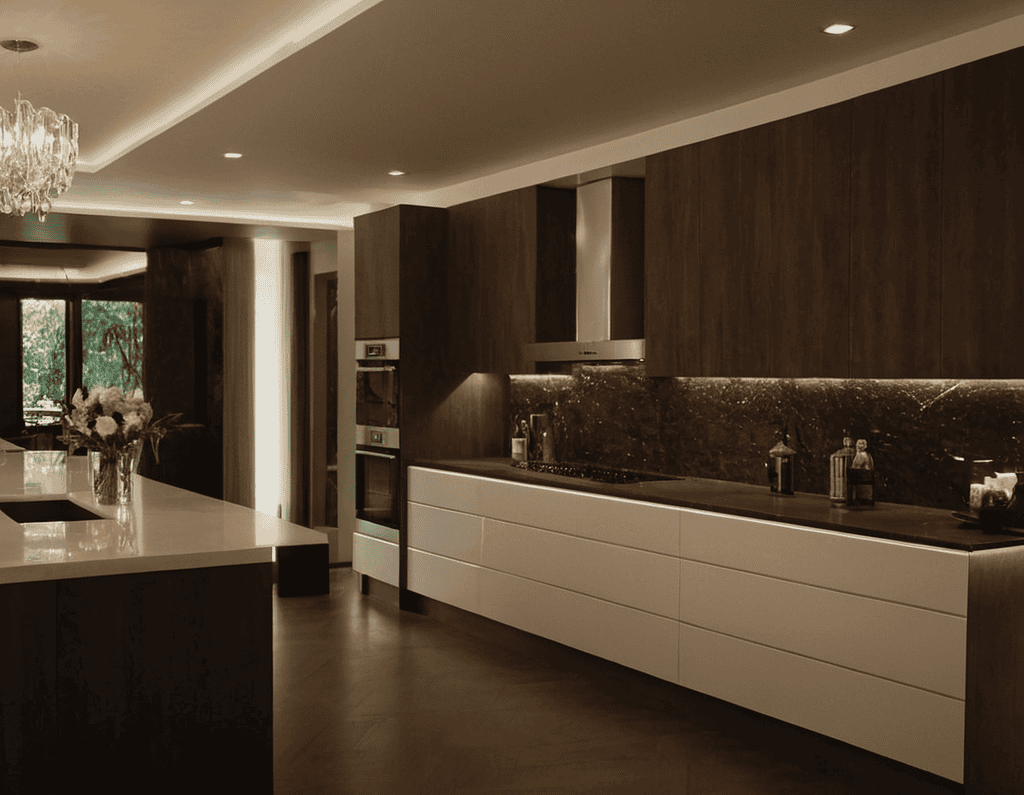
When planning a high-end kitchen in Houston, homeowners often find themselves comparing European kitchen cabinets with custom cabinetry.
At first, the choice can sound straightforward: European cabinets are manufactured overseas, while custom cabinets are built specifically for the home.
In reality, the distinction is more nuanced.
Premium European cabinetry can also be highly customized. Cabinet dimensions, finishes, interior organization, appliance integration, layouts, and architectural details can all be developed around an individual project.
So the more useful comparison is often between a precision-manufactured European cabinetry system and traditionally fabricated custom cabinetry.
Both can create an exceptional kitchen. The right choice depends on the architecture of the home, desired aesthetic, storage requirements, materials, construction approach, budget, and level of detail you want to achieve.
For Houston homeowners planning a major renovation or new custom residence, understanding these differences early can make the cabinetry selection process considerably easier.
What Are European Kitchen Cabinets?
European kitchen cabinetry generally refers to cabinet systems influenced by contemporary European manufacturing and design principles.
Although there is no single construction method shared by every European manufacturer, these kitchens are commonly associated with:
- Frameless cabinet construction
- Clean architectural lines
- Large drawers and wide cabinet modules
- Integrated appliances
- Concealed or minimal hardware
- Highly engineered hinges and drawer systems
- Efficient interior storage
- Full-height cabinetry and storage walls
- Contemporary finishes such as lacquer, wood veneer, glass, metal, and textured materials
The emphasis is often on creating a complete architectural composition rather than treating every cabinet as an individual piece of furniture.
A refrigerator, pantry, oven tower, coffee station, and storage area, for example, might all be incorporated into a single uninterrupted wall of cabinetry.
This ability to visually simplify a kitchen is one reason European kitchen cabinets are particularly well suited to modern and contemporary Houston homes.
What Are Custom Kitchen Cabinets?
Custom kitchen cabinetry is built or configured specifically around the requirements of an individual project rather than selected exclusively from predetermined stock sizes.
A custom cabinetmaker can typically adjust dimensions, door styles, moldings, finishes, wood species, architectural detailing, and cabinet configurations according to the design.
Traditional custom cabinetry is especially common in kitchens that incorporate:
- Inset cabinet doors
- Face-frame construction
- Painted wood cabinetry
- Decorative moldings
- Furniture-style islands
- Detailed paneling
- Traditional or transitional architecture
- Highly specific one-off millwork details
But custom cabinetry does not have to look traditional. A skilled cabinetmaker can also produce contemporary designs.
The word custom describes how the cabinetry is adapted to the project—not necessarily how it looks.
European and Custom Cabinetry Are Not Necessarily Opposites
This is one of the most important points for homeowners to understand.
A European cabinet system can also be custom.
Premium European manufacturers frequently offer extensive flexibility in dimensions, cabinet configurations, finishes, internal components, and architectural applications. Cabinetry can be planned around the room, appliances, ceiling heights, storage needs, and other project conditions.
That means a homeowner is not necessarily choosing between European and custom.
The real decision may be between two different methods of achieving customization:
- European manufactured cabinetry: custom planning within a highly engineered manufacturing system.
- Traditional bespoke cabinetry: cabinetry fabricated individually by a local or regional cabinet shop according to project-specific drawings and specifications.
Neither approach is automatically better. They simply offer different advantages.
European vs. Custom Kitchen Cabinets: Key Differences
| Feature | European Cabinetry | Traditional Custom Cabinetry |
|---|---|---|
| Construction | Often frameless and system-based | Can be framed, frameless, inset, or bespoke |
| Design Style | Modern, contemporary, architectural | Can range from traditional to contemporary |
| Manufacturing | Factory engineered and precision manufactured | Typically fabricated by an individual cabinet shop |
| Customization | Extensive within the manufacturer’s system | Potentially highly flexible for one-off details |
| Finishes | Lacquer, veneer, laminate, glass, metal, textured surfaces, and more | Wood, paint, stain, veneer, and specialty finishes depending on fabricator |
| Appliance Integration | Often a major design strength | Depends on cabinetmaker and design team |
| Interior Organization | Highly developed modular storage systems | Can be customized or sourced separately |
| Decorative Millwork | Typically minimal | Well suited to moldings and traditional details |
| Best Fit | Modern and contemporary luxury interiors | Traditional, transitional, or highly one-off designs |
Construction and Cabinet Structure
One of the most recognizable differences is cabinet construction.
Many European cabinets use frameless construction. Instead of attaching the door to a separate face frame on the front of the cabinet box, the hinges attach directly to the cabinet structure.
The result is a cleaner exterior with relatively narrow reveals between doors and drawers.
Frameless construction can also make the interior width of the cabinet more accessible because there is no face frame partially covering the opening.
Traditional custom cabinetry may use either framed or frameless construction.
Face-frame cabinetry remains especially popular in traditional and transitional American homes because it supports details such as inset doors, visible rails and stiles, and furniture-inspired proportions.
Neither construction method alone determines quality. Material selection, engineering, hardware, manufacturing accuracy, installation, and detailing all matter.
We explore these construction methods more closely in our guide to frameless vs. face-frame cabinets.
Design and Overall Appearance
For many homeowners, appearance is where the distinction becomes most obvious.
European cabinetry generally emphasizes:
- Long uninterrupted lines
- Consistent reveals
- Large-scale surfaces
- Minimal ornamentation
- Integrated storage
- Concealed appliances
- Architectural compositions
Rather than emphasizing each individual door, the cabinetry is often designed so an entire elevation reads as one composition.
Traditional custom cabinetry can place greater emphasis on the individual cabinet. Rails, stiles, molding profiles, inset doors, decorative end panels, furniture feet, and other details may all contribute to the final appearance.
The appropriate direction depends heavily on the home.
A new contemporary residence in Houston may benefit from full-height European cabinetry that visually becomes part of the architecture. A traditional River Oaks residence, by contrast, may call for custom inset cabinetry with proportions and detailing that relate more directly to the character of the home.
There is also considerable room between those two examples. A warm contemporary kitchen can combine clean European cabinet geometry with natural woods and tactile materials, creating a space that feels refined rather than stark.
Customization and Design Flexibility
Traditional custom cabinetry has an obvious advantage when a project requires unusual, completely one-off millwork.
A cabinetmaker can potentially fabricate a unique profile, molding, panel, furniture detail, or unusual dimension specifically for the project.
European systems approach customization differently.
Instead of fabricating every component independently, the designer works within an extensive engineered system of cabinet sizes, dimensional options, finishes, doors, internal accessories, hardware, and specialty components.
At the luxury level, that system can offer substantial flexibility.
For many contemporary kitchens, the limitations homeowners expect from the word “system” may be far less significant than they assume.
European cabinetry can be designed around:
- Very high ceilings
- Large kitchen islands
- Unusual room dimensions
- Panel-ready refrigeration
- Multiple ovens
- Wine storage
- Hidden pantries
- Appliance garages
- Pocket-door work areas
- Breakfast and coffee stations
- Integrated bars
- Open shelving
- Whole-home cabinetry
The best choice therefore depends less on whether customization is possible and more on what type of customization the project requires.
Materials and Finishes
The finish palette can be another meaningful difference.
Traditional custom cabinetry is particularly strong when the design calls for painted finishes, stained solid woods, traditional species, or hand-applied decorative treatments.
European cabinetry often offers a broader range of contemporary architectural surfaces.
Depending on the manufacturer, selections may include:
- Natural wood veneers
- Matte lacquer
- High-gloss lacquer
- Textured laminates
- Fenix and other advanced surfaces
- Glass
- Metallic finishes
- Stone-inspired surfaces
- Specialty textures
This can make European cabinetry particularly appealing when the kitchen is being designed as part of a larger material palette involving natural stone, architectural lighting, wood flooring, metal, glass, and contemporary furnishings.
The cabinet finish becomes an architectural surface rather than simply a door color.
Storage and Interior Organization
European kitchen design tends to place significant emphasis on what happens behind the cabinet doors.
Wide drawers can replace traditional lower cabinet doors. Tall pantry cabinets may contain internal pull-outs or drawers. Corner mechanisms can make otherwise difficult areas more accessible. Utensil organizers can be integrated directly into drawer systems.
A European kitchen may incorporate:
- Oversized deep drawers
- Internal drawers
- Cutlery and utensil inserts
- Pull-out pantry systems
- Waste and recycling centers
- Corner storage mechanisms
- Dish and plate organization
- Integrated LED lighting
- Hidden small-appliance storage
Traditional custom cabinetry can certainly incorporate sophisticated storage as well, but the components may be designed, fabricated, or sourced separately depending on the cabinetmaker.
For homeowners comparing cabinets, it is important to open drawers and doors rather than evaluating the kitchen from the exterior alone.
Appliance Integration
Appliance integration is one of the areas where European kitchen systems are particularly at home.
Panel-ready refrigerators, freezers, dishwashers, wine columns, and other appliances can be incorporated into the cabinetry so they become part of the overall composition.
Rather than having a refrigerator interrupt a wall of cabinetry, for example, matching panels can allow the appliance to visually disappear.
Ovens and coffee systems can also be aligned precisely within tall cabinet walls.
In more elaborate kitchens, pocket doors may conceal:
- Small appliances
- Coffee stations
- Breakfast preparation areas
- Secondary sinks
- Bar equipment
- Additional countertop workspace
When the doors are closed, the kitchen returns to a clean architectural composition.
Traditional custom cabinets can also integrate appliances successfully, but execution depends greatly on the designer, cabinetmaker, appliance specifications, and installation team.
Regardless of cabinetry type, luxury appliances should be identified early in the kitchen design process.
Precision, Hardware, and Quality Control
One advantage of premium factory-manufactured cabinetry is consistency.
Cabinet components are produced within a controlled manufacturing environment using established materials, machinery, hardware systems, and finishing processes.
That can contribute to consistent dimensions, repeatable finish quality, precise reveals, and predictable hardware performance across a large kitchen.
Traditional custom cabinetry is more dependent on the capabilities of the individual fabrication shop.
An exceptional custom cabinetmaker can produce extraordinary work. However, the phrase “custom cabinetry” by itself does not tell you what level of material quality, hardware, finishing, or precision you will receive.
The same is true of European cabinetry. A cabinet’s country of origin is not automatically a guarantee of quality.
In either category, homeowners should evaluate the actual manufacturer or fabricator, construction, materials, hardware, warranty, installation, and service rather than relying solely on labels.
Installation and Site Conditions
Both European and traditional custom cabinetry require skilled installation.
Precision European cabinetry can be particularly dependent on accurate site conditions because the design may use long horizontal lines, small reveals, full-height panels, and closely coordinated appliance openings.
In a room where a wall, ceiling, or floor is out of level, small inconsistencies can become visually obvious.
This matters in Houston renovations, where existing houses may have conditions that differ considerably from what appears on the original architectural drawings.
Detailed field measurements, site verification, fillers, scribes, panels, and installation planning all become part of achieving the finished result.
For new construction, early coordination can make the process even smoother.
Cabinet dimensions can inform framing, electrical locations, plumbing, ventilation, appliance placement, lighting, ceiling details, and flooring transitions before those elements are finalized.
European vs. Custom Cabinets: Which Costs More?
There is no universal answer.
A high-end European kitchen can cost more than some custom cabinetry and less than others.
Likewise, traditional bespoke cabinetry can range from relatively straightforward painted millwork to extremely expensive hand-finished furniture-grade cabinetry.
Major factors influencing price include:
- Overall kitchen size
- Number and type of cabinets
- Finish selection
- Interior accessories
- Hardware
- Appliance integration
- Specialty mechanisms
- Decorative detailing
- Freight
- Installation complexity
- Design and project coordination
Comparing cabinetry based only on a price per linear foot is therefore rarely sufficient for a luxury project.
A better approach is to compare the complete scope of each proposal.
For a more detailed discussion of cabinetry budgets, read How Much Do Luxury European Kitchen Cabinets Cost in Houston?
Which Is Better for a Houston Custom Home?
For a new custom home, European cabinetry can be particularly compelling when the architecture is modern, contemporary, or transitional with clean detailing.
Planning the cabinetry while the house is still being designed allows the kitchen to become part of the architecture rather than an element added after the room has already been defined.
Full-height storage can be coordinated with ceiling conditions. Appliance walls can be designed around the exact equipment package. Islands can align with lighting and structural elements. Hidden pantries or secondary kitchens can be integrated into the plan.
The same design language can also continue into other areas of the residence, including:
- Bathrooms
- Walk-in closets
- Home bars
- Wine rooms
- Home offices
- Media rooms
- Living spaces
- Laundry and utility rooms
Traditional custom cabinetry may be the stronger choice when the architecture calls for highly specific millwork, historically influenced detailing, extensive molding, inset construction, or furniture-inspired features.
In some custom homes, the best solution may even involve both approaches in different rooms.
Which Is Better for a Houston Renovation?
Either approach can work successfully in a renovation.
The key question is how much of the existing architecture will remain.
If the renovation is transforming a traditional kitchen into a cleaner, contemporary interior, European cabinetry can dramatically change the character of the room.
Full-height cabinets can simplify visually busy elevations, integrated appliances can reduce visual clutter, and large drawers can make storage more efficient.
If the goal is to preserve or restore the architectural language of an older home, traditional custom cabinetry may provide greater freedom to reproduce existing profiles, molding details, paneling, and furniture-style features.
The decision should respond to the architecture rather than simply following a cabinetry trend.
When European Cabinetry May Be the Better Choice
European cabinetry may be particularly well suited to your Houston home if you want:
- A modern or contemporary aesthetic
- Clean, consistent cabinet reveals
- A frameless cabinet system
- Large drawers and efficient interior storage
- Highly integrated appliances
- Full-height cabinetry
- Minimal visible hardware
- Contemporary architectural finishes
- Factory-controlled manufacturing
- A consistent cabinetry language throughout the home
European cabinetry can also be an excellent fit for homeowners who value visual simplicity but want substantial functionality hidden behind the cabinetry.
When Traditional Custom Cabinetry May Be the Better Choice
Traditional bespoke cabinetry may be the stronger option when the project requires:
- Inset cabinet construction
- Traditional face-frame detailing
- Highly specific molding profiles
- Historic architectural references
- Furniture-style cabinetry
- Unusual one-off millwork
- Hand-applied specialty finishes
- Complex decorative wood detailing
It can also make sense when matching existing architectural millwork is a major requirement of the project.
How to Compare European and Custom Cabinetry Proposals
If you are deciding between European and custom kitchen cabinets, avoid comparing only the total numbers at the bottom of two proposals.
First determine whether the proposals include the same scope.
Compare:
- Cabinet construction
- Cabinet interior material
- Door and drawer finishes
- Drawer systems
- Hinges
- Interior accessories
- Appliance panels
- Finished side panels
- Specialty mechanisms
- Integrated lighting
- Design services
- Shop drawings or design documentation
- Freight and delivery
- Installation
- Site measurement
- Project coordination
- Warranty and post-installation service
A lower cabinetry price may represent a genuinely better value—or it may simply exclude components included elsewhere.
Understanding exactly what you are buying is more useful than comparing cabinetry by category alone.
Why You Should Compare Cabinetry in Person
Many of the most important differences between cabinetry systems are difficult to judge from photographs.
A rendering cannot fully communicate the texture of a finish, the depth of a wood veneer, the movement of a drawer, the sound of a closing mechanism, the interior construction, or how different materials look next to one another under real lighting.
This becomes especially important when selecting luxury kitchen cabinets in Houston, where relatively subtle details can have a large effect on the finished room.
At the Foscari Interiors Houston showroom, homeowners, designers, architects, and builders can compare European cabinetry, finishes, materials, storage solutions, hardware, and architectural applications in person.
Bringing architectural plans, appliance selections, inspiration images, or even an early floor plan can make the conversation more productive.
Frequently Asked Questions About European vs. Custom Kitchen Cabinets
Are European kitchen cabinets custom?
They can be. Premium European cabinetry systems often allow significant customization in dimensions, layouts, finishes, storage, hardware, and appliance integration. The cabinetry is manufactured within an engineered system, but the kitchen itself can still be designed specifically for the home.
Are European cabinets better than custom cabinets?
Neither category is automatically better. European cabinetry may offer advantages in precision manufacturing, contemporary finishes, frameless construction, interior systems, and appliance integration. Traditional custom cabinetry may provide greater freedom for one-off decorative millwork, inset construction, and historically influenced detailing.
The better option is the one that fits the architecture and requirements of the project.
What is the main difference between European and American-style cabinets?
European-style kitchens are commonly associated with frameless construction, clean reveals, integrated appliances, large drawers, and an architectural approach to cabinetry. American cabinetry includes a much wider range of construction methods and styles, including face-frame, inset, traditional, transitional, and frameless cabinets.
Are European cabinets always frameless?
Frameless construction is strongly associated with European cabinetry, but it is better to evaluate the specifications of the individual manufacturer rather than assume every product is constructed identically.
Are custom cabinets always made from solid wood?
No. Custom cabinetry can be manufactured from many different materials, including plywood, engineered panels, MDF, veneers, solid wood, laminates, and combinations of materials. Solid wood is not automatically an indication that a cabinet is better constructed.
Which cabinets are better for a modern kitchen?
European cabinetry is often particularly well suited to modern kitchens because frameless construction, integrated appliances, wide drawers, clean proportions, and contemporary finishes naturally support an architectural aesthetic.
Which cabinets are best for a traditional Houston home?
If the goal is a traditional kitchen with inset doors, detailed moldings, furniture-style cabinetry, or historically influenced millwork, traditional custom cabinetry may offer more design freedom.
However, contemporary European cabinetry can also create an intentional contrast inside a traditional Houston residence when the renovation is designed that way.
Do European cabinets provide more storage?
Frameless cabinets can provide efficient access to interior cabinet space because there is no face frame covering part of the opening. European kitchen systems also frequently emphasize large drawers, tall storage, internal organization, and specialized accessories.
The total storage capacity still depends on the individual kitchen layout.
Are European cabinets more expensive?
Not necessarily. Premium European cabinetry and high-quality bespoke cabinetry can both represent substantial investments. Final pricing depends on the manufacturer or fabricator, materials, finishes, hardware, accessories, design complexity, appliance integration, installation, and overall project scope.
Can European cabinets work in a transitional home?
Yes. European cabinetry does not have to feel ultra-minimal or cold. Natural woods, warm neutrals, textured finishes, stone, metals, and carefully selected details can create a softer contemporary or transitional kitchen while retaining the functionality and precision associated with European cabinet systems.
Can I use European cabinetry throughout the entire home?
Yes. The same cabinetry approach can extend into bathrooms, closets, bars, home offices, living rooms, laundry rooms, media spaces, and other areas. Planning several rooms together can create greater continuity in materials and architectural detailing.
Choosing the Right Cabinetry for Your Houston Home
The decision between European and traditional custom kitchen cabinets should begin with the home—not with the label on the cabinet.
Consider the architecture, desired aesthetic, appliances, storage requirements, materials, construction schedule, and level of customization the project requires.
If you prefer clean lines, integrated appliances, sophisticated storage, contemporary finishes, and a more architectural approach to the kitchen, European cabinetry may be the stronger fit.
If your design depends on inset doors, traditional detailing, extensive molding, furniture-style millwork, or highly specific one-off elements, traditional custom fabrication may make more sense.
And for many luxury projects, the answer is not simply one or the other.
The goal is to choose the cabinetry system that supports the architecture and creates the best finished space.
Foscari Interiors specializes in European kitchen cabinets in Houston and custom kitchen cabinetry for luxury renovations and new residential projects.
Visit the Foscari Interiors Houston showroom to compare cabinetry, materials, finishes, storage systems, and design possibilities in person.
Foscari Interiors
2226 Richmond Ave.
Houston, TX 77098
Schedule a consultation to discuss which cabinetry approach is right for your home.