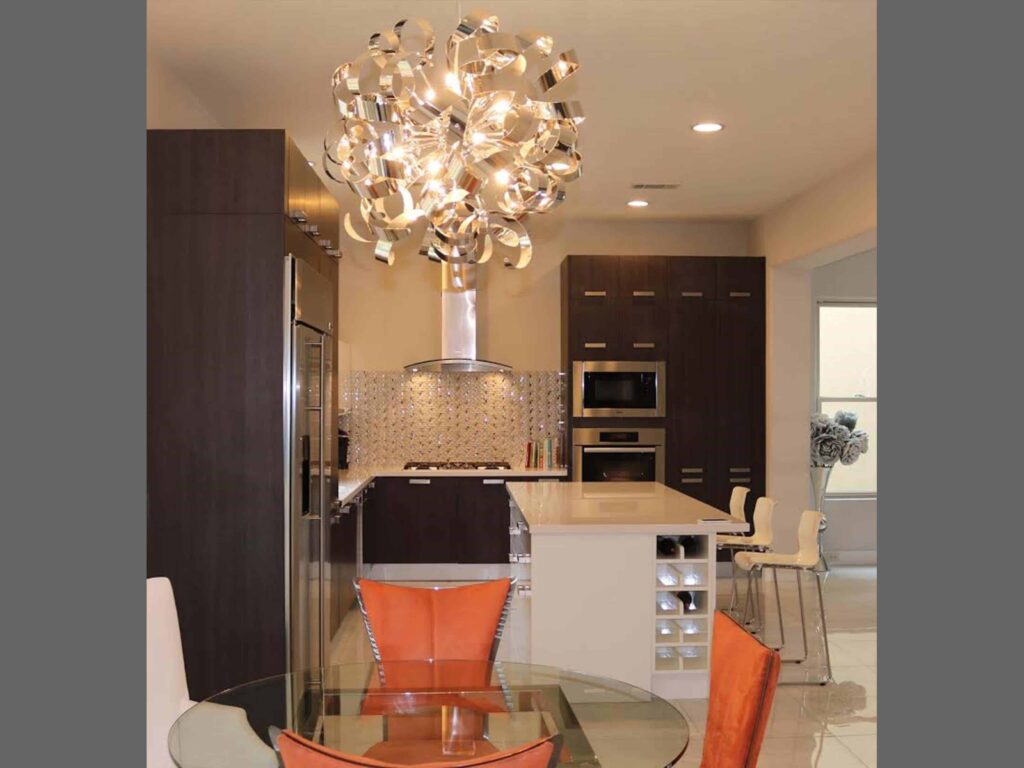
The best way to incorporate lighting into a kitchen with modern cabinetry from Foscari Interiors is to plan the cabinetry and lighting as one complete design. Rather than treating light fixtures as a finishing touch, lighting should be integrated into cabinet interiors, work surfaces, architectural details, and the overall layout from the beginning.
Modern cabinetry is defined by clean lines, precise proportions, and visually uninterrupted surfaces. Thoughtful lighting enhances these qualities by revealing material texture, improving task visibility, and creating atmosphere without introducing unnecessary visual clutter.
A successful modern kitchen typically combines several layers of light. Ambient lighting establishes the overall brightness of the room, task lighting supports cooking and preparation, accent lighting highlights cabinetry and materials, and decorative lighting adds a carefully selected focal point.
Plan Lighting and Cabinetry Together
Lighting decisions should begin during the cabinetry-design process, not after the cabinets have been ordered or installed.
Early coordination allows lighting channels, electrical connections, drivers, switches, and concealed wiring to be integrated into the design. It also helps determine where work surfaces, open shelves, glass cabinets, appliance zones, and decorative features will require illumination.
With modern cabinetry, even small details matter. A visible wire, uneven light strip, or poorly positioned fixture can interrupt the clean appearance of the kitchen.
Planning cabinetry and lighting together allows Foscari Interiors to coordinate:
- Cabinet dimensions and lighting channels
- Electrical and switching locations
- Appliance placement
- Open shelving and display areas
- Countertop illumination
- Decorative fixtures over islands and tables
- Natural light from windows and doors
This integrated approach produces a more refined result and reduces the need for visible modifications later.
Use a Layered Lighting Approach
One fixture type is rarely enough for a well-designed modern kitchen.
The most successful kitchens use several layers of light, each serving a different purpose.
Ambient Lighting
Ambient lighting provides the room’s overall illumination. Recessed ceiling fixtures, architectural ceiling details, linear lighting, and indirect light can all contribute to an even foundation.
Task Lighting
Task lighting supports food preparation, cooking, cleaning, and other detailed activities. It is typically positioned above countertops, sinks, cooktops, and workstations.
Accent Lighting
Accent lighting reveals the depth, texture, and craftsmanship of the cabinetry. It may be placed inside glass cabinets, beneath floating shelves, within recessed niches, or along architectural cabinet panels.
Decorative Lighting
Decorative fixtures, such as pendants or sculptural linear lights, can create a focal point above a kitchen island or dining area.
When these layers are balanced, the kitchen can transition smoothly from bright daytime functionality to a softer evening atmosphere.
Add Under-Cabinet Task Lighting
Under-cabinet lighting is one of the most practical additions to a kitchen with modern cabinetry.
Ceiling lights can cast shadows when a person stands at the countertop. Integrated lighting beneath upper cabinets places illumination directly on the work surface, making preparation and cleaning easier.
Linear lighting generally complements modern cabinets better than a series of visible individual fixtures. A continuous source creates more even illumination and reinforces the long horizontal lines of the cabinetry.
The light source should be positioned so it illuminates the countertop without creating glare on polished stone, glass, or reflective backsplashes.
Concealed channels and diffusers can help soften the light and prevent individual points of illumination from being visible.
Under-cabinet lighting may also be coordinated with wall switches, dimmers, or smart controls so it can serve as both task lighting and low-level evening light.
Illuminate Cabinet Interiors
Interior cabinet lighting can improve visibility while adding a refined detail to modern cabinetry.
Tall pantry units, glass-fronted cabinets, appliance garages, and concealed beverage stations can all benefit from integrated illumination.
Lighting may activate automatically when a door is opened, allowing homeowners to find items without relying on the room’s general lighting.
In display cabinetry, light can emphasize glassware, ceramics, art objects, or other selected pieces. The placement should be subtle enough that the objects, rather than the fixture itself, remain the focus.
Interior lighting is especially useful in deep or dark-finished cabinetry, where shelves and stored items may otherwise be difficult to see.
For the cleanest appearance, wiring, switches, and light channels should be incorporated into the cabinet design before fabrication.
Incorporate Lighting Into Shelves and Niches
Open shelves and recessed niches provide an opportunity to introduce warmth and dimension into a modern kitchen.
Integrated lighting can be concealed beneath a shelf, recessed into the rear panel, or incorporated along the sides of a niche. The most appropriate placement depends on the material, shelf depth, and objects being displayed.
A softly illuminated wood shelf can warm matte lacquer cabinetry. Light behind a glass shelf can create a more reflective, luminous effect. Stone or metal niches can become sculptural features when the light grazes the surface and reveals its texture.
These details are especially effective in modern cabinetry because they add visual interest without relying on decorative molding or prominent hardware.
The goal is to create depth and atmosphere while preserving the simplicity of the cabinetry.
Consider Toe-Kick and Base Lighting
Lighting along the base of modern cabinets can create a subtle floating effect.
Toe-kick lighting is typically used as low-level accent illumination rather than the main source of light. It can emphasize the horizontal geometry of the cabinetry and improve visibility when moving through the kitchen at night.
This approach works particularly well beneath long cabinet runs, floating vanities, islands, and furniture-like storage elements.
Restraint is important. The lighting should feel soft and architectural rather than overly bright or decorative.
A continuous, concealed source usually produces the most refined result. Dimming controls can allow the light level to be adjusted for evening use.
When coordinated with other integrated lighting, toe-kick illumination can help the cabinetry appear lighter while adding depth to the room.
Choose Lighting for the Kitchen Island
A kitchen island is often the visual and functional center of a modern kitchen, so its lighting requires careful consideration.
Pendant lights can create rhythm and intimacy, while a single linear fixture can reinforce the island’s horizontal form. In a highly minimal kitchen, recessed or architectural lighting may be preferable when the cabinetry and stone are intended to remain the primary focus.
The scale of the fixture should relate to the length and width of the island, as well as the ceiling height and surrounding architecture.
Lighting should also respond to the island’s functions. An island used primarily for preparation may require brighter, more evenly distributed task lighting. An island designed for dining and entertaining may benefit from softer, dimmable illumination.
The fixture should not obstruct views across an open-concept room or compete with the cabinetry’s clean lines.
In many luxury modern kitchens, the strongest result comes from selecting fewer, better-proportioned fixtures rather than filling the ceiling with multiple decorative elements.
Match Lighting to Cabinet Finishes
Cabinet materials and finishes influence how light is reflected, absorbed, and perceived.
Natural Wood Cabinetry
Warm lighting can emphasize wood grain and bring out the natural variation in oak, walnut, and other veneers. Grazing light may be used to reveal texture, but it should be tested carefully to avoid exaggerating uneven reflections.
Matte Cabinetry
Matte finishes absorb more light and produce softer reflections. They often benefit from layered illumination that reveals their color without creating harsh hotspots.
Glossy Cabinetry
Glossy and highly reflective finishes can bounce light around the room, but they may also reveal glare or individual light sources. Diffused lighting and careful fixture placement are especially important.
Dark Cabinets
Matte black, charcoal, and dark wood cabinetry can create depth and drama. These finishes generally benefit from additional task lighting, illuminated interiors, and warm accent lighting to prevent the room from feeling visually heavy.
Metallic and Textured Finishes
Directional or grazing light can reveal the character of metal, stone-effect, and textured cabinet fronts. The angle should be carefully controlled so the surface appears dimensional rather than overly reflective.
Viewing cabinet and countertop samples under the proposed lighting is one of the most reliable ways to evaluate the complete palette.
Select the Right Color Temperature
Color temperature affects how cabinet finishes, stone, wood, paint, and metal appear in the kitchen.
Warmer light generally creates a more inviting residential atmosphere and can complement natural wood, warm neutrals, brass, bronze, and softly veined stone.
Cooler light may emphasize white, gray, stainless steel, and crisp architectural finishes, but it can feel clinical when it is too blue or intense.
Consistency is important. Mixing noticeably different color temperatures within the same sightline can make cabinet finishes appear uneven or mismatched.
Decorative fixtures, recessed lighting, under-cabinet illumination, and interior cabinet lights should therefore be coordinated as part of the same visual system.
The appropriate selection depends on the cabinet finish, amount of natural light, countertop material, flooring, and desired atmosphere.
Testing full-size samples in the actual room can help confirm how the palette will look during both daytime and evening conditions.
Keep Lighting Sources Visually Discreet
Modern cabinetry benefits from lighting that is experienced more than it is seen.
Visible bulbs, exposed wiring, uneven strips, and poorly placed transformers can interrupt the cabinetry’s clean appearance.
Recessed channels, diffusers, concealed drivers, and integrated switches help preserve a refined result. The light should appear to emerge naturally from the cabinetry or architecture.
This does not mean every fixture must disappear. A pendant or chandelier may remain visible when it has been selected as a deliberate focal point.
The distinction is between purposeful decorative lighting and technical lighting that should remain unobtrusive.
Concealing the technical components allows the materials, proportions, and craftsmanship of the Foscari cabinetry to remain visually prominent.
Add Smart Controls and Dimming
A modern kitchen should be able to adapt to different activities and times of day.
Dimming controls allow task lighting to remain bright during preparation and cleaning, then soften for dining or entertaining.
Separate lighting zones may be created for:
- General ceiling lighting
- Under-cabinet task lighting
- Island pendants or linear fixtures
- Interior cabinet lighting
- Display shelves and niches
- Toe-kick or low-level evening lighting
Smart lighting systems can store preset scenes for cooking, entertaining, nighttime navigation, and cleaning.
Motion or door sensors may also be used inside pantries, appliance cabinets, and other concealed storage areas.
These features support the practical sophistication of modern cabinetry by making the kitchen easier and more intuitive to use.
Avoid Common Kitchen-Lighting Mistakes
Even beautifully designed cabinetry can be diminished by poorly planned lighting.
Common mistakes include:
- Relying on ceiling lighting alone
- Placing recessed fixtures behind the person using the countertop
- Using visible, uneven light strips
- Selecting inconsistent color temperatures
- Creating excessive glare on glossy cabinetry or polished stone
- Choosing decorative fixtures that are too small or too large
- Failing to include dimming controls
- Adding cabinet lighting after fabrication is complete
- Overlighting display shelves and decorative niches
- Ignoring how natural light changes during the day
Another common mistake is using the same amount of light everywhere. A kitchen benefits from variation. Work zones require clarity, while display areas and evening settings may call for softer illumination.
Careful planning allows each lighting layer to perform its role without overwhelming the cabinetry or the room.
Designing Cabinetry and Lighting With Foscari
Incorporating lighting into a kitchen with modern cabinetry from Foscari begins with a coordinated design process.
Cabinet layout, materials, appliance locations, work surfaces, decorative fixtures, natural light, and integrated illumination should be considered together. This ensures that the lighting supports both the function of the kitchen and the architectural character of the cabinetry.
The strongest results usually combine concealed task lighting, carefully selected decorative fixtures, illuminated storage, and flexible controls. Each layer should have a clear purpose and contribute to the atmosphere of the room.
At Foscari Interiors, modern cabinetry can be designed with lighting integration in mind from the earliest planning stages. Channels, wiring locations, interior illumination, display niches, and appliance zones can be coordinated to preserve the cabinetry’s precise, streamlined appearance.
The result is a kitchen that remains bright and practical when work is being done, then becomes softer and more atmospheric for dining, entertaining, and everyday living.
Contact Foscari Interiors to begin planning modern kitchen cabinetry and integrated lighting tailored to your home.