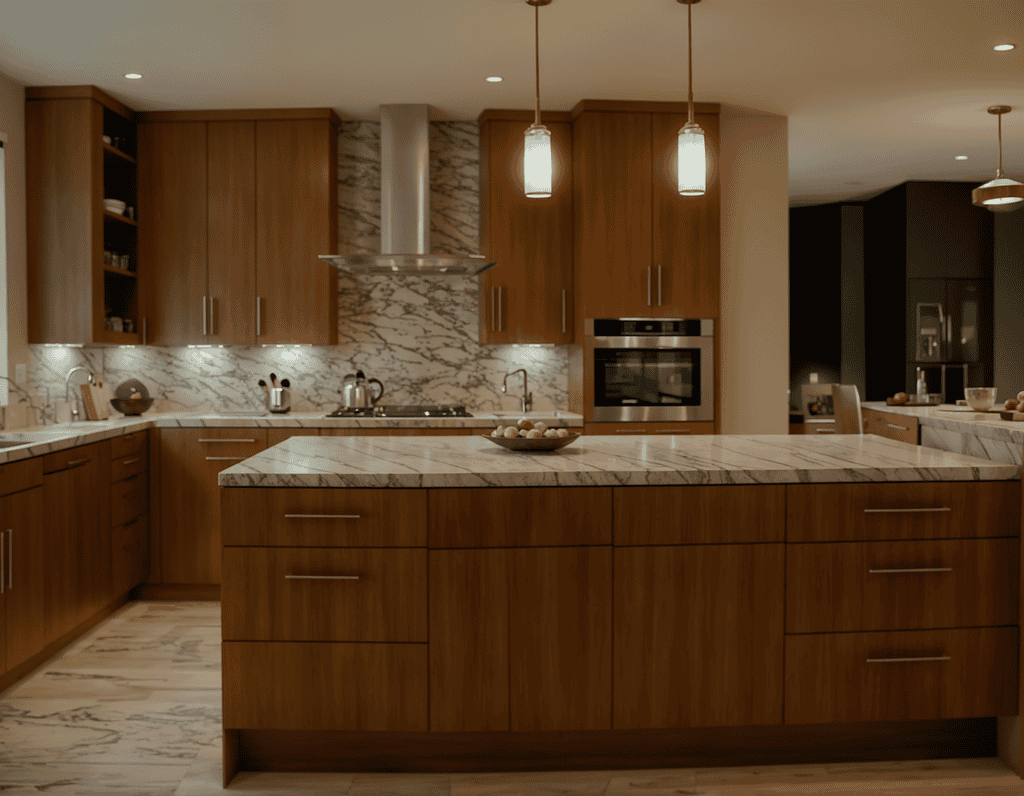
Modern kitchens are becoming less about what homeowners can see and more about what they can’t.
For decades, kitchens were designed to showcase everything from professional-grade appliances to decorative range hoods and open shelving displays. Today, however, designers are moving in a different direction. Across contemporary homes, kitchens are becoming cleaner, quieter, and more integrated into the overall architecture of the space.
The shift is being driven by a growing desire for simplicity. Homeowners want kitchens that feel organized, sophisticated, and effortless—spaces that support everyday life without creating visual clutter. As a result, designers are embracing a seamless approach that conceals appliances, storage, and work zones behind beautifully crafted cabinetry.
From integrated refrigeration and hidden pantries to appliance garages and flush cabinet fronts, modern kitchens are increasingly designed to hide more than ever before.
A Shift Toward Seamless Living
The popularity of open-concept floor plans has fundamentally changed kitchen design.
In many homes, the kitchen is no longer a separate room. It serves as part of a larger living environment that includes dining areas, family rooms, and entertaining spaces. Because these areas are visually connected, homeowners are looking for ways to create greater harmony throughout the home.
A seamless kitchen helps achieve that goal.
Rather than drawing attention to appliances, storage areas, and everyday clutter, the kitchen blends naturally into the surrounding architecture. Cabinetry becomes part of the design language of the home, creating a more cohesive and sophisticated appearance.
This approach feels especially relevant as homeowners continue to prioritize calm, intentional living environments.
Flush Cabinetry Creates a Clean Architectural Foundation
One of the most important elements behind this design movement is flush cabinetry.
Unlike traditional cabinet styles that feature decorative frames, visible hardware, and prominent detailing, flush cabinetry emphasizes smooth surfaces and clean lines. Doors and drawers align precisely to create a unified appearance across the entire kitchen.
This minimalist aesthetic has long been associated with European cabinet design, where precision craftsmanship and functional simplicity are central design principles.
The result is a kitchen that feels more architectural than decorative—an environment defined by balance, proportion, and material quality rather than ornamentation.
Integrated Refrigeration Keeps Appliances Out of Sight
Large appliances often dominate the visual landscape of a kitchen.
Modern designers are increasingly addressing this by incorporating integrated refrigeration systems concealed behind custom cabinet panels. Instead of interrupting the design with stainless steel surfaces, refrigerators blend seamlessly into the surrounding cabinetry.
This creates continuity throughout the space while allowing natural materials, lighting, and architectural details to become the focal points.
Integrated refrigeration has become one of the most requested features in modern kitchen design because it supports the clean, uninterrupted appearance homeowners are seeking.
Appliance Garages Help Eliminate Countertop Clutter
Coffee makers, toasters, mixers, and charging stations are essential parts of daily life, but they can quickly make even the most beautiful kitchen feel crowded.
Appliance garages offer an elegant solution.
Designed to conceal frequently used appliances behind retractable doors, lift-up panels, or sliding systems, these storage areas keep countertops clear without sacrificing convenience. Everything remains easily accessible while staying neatly hidden when not in use.
For homeowners who value both organization and aesthetics, appliance garages have become a practical and highly desirable feature.
Hidden Pantries Are Redefining Storage
Storage remains one of the most important considerations in any kitchen renovation, but the way storage is integrated has evolved significantly.
Today’s designers are incorporating pantries directly into cabinetry walls, often using doors that are virtually indistinguishable from surrounding cabinets. These concealed entries create a seamless appearance while providing generous storage space behind the scenes.
Hidden pantries allow homeowners to store food, small appliances, serving pieces, and household essentials without disrupting the visual flow of the kitchen.
The concept reflects a broader design philosophy: maximize functionality while minimizing visual distraction.
Pocket Doors Add Flexibility to Modern Kitchens
Pocket-door systems are becoming increasingly popular in contemporary kitchen design because they allow entire work areas to disappear when not in use.
Coffee stations, beverage centers, prep areas, and even small home office spaces can be concealed behind doors that slide neatly out of view.
When open, these areas function normally. When closed, they become part of the surrounding cabinetry, maintaining the clean and organized appearance that defines modern design.
This flexibility is particularly valuable in homes where kitchens serve multiple purposes throughout the day.
European Design Continues to Shape Modern Kitchens
Many of the features driving this movement toward seamless design have their roots in European kitchens.
For decades, European cabinet manufacturers have emphasized efficiency, intelligent storage, and minimalist aesthetics. Frameless cabinetry, integrated appliances, handleless door systems, and floor-to-ceiling storage solutions have long been hallmarks of contemporary European design.
As homeowners increasingly seek kitchens that feel timeless rather than trend-driven, these principles continue to gain popularity.
The focus is no longer on adding more visual elements. Instead, it is about refining what remains visible and thoughtfully concealing everything else.
The Future of Kitchen Design Is Simplicity
The growing popularity of concealed storage and integrated design reflects a larger shift in how homeowners think about their living spaces.
Modern kitchens are expected to do more than function efficiently. They must support entertaining, family life, remote work, and everyday routines while maintaining a sense of order and sophistication.
By concealing appliances, integrating storage, and creating uninterrupted visual lines, designers are helping homeowners achieve that balance.
The most desirable kitchens today aren’t necessarily the ones with the most features on display. They’re the ones where every detail feels intentional, every surface feels calm, and every function is thoughtfully integrated into the overall design.
In the years ahead, seamless kitchen design will continue to shape modern homes, proving that sometimes the most impactful design choices are the ones you hardly notice at all.