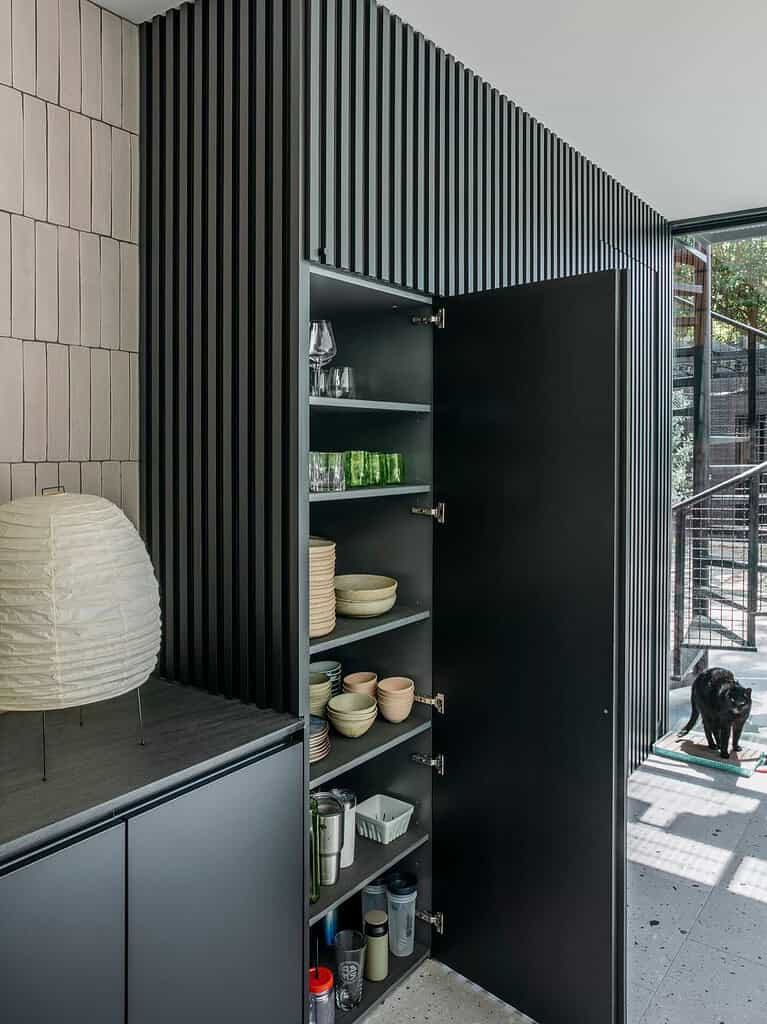
The rise of open-concept living has completely transformed the role of the kitchen in modern homes. What was once treated as a separate functional room has evolved into one of the most visible and architecturally important spaces in the home. Today, kitchens are no longer hidden behind walls or isolated from daily life — they are fully integrated into how homeowners gather, entertain, and live.
This shift has fundamentally changed kitchen design.
At Foscari Interiors, modern kitchens are designed as part of the overall architectural experience of the home rather than standalone spaces. Cabinetry, materials, lighting, and layout must now work cohesively with adjacent living and dining areas, especially in open-concept homes where every design decision remains constantly visible.
As a result, modern kitchen design has become cleaner, more refined, and far more intentional.
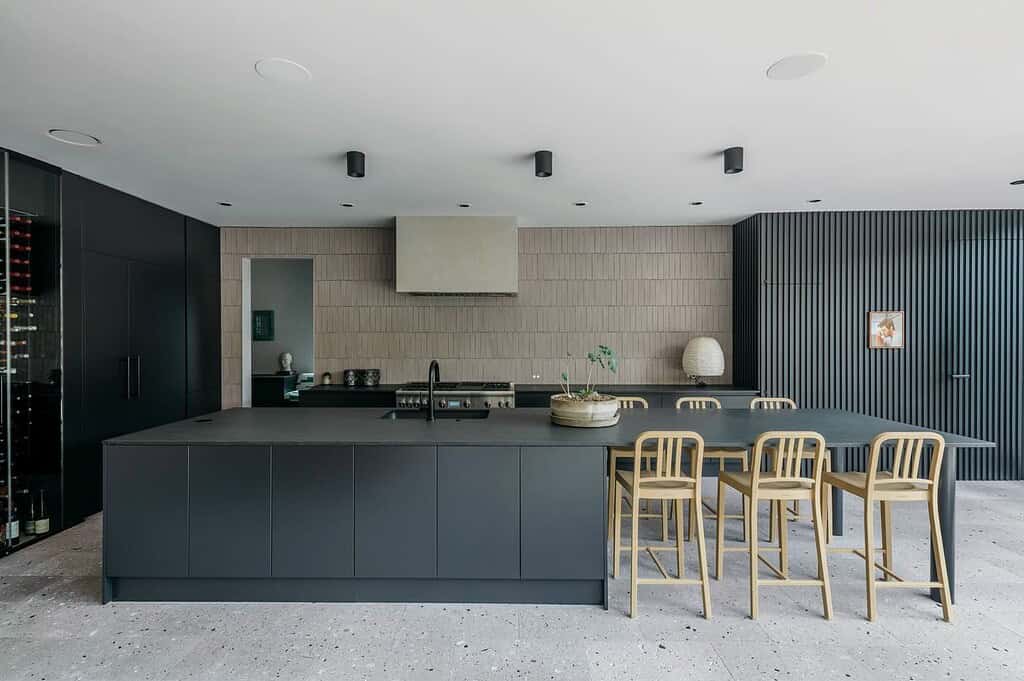
Open-Concept Living Changed Kitchen Priorities
Traditional kitchens were designed primarily around utility. Because they were separated from the rest of the home, functionality often took priority over visual cohesion.
Open-concept homes changed that completely.
When kitchens became fully exposed to surrounding living spaces, homeowners no longer wanted visually heavy cabinetry, excessive ornamentation, or cluttered layouts dominating the architecture of the home.
Instead, modern kitchens needed to feel:
- Seamless
- Architectural
- Calm
- Minimal
- Integrated into the overall environment
This is one of the biggest reasons contemporary European-inspired cabinetry became so influential in luxury home design.
Minimalist cabinetry systems naturally support the openness and visual continuity that open-concept living requires.
Modern Kitchens Are Now Part of the Living Space
One of the defining characteristics of contemporary homes is that kitchens now function as social environments rather than isolated work zones.
Cooking, entertaining, dining, and relaxing all overlap within the same architectural footprint.
Because of this, the kitchen must visually relate to:
- Living rooms
- Dining areas
- Outdoor spaces
- Lighting design
- Furniture selections
- Overall material palettes
At Foscari Interiors, modern kitchen design is approached holistically. The kitchen should feel connected to the broader atmosphere of the home rather than standing apart from it.
This has led to a major shift toward kitchens that feel quieter visually and more architectural in composition.
Why Minimalist Cabinetry Works Best in Open-Concept Homes
Modern cabinetry plays a central role in creating successful open-concept kitchens because cabinetry occupies so much visual space within the home.
Traditional raised-panel doors, ornate detailing, and decorative moldings can quickly feel overwhelming in open layouts. In contrast, modern flat-panel cabinetry creates visual simplicity and allows the surrounding architecture to breathe.
Contemporary kitchens often feature:
- Frameless cabinetry
- Handleless systems
- Integrated appliances
- Matte finishes
- Continuous material palettes
- Floor-to-ceiling cabinet walls
These elements help reduce visual clutter while reinforcing a sense of architectural cohesion throughout the home.
At Foscari Interiors, cabinetry is often designed to visually recede into the environment rather than dominate it. The goal is to create kitchens that feel integrated, effortless, and timeless.
European Design Influenced the Open-Concept Kitchen
The evolution of open-concept kitchens is deeply connected to European design philosophy.
Italian and German kitchen manufacturers pioneered many of the minimalist cabinetry systems that now define contemporary luxury interiors. Their approach focused on:
- Precision
- Simplicity
- Hidden functionality
- Seamless integration
- Architectural restraint
This philosophy aligned perfectly with the growing popularity of open floor plans.
European cabinetry helped transform kitchens from purely functional spaces into architectural features that complement the entire home.
Integrated appliances, flush cabinetry surfaces, and concealed storage systems all contribute to a cleaner and more unified aesthetic — something essential in homes where kitchens remain constantly visible.
Natural Light and Spatial Flow
Open-concept homes often emphasize natural light, expansive glazing, and uninterrupted sightlines. Modern kitchen design must support these architectural qualities rather than compete with them.
This is why contemporary kitchens increasingly favor:
- Low visual contrast
- Soft neutral palettes
- Matte finishes
- Warm wood textures
- Minimal upper cabinetry
- Streamlined islands
The goal is to maintain openness and fluidity throughout the home.
At Foscari Interiors, kitchens are designed to enhance spatial flow rather than interrupt it. Cabinetry, lighting, and material transitions are carefully coordinated to create continuity between rooms.
This creates homes that feel larger, calmer, and more cohesive overall.
The Rise of the “Quiet Kitchen”
One of the most important shifts in modern kitchen design is the movement toward what many designers now describe as the “quiet kitchen.”
Rather than acting as loud focal points filled with decorative detail, contemporary kitchens increasingly emphasize restraint and simplicity.
This aesthetic is especially important in open-concept homes where visual balance matters more than ever.
Quiet kitchens prioritize:
- Hidden functionality
- Clean architectural lines
- Integrated storage
- Minimal hardware
- Understated materials
- Calm material palettes
The sophistication comes not from excess, but from precision and intentionality.
At Foscari Interiors, this approach reflects a broader luxury design philosophy centered around timelessness rather than trends.
Kitchen Islands Became Architectural Anchors
As kitchens became integrated into larger living environments, the kitchen island evolved into one of the most important architectural elements in the home.
Modern islands now function as:
- Social gathering spaces
- Dining areas
- Workspace extensions
- Visual anchors
- Transitional elements between rooms
Because islands remain highly visible in open layouts, their design must feel sculptural and refined.
Minimalist cabinetry, integrated appliances, waterfall countertops, and monolithic forms all contribute to a cleaner and more contemporary appearance.
At Foscari Interiors, islands are often designed to balance functionality with visual lightness so they complement the architecture rather than overpower it.
Warm Contemporary Design Softened Modern Kitchens
Earlier generations of modern kitchens sometimes felt cold or overly industrial. Today’s luxury interiors have evolved toward a softer and more livable aesthetic.
Open-concept homes especially benefit from kitchens that feel warm and welcoming because they are constantly connected to shared living areas.
Modern kitchens now frequently incorporate:
- White oak cabinetry
- Walnut veneers
- Textured stone
- Matte surfaces
- Soft integrated lighting
- Warm neutral palettes
This “warm contemporary” direction creates kitchens that feel sophisticated while still supporting comfort and everyday living.
At Foscari Interiors, materiality plays a central role in balancing modern minimalism with warmth and livability.
The Future of Open-Concept Kitchen Design
As architecture continues evolving toward openness and flexibility, kitchens will become even more integrated into the overall living environment.
Future kitchen design will likely continue emphasizing:
- Architectural simplicity
- Seamless storage
- Integrated functionality
- Warm minimalism
- Indoor-outdoor continuity
- Timeless materials
The kitchen will continue functioning less like a separate room and more like part of the home’s broader architectural identity.
The Foscari Interiors Perspective
At Foscari Interiors, modern kitchen design is approached through the lens of architecture, lifestyle, and spatial harmony.
Open-concept homes require kitchens that feel visually calm, deeply functional, and seamlessly integrated into the surrounding environment. Contemporary European-inspired cabinetry provides the ideal foundation for achieving this balance through minimalist forms, refined materials, and timeless design principles.
The best modern kitchens no longer compete for attention. Instead, they quietly elevate the entire experience of living within the home