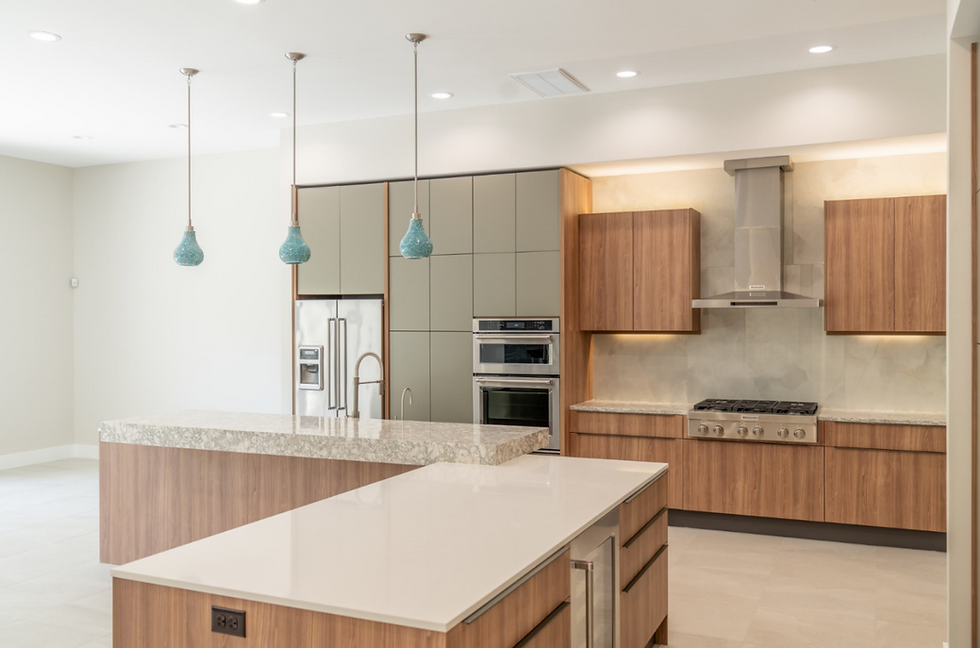
When designing a luxury kitchen, few decisions carry as much long-term impact as cabinetry. Cabinetry defines how a kitchen looks, how it functions, and how it integrates with the architecture of the home. For homeowners planning a high-end renovation or new build, the choice often comes down to two distinct approaches: bespoke cabinetry or modular kitchen systems.
While both options can appear similar on the surface, they represent fundamentally different design philosophies. Understanding the difference is essential for homeowners who value craftsmanship, longevity, and a kitchen that feels truly personal.
At Foscari Interiors, cabinetry is never an afterthought. It is the foundation upon which every successful luxury kitchen is built. This guide explores the differences between bespoke and modular kitchens and helps clarify which approach best aligns with your home, lifestyle, and long-term goals.
Why Cabinetry Defines the Luxury Kitchen
In a well-designed kitchen, cabinetry occupies the largest visual footprint. It establishes proportion, sets the tone of the space, and influences how the kitchen is experienced day to day. Beyond aesthetics, cabinetry determines how efficiently the kitchen functions — how storage is organized, how movement flows, and how intuitive the space feels to live in.
Luxury homeowners increasingly recognize that cabinetry is not just about style. It is about how seamlessly the kitchen integrates into the architecture of the home and how well it supports daily life over time. This is where the distinction between bespoke and modular kitchens becomes most apparent.
What Is Bespoke Cabinetry?
Bespoke cabinetry is fully custom, designed and crafted specifically for an individual home. Every element — from dimensions and materials to internal layouts and finishes — is tailored to the space and the homeowner’s needs.
Rather than working within predefined cabinet sizes, bespoke design begins with the architecture itself. Ceiling heights, wall proportions, sightlines, and natural light all inform how the cabinetry is conceived and executed.
This approach allows for complete design freedom. Storage solutions can be customized, appliances seamlessly integrated, and details refined to create a kitchen that feels architectural rather than assembled. Bespoke cabinetry is often chosen by homeowners who value individuality, craftsmanship, and a kitchen that feels like a natural extension of the home.
What Defines a Modular Luxury Kitchen?
Modular kitchens are built using pre-engineered cabinet systems. Even at the luxury level, modular kitchens rely on standardized cabinet sizes, configurations, and construction methods. These systems are then customized through finishes, door styles, and accessories.
High-end modular kitchens can be beautifully designed and highly functional. They are often well-suited to projects with tighter timelines or homes with straightforward layouts. Many modular systems offer excellent quality and thoughtful engineering.
However, modular kitchens come with inherent limitations. Cabinet dimensions are fixed, layouts must adapt to the system rather than the architecture, and design compromises are sometimes necessary to make everything fit seamlessly.
Design Freedom and Architectural Integrity
One of the most significant differences between bespoke and modular kitchens is the level of design freedom.
With bespoke cabinetry, proportions are precisely controlled. Cabinetry can extend cleanly to ceiling height, align perfectly with windows and doors, and respond elegantly to architectural features such as beams or niches. The result is a kitchen that feels intentional, balanced, and refined from every angle.
Modular kitchens often require filler panels or visual breaks to accommodate standard sizes. While these solutions can be handled discreetly, they rarely achieve the same level of architectural integration as bespoke cabinetry.
For homeowners who value clean lines and visual harmony, bespoke design offers a degree of refinement that modular systems struggle to replicate.
Materials, Finishes, and Craftsmanship
At the luxury level, materials matter — but craftsmanship matters even more.
Bespoke cabinetry allows for a broader range of materials and finishing techniques. Wood veneers can be carefully selected and grain-matched. Edges and reveals can be refined to exact specifications. Interior finishes can be elevated to the same standard as exterior surfaces.
This attention to detail affects how the kitchen feels in daily use. Doors operate smoothly, drawers glide effortlessly, and the cabinetry ages gracefully over time.
Modular kitchens typically offer a curated selection of finishes and hardware options. While these selections can be high quality, they are chosen from a predefined range. For homeowners seeking a highly personalized palette or unique material combinations, this can feel limiting.
Functionality Tailored to How You Live
Luxury kitchens are not one-size-fits-all, and neither are the people who use them.
Bespoke cabinetry allows storage and layout to be designed around specific habits and routines. From custom pantry systems and concealed appliance garages to tailored drawer inserts and specialized storage, every element can be planned with intention.
This level of customization enhances daily life. The kitchen feels intuitive, organized, and effortless to use — qualities that become increasingly valuable over time.
Modular kitchens offer efficient storage solutions, but they are designed to suit a broad range of users. While practical, they may not fully reflect how a particular household cooks, entertains, or lives day to day.
Longevity, Value, and Long-Term Perspective
For many luxury homeowners, the kitchen is a long-term investment. They want a space that remains relevant, functional, and beautiful for years — even decades — to come.
Bespoke cabinetry is inherently timeless because it is grounded in architectural principles rather than trends. Materials are selected for durability, proportions are carefully considered, and craftsmanship ensures longevity.
Modular kitchens can be an excellent solution for shorter-term ownership or projects where speed and efficiency are priorities. However, they may not deliver the same long-term satisfaction for homeowners planning to remain in their home for the foreseeable future.
From a value standpoint, bespoke kitchens often contribute more meaningfully to resale appeal in high-end markets, where buyers recognize and appreciate craftsmanship and customization.
Which Option Is Right for Your Home?
Choosing between bespoke and modular cabinetry depends on several factors, including the scope of your project, your timeline, and how personalized you want your kitchen to be.
Bespoke cabinetry is often ideal for:
- Custom homes and high-end renovations
- Homes with unique architecture or complex layouts
- Homeowners who value craftsmanship and individuality
- Long-term residences where longevity matters
Modular kitchens may be well-suited for:
- Projects with tighter timelines
- Homes with straightforward layouts
- Secondary residences or shorter-term ownership
- Clients prioritizing efficiency with refined aesthetics
Neither approach is inherently right or wrong. The key is understanding how each option aligns with your expectations and how you intend to live in your home.
A Thoughtful Approach to Luxury Kitchen Design
At Foscari Interiors, we believe cabinetry should support both the architecture of the home and the lifestyle of the people who live there. Our approach is rooted in clarity, craftsmanship, and long-term value.
Whether a project calls for fully bespoke solutions or a carefully tailored system, our role is to guide homeowners through the decision-making process with expertise and intention. The result is a kitchen that feels cohesive, considered, and effortless — not because it follows trends, but because it is designed with purpose.
When cabinetry is done well, it fades into the experience of the home. And that, ultimately, is the true mark of luxury.