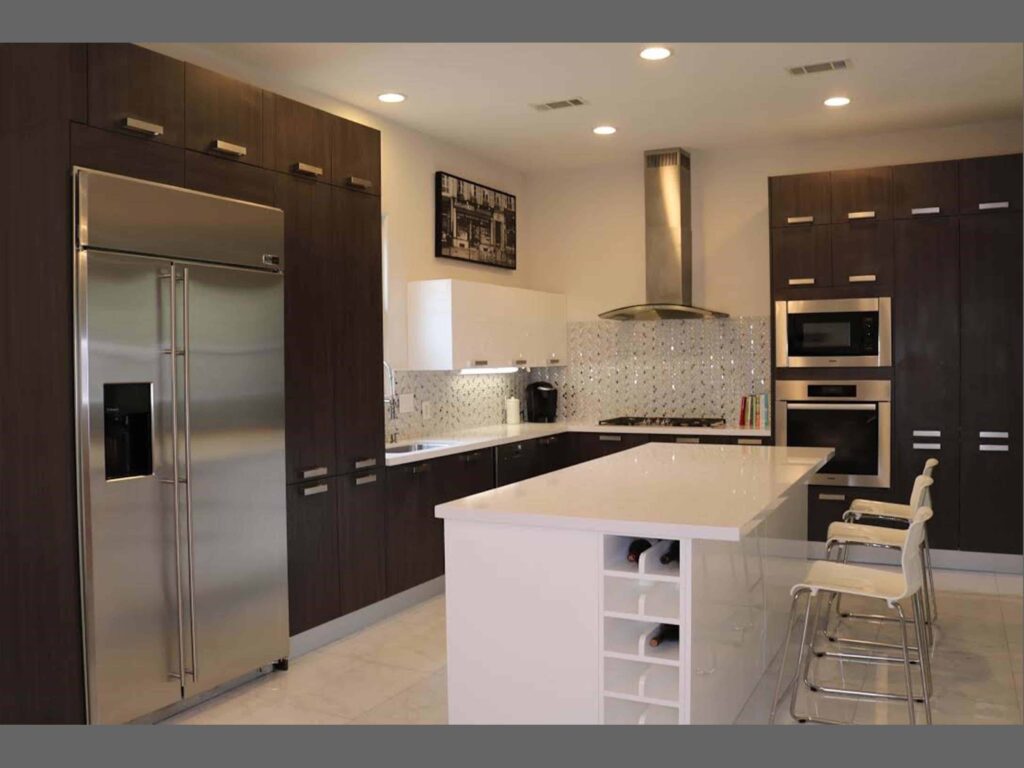
The modern luxury kitchen has evolved far beyond a functional space for cooking. In today’s most refined homes, the kitchen is a reflection of lifestyle, taste, and intention — a place where architecture, craftsmanship, and daily living intersect. As we move into 2026, luxury kitchen design is no longer defined by excess or ornamentation, but by thoughtful choices that balance beauty, performance, and longevity.
Discerning homeowners are moving away from trend-driven design in favor of kitchens that feel timeless, personal, and deeply considered. At Foscari Interiors, we believe the kitchen should anchor the home both aesthetically and emotionally — a space that supports everyday rituals while elevating the overall living experience. The following design trends define modern luxury kitchens in 2026 and offer insight into what truly sets high-end interiors apart.
Clean Architecture with Seamless Lines
One of the most defining elements of modern luxury kitchens is architectural clarity. Clean lines, uninterrupted surfaces, and a sense of visual order create an atmosphere of calm and refinement. Handle-less cabinetry, flush panels, and integrated appliances allow the kitchen to read as a cohesive architectural feature rather than a collection of individual elements.
This approach goes beyond minimalism. Every detail is intentional, from precisely aligned cabinet fronts to carefully proportioned reveals. Seamless design enhances both form and function, allowing the kitchen to feel expansive, composed, and effortlessly elegant.
Architectural kitchens also stand the test of time. By focusing on proportion, balance, and simplicity, these spaces age gracefully and remain relevant long after fleeting trends fade.
Natural Materials Elevated Through Craftsmanship
Luxury in 2026 is tactile, organic, and authentic. Natural materials remain at the forefront of high-end kitchen design, valued not only for their beauty but for the way they connect the home to the natural world. Stone surfaces such as marble and quartzite continue to be highly sought after for their depth, movement, and individuality, while warm wood tones introduce softness and visual balance.
What distinguishes a luxury kitchen is not simply the presence of premium materials, but the way they are finished and detailed. Honed or leathered stone surfaces, bookmatched slabs, and carefully selected wood veneers elevate the space from standard to exceptional.
Metal accents are used sparingly and thoughtfully, often in brushed or matte finishes that complement rather than dominate. The emphasis is on harmony, allowing materials to work together to create a cohesive and enduring design.
Bespoke Cabinetry as the Foundation of Luxury
True luxury kitchens are never generic. Bespoke cabinetry forms the foundation of high-end design, allowing the space to be tailored precisely to the homeowner’s lifestyle, preferences, and daily routines.
Custom millwork ensures that every inch of the kitchen serves a purpose. Hidden pantries, integrated refrigeration, specialty storage, and custom drawer configurations transform functionality into an experience. Rather than adapting to a predefined layout, the kitchen is designed around how the homeowner lives and entertains.
Beyond functionality, bespoke cabinetry contributes to the architectural integrity of the space. Proportions, finishes, and detailing are aligned with the broader interior design, creating a seamless transition between rooms. This level of customization is a defining characteristic of luxury interiors.
Statement Islands That Anchor the Space
The kitchen island has become the emotional and functional center of the modern home. In luxury kitchens, islands are larger, more sculptural, and designed to serve multiple roles — from food preparation and casual dining to entertaining and gathering.
Statement islands often feature waterfall stone edges, custom wood paneling, or integrated seating that gives them a furniture-like presence. These elements anchor the space visually while encouraging interaction and connection.
In open-concept homes, the island also acts as a bridge between the kitchen and adjacent living areas. Its design must be intentional from every angle, reinforcing the importance of craftsmanship, material continuity, and proportion.
Sculptural Lighting with Purpose
Lighting plays a pivotal role in defining the atmosphere of a luxury kitchen. In 2026, lighting is increasingly sculptural, serving as both a functional necessity and a design statement.
Oversized pendants, linear fixtures, and custom lighting installations are often used to highlight islands and dining areas. These fixtures are chosen not to dominate the space, but to complement the architecture and materials.
Equally important is layered lighting. A thoughtful combination of ambient, task, and accent lighting allows the kitchen to transition seamlessly from daytime functionality to evening elegance. When lighting is well-designed, it enhances textures, highlights finishes, and brings depth and warmth to the space.
Technology That Disappears Into the Design
Smart technology continues to be an essential component of modern luxury kitchens, but its role has evolved. Rather than drawing attention, technology is now designed to integrate invisibly into the kitchen’s architecture.
Integrated appliances, touchless fixtures, concealed charging stations, and automated lighting systems enhance convenience without compromising aesthetics. The focus is on intuitive performance — technology that supports daily life quietly and efficiently.
Luxury homeowners expect sophistication without visual clutter. When technology is seamlessly incorporated, the kitchen maintains its refined appearance while delivering exceptional functionality.
A Shift Toward Warm, Livable Luxury
While modern luxury kitchens remain clean and architectural, there is a noticeable shift toward warmth and livability. Homes are no longer designed solely for visual impact; they are created to be lived in, shared, and enjoyed.
Soft color palettes, natural textures, and inviting layouts make the kitchen feel approachable rather than austere. Integrated seating, layered materials, and thoughtful lighting encourage connection and comfort, transforming the kitchen into a true gathering place.
This balance between elegance and ease defines contemporary luxury. A kitchen should feel as welcoming as it is impressive.
Timeless Design Over Temporary Trends
Perhaps the most important trend shaping luxury kitchens in 2026 is a renewed focus on longevity. Homeowners are prioritizing designs that will remain beautiful and functional for years to come.
Rather than chasing trends, modern luxury kitchens are grounded in architectural principles, high-quality materials, and expert craftsmanship. This approach not only ensures aesthetic longevity but also supports sustainability by reducing the need for frequent renovations.
Timeless design is an investment — one that enhances daily living while preserving long-term value.
A Thoughtful Approach to High-End Kitchen Design
The modern luxury kitchen reflects how we live today: intentional, connected, and design-conscious. Clean architecture, natural materials, bespoke cabinetry, sculptural lighting, and discreet technology come together to create spaces that feel both refined and personal.
At Foscari Interiors, we believe a luxury kitchen should feel effortless, elegant, and uniquely tailored to its owners. Every detail is guided by craftsmanship, balance, and a commitment to timeless beauty.
Whether planning a full renovation or refining an existing space, a thoughtfully designed kitchen elevates not only the home, but the everyday experience of living within it.