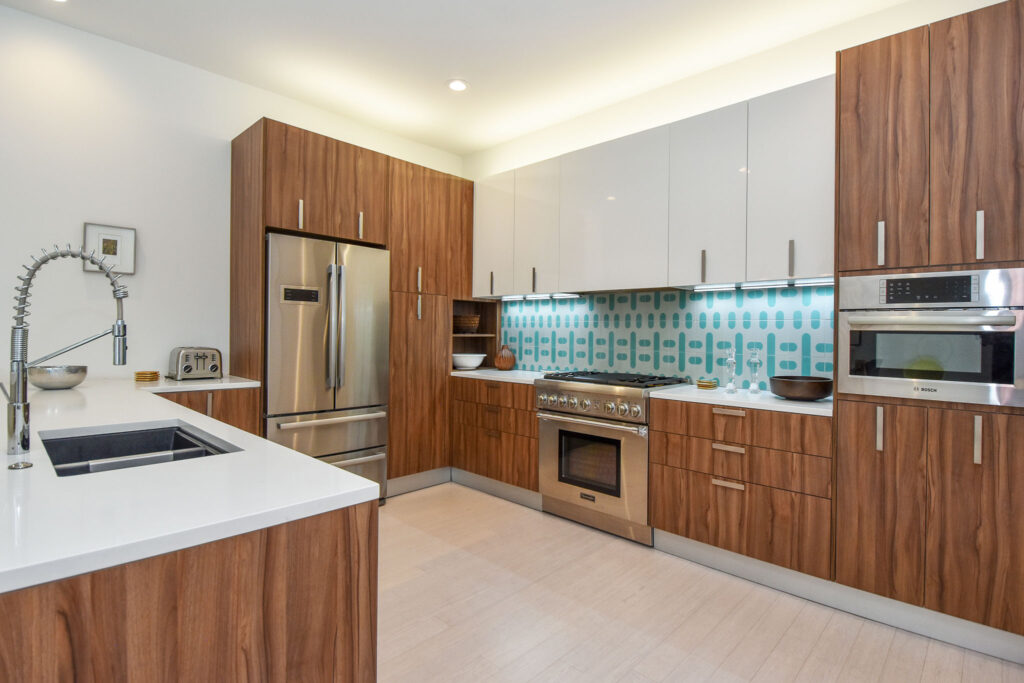
When it comes to kitchen design, homeowners often find themselves torn between timeless traditional charm and sleek modern minimalism. The transitional kitchen is the elegant solution — a harmonious blend that bridges the gap between old and new, warmth and simplicity, sophistication and comfort.
At Foscari Interiors, we’ve seen the transitional kitchen requested by clients who want both refinement and functionality. But what exactly defines a transitional kitchen, and where did this timeless design trend begin?
What Is a Transitional Kitchen?
A transitional kitchen seamlessly combines the best elements of traditional craftsmanship and modern design. It’s neither overly ornate nor starkly minimalist — instead, it strikes a balance that feels welcoming yet sophisticated.
This design approach brings together classic materials such as natural wood, stone, and detailed cabinetry, with modern features like clean lines, open layouts, and subtle color palettes. The result is a space that feels grounded and timeless, yet fresh and contemporary.
Key Characteristics of a Transitional Kitchen:
- Neutral Color Palette:
Shades of white, beige, soft gray, and taupe dominate transitional spaces. These tones create a calm backdrop that allows textures and finishes to take center stage. - Mixed Materials:
Expect a thoughtful blend of finishes — think marble countertops paired with matte black fixtures, or oak cabinetry contrasted with stainless steel appliances. - Streamlined Cabinetry:
Cabinetry in transitional kitchens typically avoids ornate details but isn’t ultra-flat either. Simple shaker-style doors or subtly recessed panels are popular choices. - Balanced Lighting:
Statement pendant lights or under-cabinet lighting add both function and ambiance, maintaining the room’s inviting, layered atmosphere. - Functional Layouts:
Transitional kitchens prioritize flow and usability. Islands often serve as multi-purpose spaces for meal prep, casual dining, or entertaining.
The Origins of the Transitional Kitchen Trend
The transitional design movement began taking shape in the late 20th century, as homeowners started blending traditional craftsmanship with modern lifestyles. During the 1980s and 1990s, the rise of open-concept living encouraged designers to find ways to merge the warm, detailed aesthetics of older homes with the clean, unfussy appeal of modern architecture.
While traditional kitchens were once defined by intricate woodwork and formal layouts, and modern kitchens by their stark minimalism, transitional kitchens found the sweet spot between the two. The style gained traction in luxury design circles in Europe and North America, where it became synonymous with livable sophistication — elegant but never ostentatious.
Today, transitional kitchens are a staple in high-end homes across the world, offering enduring appeal that easily adapts to changing trends.
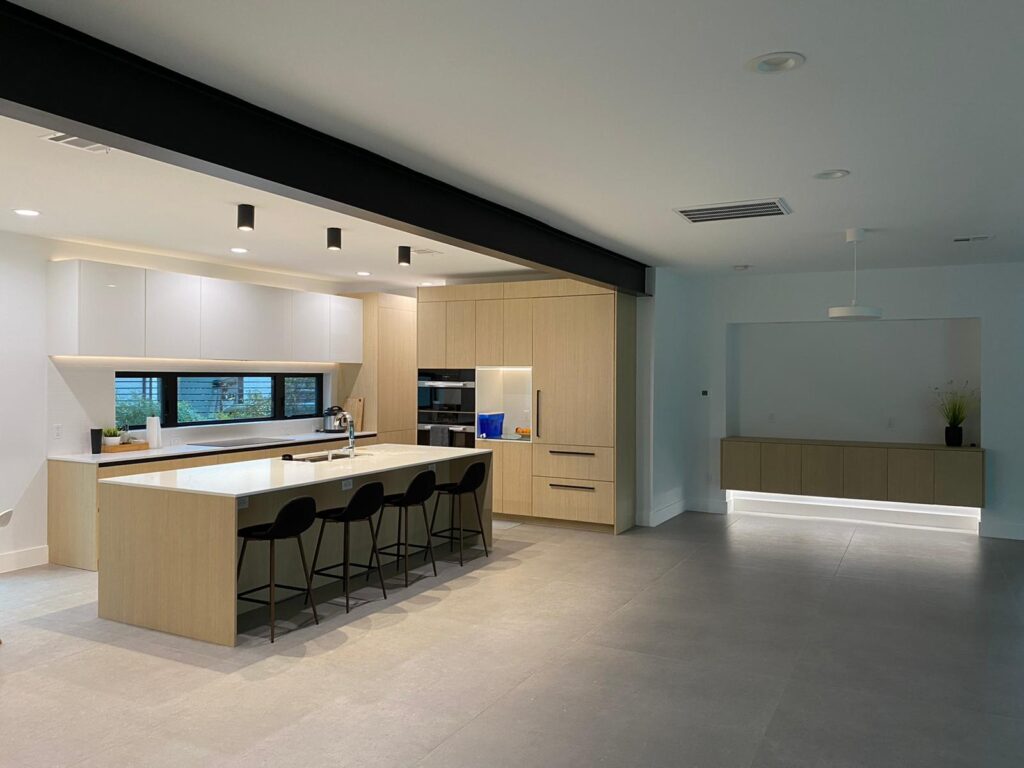
Why Homeowners Love Transitional Kitchens
At Foscari Interiors, our clients are drawn to transitional kitchens because they offer flexibility and timelessness. This style can evolve with your lifestyle — a new backsplash, updated fixtures, or a change in lighting can refresh the look without losing its core elegance.
Here’s why transitional kitchens remain one of the most desirable styles in luxury interior design:
- Timeless Design: The look doesn’t feel tied to a particular era, ensuring your kitchen remains current for years to come.
- Wide Appeal: The combination of classic and contemporary elements suits diverse architectural styles, from urban condos to estate homes.
- Personalization Potential: Transitional kitchens allow for creativity — whether it’s mixing metals, experimenting with textures, or introducing a statement island.
- Comfort Meets Elegance: This design feels both luxurious and livable — perfect for family life, entertaining, or quiet mornings at home.
Designing a Transitional Kitchen with Foscari Interiors
Creating a truly transitional kitchen requires an expert hand. It’s all about proportion, texture, and restraint — balancing contrasting elements so the design feels intentional and effortless.
At Foscari Interiors, we curate each kitchen with an eye for harmony. Our design process begins with understanding how you live — whether you prioritize entertaining, cooking, or quiet morning rituals — and then shaping the space around your lifestyle.
We use high-quality materials, bespoke cabinetry, and refined finishes to achieve the signature balance of a transitional kitchen. From custom marble islands to integrated lighting and tailored hardware, every detail is chosen to complement both modern living and timeless style.
Inspiration: Transitional Kitchen Design Ideas
If you’re envisioning a kitchen remodel, consider these design directions inspired by Foscari Interiors’ aesthetic:
- Soft Contrasts: Pair white quartz countertops with rich walnut cabinetry for a warm, inviting contrast.
- Understated Elegance: Choose brushed brass fixtures against soft gray tones for a subtle hint of luxury.
- Texture Play: Mix smooth polished surfaces with organic materials like linen bar stools or natural stone backsplashes.
- Open Shelving: Combine floating shelves with traditional cabinetry for visual interest and functional display space.
The Future of Transitional Design
As homeowners continue to seek balance between functionality and beauty, the transitional kitchen remains a cornerstone of modern interior design. It embodies everything today’s luxury homeowner values: timelessness, comfort, and versatility.
At Foscari Interiors, we believe the kitchen is the heart of the home — and a transitional design ensures it remains both welcoming and effortlessly elegant for years to come.