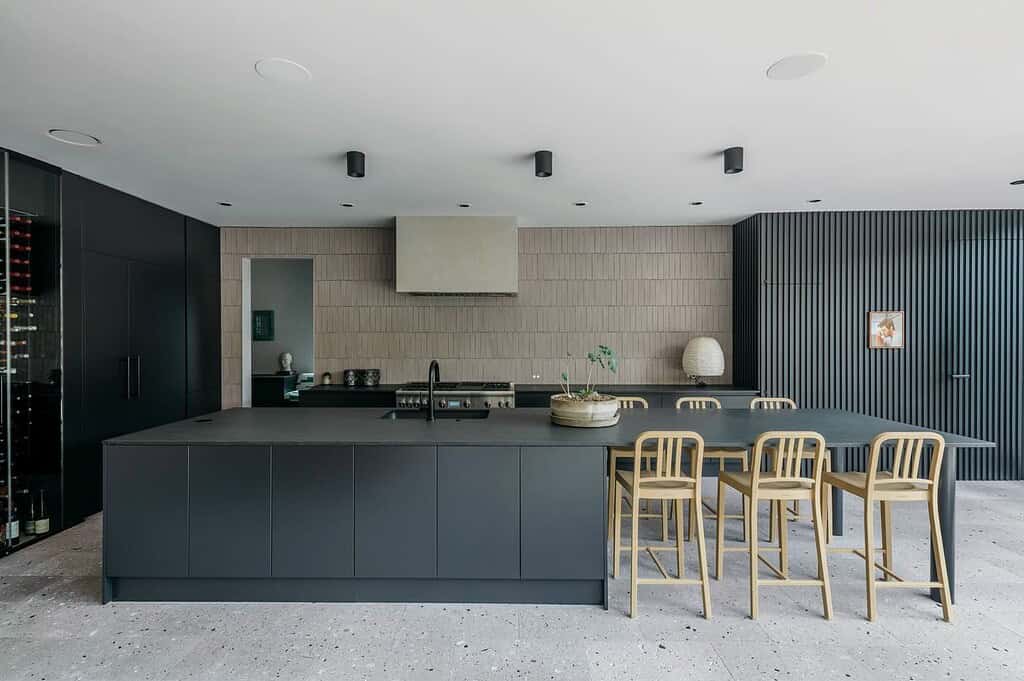
For decades, upper cabinets were considered a standard feature in kitchen design. They provided convenient storage, filled empty wall space, and created the familiar kitchen layout most homeowners grew up with. But as modern kitchens continue to evolve, designers are beginning to rethink the role of upper cabinetry altogether.
Walk through newly built custom homes or browse contemporary kitchen designs, and you’ll notice a growing trend: fewer upper cabinets and more emphasis on open space, clean lines, and integrated storage solutions.
So, are upper cabinets actually going away?
Not entirely. However, many homeowners are moving away from traditional rows of wall cabinets and embracing alternative storage solutions that create a more open, sophisticated, and functional kitchen. The shift is being influenced largely by modern European kitchen design, where storage is often consolidated into larger, more efficient cabinet systems rather than distributed throughout the room.
The result is a kitchen that feels lighter, more architectural, and better suited to today’s lifestyle.
Why Traditional Upper Cabinets Are Being Reconsidered
The move away from upper cabinets isn’t simply about aesthetics. It reflects broader changes in how kitchens are designed and used.
Today’s kitchens serve as gathering spaces, entertainment areas, and visual extensions of the home’s living environment. Because kitchens are more visible than ever before, homeowners are looking for ways to reduce visual clutter and create a cleaner overall appearance.
Traditional upper cabinets can sometimes make a kitchen feel crowded, particularly in spaces with lower ceilings or limited natural light. Long rows of cabinetry can interrupt sightlines and create a heavier visual presence throughout the room.
By reducing or eliminating some upper cabinets, designers can create a greater sense of openness while still maintaining ample storage.
Open Shelving Creates Breathing Room
One alternative gaining popularity is open shelving.
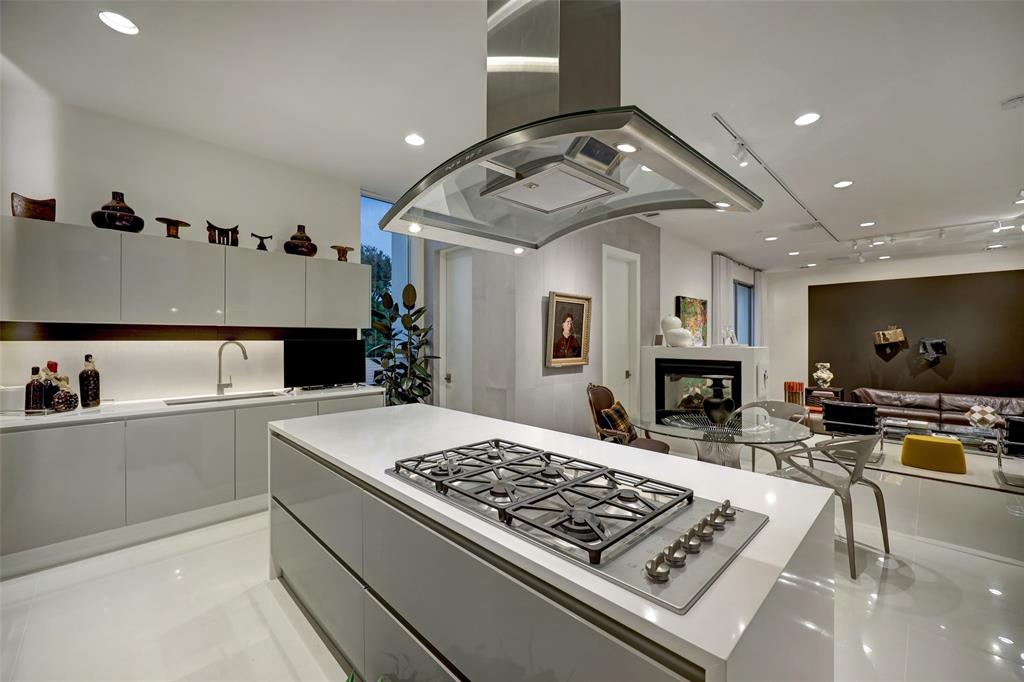
Open shelves replace some upper cabinets with simple floating surfaces that provide space for frequently used dishes, decorative objects, glassware, and curated accessories. The approach creates a lighter visual footprint while allowing homeowners to add personality to the kitchen.
Open shelving works particularly well in modern kitchens because it complements the clean, minimalist aesthetic many homeowners desire.
That said, open shelving is rarely intended to replace all storage. Most successful designs use it selectively, balancing visual openness with practical concealed storage elsewhere in the kitchen.
When thoughtfully designed, open shelving can make a kitchen feel larger, brighter, and more inviting.
Tall Pantry Walls Are Replacing Multiple Upper Cabinets
One of the biggest influences on modern kitchen design comes from European layouts that prioritize efficiency and organization.
Instead of spreading storage across numerous upper and lower cabinets, designers often consolidate storage into dedicated pantry walls.
Tall pantry cabinets can extend from floor to ceiling, providing substantial storage for food, cookware, serving pieces, and small appliances. Because these cabinets are larger and deeper than traditional upper cabinets, they often offer significantly more usable storage.
The visual effect is equally appealing.
Rather than creating multiple horizontal interruptions around the room, pantry walls establish clean vertical lines that contribute to a more architectural appearance.
This approach is becoming increasingly common in contemporary homes where homeowners value both functionality and aesthetics.
Appliance Walls Are Changing Kitchen Layouts
Another trend influencing the decline of traditional upper cabinets is the rise of appliance walls.
Instead of distributing ovens, coffee systems, refrigerators, and storage throughout the kitchen, many modern layouts group these functions together along a single wall.
Appliance walls can include:
- Integrated refrigeration
- Built-in ovens
- Coffee systems
- Microwave drawers
- Pantry storage
- Concealed appliance garages
By concentrating these elements into one organized area, designers free up other sections of the kitchen and reduce visual complexity.
This strategy allows islands and perimeter cabinets to remain clean and uncluttered while improving workflow throughout the space.
Floor-to-Ceiling Storage Maximizes Functionality
One reason homeowners feel comfortable eliminating some upper cabinets is that modern storage solutions are simply more efficient than they were in the past.
Floor-to-ceiling cabinetry has become a defining feature of contemporary kitchens. These full-height storage systems maximize every available inch while creating a streamlined appearance.
Upper storage compartments can house seasonal items and specialty cookware, while lower sections provide easy access to everyday essentials.
By utilizing vertical space more effectively, homeowners often discover they can achieve greater storage capacity with fewer visible cabinets.
This supports the growing desire for kitchens that feel open and uncluttered without sacrificing practicality.
Modern Cabinets Support a Cleaner Aesthetic
The growing popularity of modern cabinets has also contributed to the decline of traditional upper cabinet layouts.
Modern cabinets emphasize clean lines, frameless construction, and seamless integration. Rather than drawing attention to individual cabinet boxes, they create a cohesive visual experience throughout the kitchen.
Features commonly associated with modern cabinetry include:
- Flush cabinet fronts
- Minimal hardware
- Integrated appliances
- Concealed storage
- Continuous material surfaces
These design principles naturally support layouts that use fewer upper cabinets and rely more heavily on tall storage systems and integrated solutions.
The focus shifts from displaying storage to incorporating it thoughtfully into the overall architecture of the room.
European Kitchen Design Continues to Lead the Way
Many of the ideas driving this shift originate from European kitchen design.
For decades, European manufacturers have prioritized efficiency, simplicity, and intelligent space planning. Their kitchens often feature tall storage walls, frameless cabinetry, integrated appliances, and highly organized interior storage systems.
Rather than filling every available wall with cabinetry, European layouts focus on creating balance between storage and open space.
As homeowners increasingly seek kitchens that feel timeless rather than trend-driven, these design principles continue to gain popularity throughout North America.
The result is a more refined and functional approach to kitchen planning.
What This Means for Future Kitchen Design
Upper cabinets are not disappearing entirely. They still provide valuable storage and remain an important component of many kitchen designs.
What is changing is the way designers think about storage.
Instead of automatically filling every wall with cabinetry, today’s kitchens are being designed more intentionally. Open shelving, pantry walls, appliance walls, and floor-to-ceiling storage systems are giving homeowners new ways to organize their kitchens while creating a cleaner visual experience.
For many homeowners, the goal is no longer to add more cabinets. It’s to make storage work smarter while allowing the kitchen itself to feel more open, welcoming, and connected to the rest of the home.
As modern kitchen design continues to evolve, one thing is becoming clear: the future isn’t necessarily about eliminating upper cabinets. It’s about creating better alternatives that combine beauty, functionality, and thoughtful design.