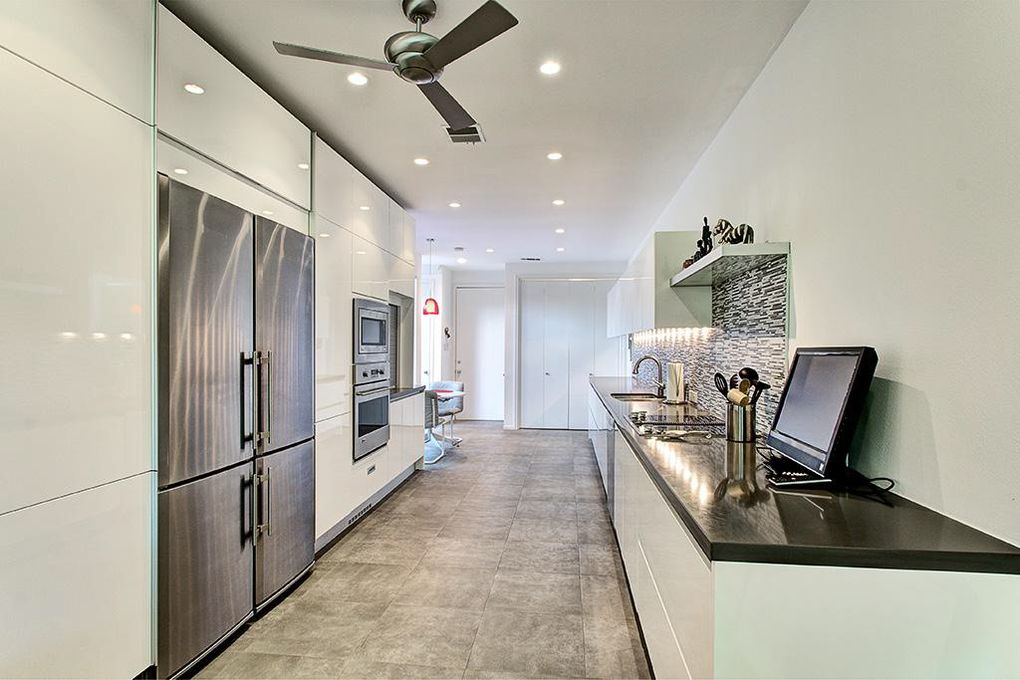
Modern kitchen design has evolved far beyond a specific color palette or a collection of trendy finishes. While design trends come and go, truly modern kitchens share a common philosophy: simplicity, functionality, and thoughtful design.
Today’s homeowners are increasingly drawn to kitchens that feel clean, organized, and connected to the rest of the home. Rather than focusing on decorative details, modern kitchens prioritize seamless integration, intelligent storage, and materials that create a sense of warmth and sophistication.
But what exactly makes a kitchen feel modern?
The answer isn’t found in any single feature. Instead, it’s the combination of clean lines, modern cabinets, natural materials, streamlined hardware, and European-inspired design principles that create the contemporary kitchens homeowners admire most.
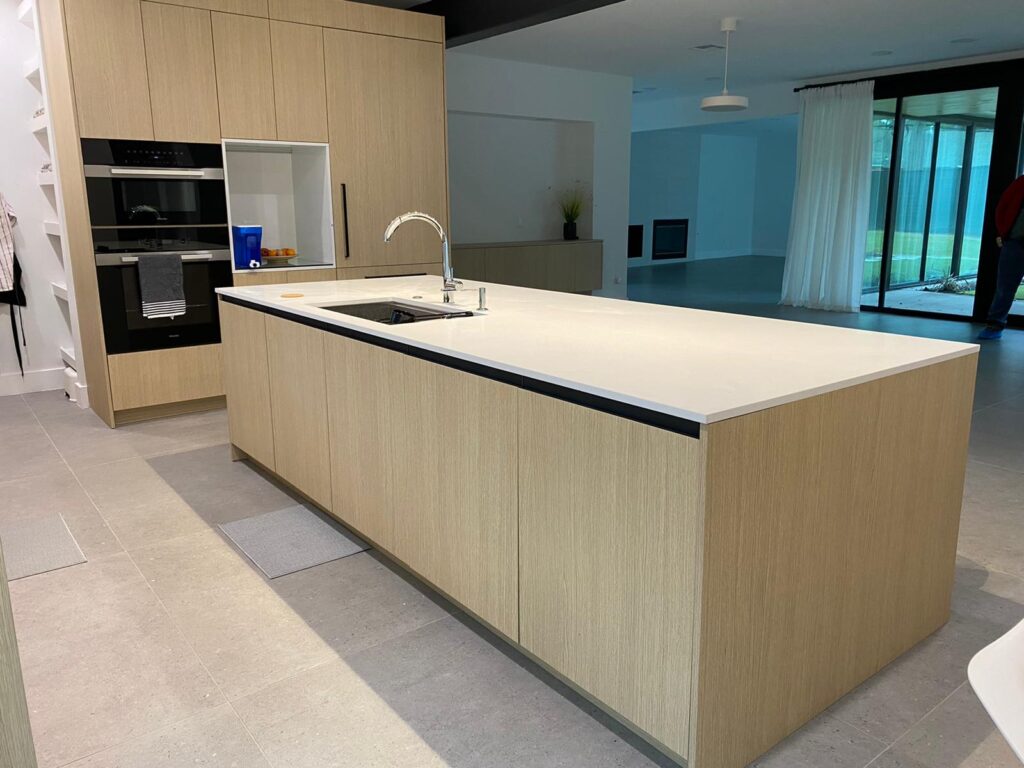
Clean Lines Create a Sense of Order
One of the defining characteristics of modern kitchen design is simplicity.
Modern kitchens avoid unnecessary ornamentation in favor of clean, intentional lines. Decorative moldings, elaborate trim work, and heavily detailed cabinetry often give way to streamlined surfaces that allow the overall design to feel more cohesive.
This doesn’t mean modern kitchens lack character. Instead, they rely on proportion, material selection, and architectural elements to create visual interest.
Clean lines help establish a sense of order throughout the space. The result is a kitchen that feels calm, uncluttered, and timeless rather than overly decorated or trend-driven.
Modern Cabinets Set the Foundation
Cabinetry often plays the biggest role in determining whether a kitchen feels modern.
Unlike traditional cabinetry, modern cabinets emphasize simplicity and functionality. Flat-panel doors, frameless construction, and streamlined profiles create a refined appearance that supports the overall design without overwhelming it.
Many modern kitchens also feature:
- Full-overlay cabinet doors
- Minimal reveals and gaps
- Integrated storage systems
- Flush surfaces
- Concealed hinges
Because cabinets occupy a significant portion of the visual space within a kitchen, their design has a major impact on how contemporary the room feels.
The most successful modern kitchens use cabinetry as an architectural element rather than simply a storage solution.
Seamless Storage Reduces Visual Clutter
A modern kitchen often feels effortless because so much of its functionality is hidden from view.
Today’s homeowners want kitchens that work hard without looking busy. As a result, designers are incorporating storage solutions that keep everyday items organized while maintaining a clean aesthetic.
Popular features include:
- Appliance garages
- Hidden pantries
- Deep drawer storage
- Integrated recycling systems
- Pull-out pantry organizers
- Concealed charging stations
By reducing visible clutter, these solutions help create the streamlined appearance associated with modern design.
In many cases, a kitchen feels modern not because of what is visible, but because of what is thoughtfully concealed.
Natural Materials Add Warmth and Sophistication
Early contemporary kitchens were often associated with high-gloss finishes and stark white surfaces. While those aesthetics still have their place, many modern kitchens today embrace a warmer and more inviting approach.
Natural materials have become increasingly important in contemporary kitchen design.
White oak, walnut, natural stone, textured veneers, and organic finishes help soften the clean lines of modern cabinetry while introducing depth and character into the space.
Popular combinations include:
- White oak cabinets paired with quartzite countertops
- Walnut cabinetry with matte finishes
- Natural stone backsplashes
- Textured wood grains
- Warm neutral color palettes
These materials create a balanced environment that feels both sophisticated and comfortable.
Minimal Hardware Creates a Streamlined Look
Another feature commonly found in modern kitchens is the use of minimal hardware.
Traditional kitchens often utilize decorative knobs and pulls as design elements. Modern kitchens, by contrast, tend to minimize visual distractions.
Many homeowners choose:
- Slim cabinet pulls
- Integrated finger pulls
- Recessed hardware
- Handleless cabinet systems
Reducing the prominence of hardware helps maintain uninterrupted surfaces and reinforces the clean lines that define contemporary design.
The goal is not to eliminate functionality but to integrate it more seamlessly into the overall aesthetic.
European Design Continues to Shape Modern Kitchens
Many of the features associated with modern kitchens can be traced back to European design principles.
For decades, European kitchen manufacturers have emphasized efficiency, precision engineering, and minimalist aesthetics. Their approach focuses on creating spaces that maximize functionality while maintaining visual simplicity.
Characteristics often associated with European kitchen design include:
- Frameless cabinetry
- Integrated appliances
- Floor-to-ceiling storage
- Handleless cabinet systems
- Streamlined layouts
- Highly organized interiors
These principles have become increasingly influential in North American homes as homeowners seek kitchens that feel timeless, functional, and architecturally refined.
European-inspired design continues to shape many of the most desirable kitchens being built today.
Integrated Appliances Create Visual Continuity
A growing number of homeowners are choosing appliances that blend seamlessly into their cabinetry.
Integrated refrigeration, concealed dishwashers, and built-in coffee systems help create visual continuity throughout the kitchen. Rather than standing out, these appliances become part of the overall design.
This approach supports one of the primary goals of modern kitchen design: reducing visual interruptions.
When cabinetry, appliances, and storage systems work together cohesively, the entire space feels more intentional and sophisticated.
Open Spaces and Better Flow
Modern kitchens are often designed with flow in mind.
Open-concept layouts have influenced how kitchens connect to dining areas, living spaces, and outdoor environments. Designers increasingly prioritize circulation, sightlines, and functionality to ensure the kitchen feels integrated into the overall home.
Large islands, unobstructed walkways, and thoughtfully planned storage contribute to a space that functions efficiently while maintaining a sense of openness.
This focus on flow helps modern kitchens support the way families live, entertain, and interact today.
Modern Design Is About More Than Trends
One of the biggest misconceptions about modern kitchens is that they are defined by a particular trend or style.
In reality, modern design is rooted in principles rather than specific products. Clean lines, purposeful storage, quality materials, and thoughtful functionality create kitchens that remain appealing long after trends have changed.
A modern kitchen does not have to feel cold, stark, or minimalist. Some of today’s most beautiful kitchens combine contemporary cabinetry with warm wood finishes, natural stone surfaces, and inviting textures that make the space feel welcoming and lived-in.
The most successful designs balance beauty and practicality while reflecting the unique lifestyle of the homeowner.
The Elements That Define a Modern Kitchen
When homeowners ask what makes a kitchen feel modern, the answer is rarely a single feature.
Instead, modern kitchens are defined by a combination of thoughtful design choices: clean lines, modern cabinets, seamless storage, natural materials, minimal hardware, and European-inspired functionality. Together, these elements create spaces that feel organized, elegant, and timeless.
As kitchen design continues to evolve, one principle remains constant: the most modern kitchens are not necessarily the most complicated. They are the ones where every detail serves a purpose and every element contributes to a cohesive and beautiful living environment.