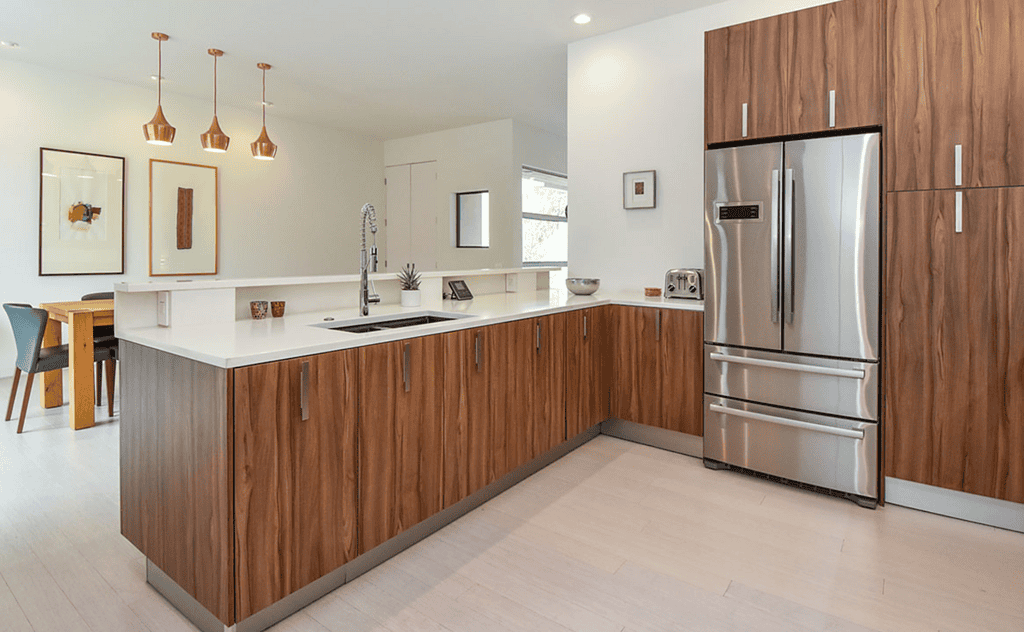
Over the last two decades, European cabinets have moved from a niche design choice to one of the most recognizable features in high-end modern kitchens across the United States. Once associated mainly with luxury European homes, designer showrooms, and imported kitchen systems, this sleek cabinetry style is now widely sought after by homeowners who want a kitchen that feels clean, architectural, and highly functional.
The rise of European kitchen cabinets in the U.S. did not happen overnight. It was shaped by changes in architecture, lifestyle, technology, and the way homeowners think about the kitchen itself. As kitchens became larger, more open, and more connected to the rest of the home, cabinetry had to evolve. Traditional framed cabinets still have a strong place in American design, but European cabinets offered something different: seamless lines, frameless construction, hidden storage, and a refined modern look.
From Traditional Kitchens to Modern Living
For many years, American kitchens were dominated by framed cabinetry, raised-panel doors, decorative molding, and more traditional styling. These kitchens often felt separate from the rest of the home, designed primarily for cooking rather than gathering, entertaining, or everyday living.
That began to shift as open-concept homes became more desirable. Kitchens were no longer hidden behind walls. They became part of the living room, dining area, and entertaining space. As a result, homeowners wanted cabinetry that looked less like a purely functional storage system and more like integrated furniture or architecture.
European cabinets were a natural fit for this change. Their frameless construction creates full-overlay doors and drawers with minimal gaps, allowing the cabinetry to appear smooth, clean, and continuous. This made them especially appealing in modern luxury kitchens where the kitchen is visible from multiple areas of the home.
Industry commentary has long noted that frameless cabinets were common in Europe for decades before becoming a more recent favorite among American homeowners, largely because of their contemporary, seamless appearance.
The Appeal of Clean Lines
One of the biggest reasons European cabinets became popular in the U.S. is their visual simplicity. In a luxury home, simplicity can feel incredibly sophisticated when it is executed well.
European cabinetry often features flat-panel doors, concealed hinges, integrated pulls, matte finishes, textured laminates, natural wood veneers, and high-gloss surfaces. Instead of relying on ornate details, the design focuses on proportion, finish, and precision.
This aligned perfectly with the rise of contemporary kitchen cabinets and modern luxury kitchen design. Homeowners began looking for spaces that felt calm, uncluttered, and timeless. European cabinets delivered that feeling while still offering a strong design statement.
The current kitchen market continues to support this direction. NKBA’s 2026 Kitchen Trends Report found that contemporary, modern, and minimalist styles are expected to remain popular, with flat slab cabinet doors and panel-faced appliances also gaining attention.
Better Storage Became a Priority
Another major factor behind the popularity of European cabinets is storage. Modern homeowners do not simply want beautiful kitchens. They want kitchens that work beautifully.
European cabinet systems are known for their efficient use of interior space. Because frameless cabinets do not have a front face frame, they can provide easier access and a slightly more open interior. This makes them ideal for deep drawers, pull-out pantry systems, custom dividers, appliance garages, hidden waste storage, and highly organized cabinet interiors.
Over the last twenty years, the American kitchen has become a multi-purpose hub. It is used for cooking, hosting, working, homework, coffee stations, wine storage, and everyday family routines. That shift created demand for high-end modern kitchen cabinets that could support more than basic dish and cookware storage.
Recent NKBA research identifies storage maximization, seamless design, multi-purpose kitchen hubs, and material sophistication as core themes shaping kitchen design. European cabinetry fits directly into those priorities.
The Influence of Luxury Showrooms and Global Design
As luxury homeowners became more exposed to international design, European cabinets gained visibility. Design magazines, architectural homes, boutique hotels, luxury condos, and high-end kitchen showrooms all helped introduce American homeowners to a more streamlined European aesthetic.
In major design markets, European-inspired kitchens became associated with sophistication. The look was polished but not overly decorative. It worked well in modern estates, penthouses, new construction homes, and full-scale renovations.
Homeowners also became more comfortable investing in custom luxury kitchens. Instead of selecting cabinetry as a standalone product, they began viewing the kitchen as a complete design environment. European cabinets supported that mindset because they can be coordinated with integrated appliances, lighting, islands, wall panels, pantry systems, and custom closets.
Appliances Changed the Look of Kitchens
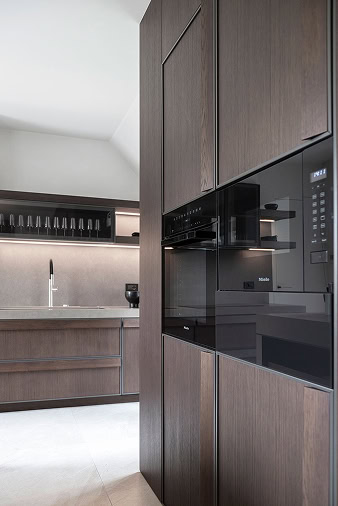
The rise of integrated and panel-ready appliances also helped European kitchen cabinets become more popular. Refrigerators, dishwashers, wine columns, and freezer drawers could be concealed behind matching cabinet panels, allowing the kitchen to feel more cohesive.
This was a major change in American kitchen design. Rather than making every appliance visible, homeowners could create a seamless wall of cabinetry where storage and appliances blended together. European cabinet systems were especially suited to this because of their precise lines and custom panel capabilities.
The result was a kitchen that looked less busy and more architectural. For open-concept homes, that was a significant advantage.
Warm Modernism Expanded the Audience
Early modern kitchens were sometimes perceived as cold or minimal. Over time, European cabinetry evolved in the U.S. market to include warmer finishes, softer textures, and more natural materials.
Wood veneers, textured oak, walnut, matte neutrals, taupe, charcoal, and stone-inspired finishes made European cabinets feel more inviting. This helped expand their appeal beyond ultra-modern homes. Today, they can be used in contemporary, transitional, organic modern, and luxury minimalist interiors.
Houzz’s 2026 kitchen trend coverage noted that wood cabinets have overtaken white as the top cabinet color choice among renovating homeowners, reflecting a broader shift toward warmth and natural character.
Why European Cabinets Continue to Grow
European cabinets became popular in the U.S. because they answered several needs at once. They offered a modern aesthetic, better storage options, a high-end appearance, and the flexibility to support open-concept living.
They also changed the way homeowners think about cabinetry. Instead of seeing cabinets as boxes with doors, homeowners began seeing them as a key architectural feature. In a luxury kitchen, the cabinetry defines the mood of the entire space.
The Bottom Line
Over the last two decades, European cabinets have become popular in the U.S. because they reflect how modern homeowners want to live. They are elegant, efficient, highly customizable, and visually refined. They support the demand for luxury kitchen cabinetry that feels seamless, organized, and connected to the rest of the home.
At Foscari Interiors, European cabinets are more than a trend. They are a sophisticated solution for homeowners who want modern kitchen cabinets with lasting style, intelligent storage, and a distinctly high-end finish.