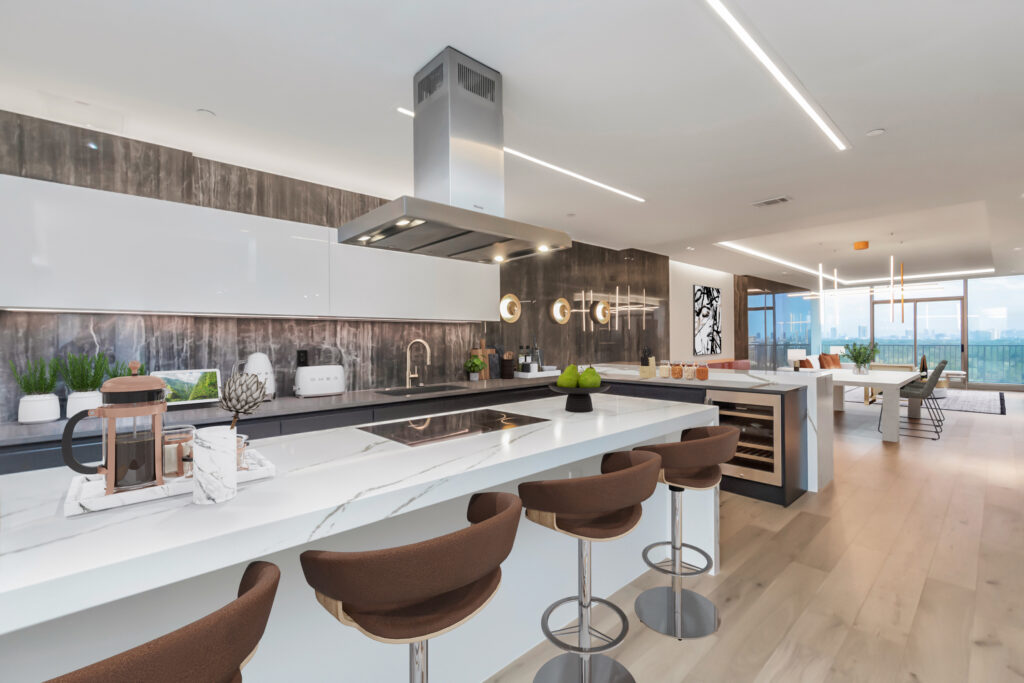
Designing a kitchen is one of the most significant investments homeowners make in a renovation or new build. Beyond cabinetry and finishes, a kitchen influences daily routines, entertaining, storage, and the overall architectural feel of a home. That is why many homeowners choose to work with a professional kitchen designer rather than relying solely on contractors or cabinet suppliers.
So, what does it really mean to work with a professional kitchen designer?
A professional kitchen designer helps transform ideas into a fully functional, highly detailed kitchen plan that balances aesthetics, workflow, storage, and long-term livability. In luxury modern kitchens, that role becomes even more valuable because every design decision—from appliance placement to cabinet proportions—affects how the space performs.
From a Foscari Interiors perspective, kitchen design is not simply about selecting cabinets. It is about building a kitchen around architecture, lifestyle, and precision planning.
What Does a Professional Kitchen Designer Do?
A professional kitchen designer plans the kitchen as a complete system rather than treating it as isolated products.
That includes:
- Space planning
- Cabinet layout design
- Workflow optimization
- Appliance integration
- Island sizing
- Material coordination
- Storage planning
- Lighting alignment
- Ventilation considerations
- Ergonomics
- Traffic flow
- Final visual balance
In high-end homes, a kitchen designer often coordinates between homeowners, builders, fabricators, and installation teams.
The goal is to create a kitchen that looks refined and works exceptionally well.
When Should You Hire a Professional Kitchen Designer?
Many homeowners wait until construction begins to think about kitchen design.
In reality, a designer should be involved early.
The best time to work with a kitchen designer is during:
- Full kitchen remodels
- Custom home construction
- Open-concept redesigns
- Luxury kitchen upgrades
- Large island planning
- Appliance-heavy kitchens
- Custom cabinetry projects
- Homes with structural layout changes
Early planning helps reduce rework, budget surprises, and costly mistakes.
At Foscari, kitchen design is most effective when it begins before cabinetry, appliances, and finishes are finalized.
Step 1: Start With Lifestyle and Function
A professional kitchen designer does not begin with colors or cabinet doors.
The first step is understanding how the homeowner lives.
This often includes questions like:
- Do you cook daily or occasionally?
- Do you entertain often?
- How many people use the kitchen at once?
- Do you need hidden storage?
- Do you want a coffee bar or beverage station?
- Is the kitchen highly minimalist or warm and layered?
- Do you prefer open shelving or full-height cabinetry?
These details shape the entire layout.
A family-focused kitchen will differ greatly from an entertaining-focused luxury kitchen.
At Foscari Interiors, lifestyle planning helps define not only storage, but the overall flow of the kitchen.
Step 2: Space Planning and Layout Development
Once goals are clear, the kitchen layout begins.
This is where a professional designer creates the functional structure of the room.
Planning often includes:
- Work triangle efficiency
- Prep zones
- Cooking zones
- Cleanup areas
- Pantry access
- Appliance walls
- Island positioning
- Walkway clearances
- Seating flow
- Traffic circulation
This stage determines whether the kitchen feels effortless or frustrating.
A poorly planned kitchen can have beautiful materials but weak functionality.
A well-planned kitchen supports movement naturally.
Step 3: Cabinet Layout Strategy
Cabinetry is one of the most technical parts of kitchen design.
A professional kitchen designer evaluates how cabinetry supports both aesthetics and storage.
This may include:
- Base cabinet planning
- Wall cabinet placement
- Tall pantry systems
- Appliance housing
- Deep drawer storage
- Hidden organization
- Corner optimization
- Pull-out systems
- Vertical storage walls
- Integrated panel systems
Luxury kitchens often use fewer visible cabinets but smarter internal storage.
At Foscari, cabinetry is often approached architecturally—balancing clean modern lines with high-performance functionality.
Step 4: Appliance Integration
Today’s modern kitchens often include large or built-in appliances.
That requires careful design coordination.
A professional kitchen designer plans around:
- Refrigeration walls
- Built-in ovens
- Cooktops
- Ventilation systems
- Dishwashers
- Microwave drawers
- Beverage refrigeration
- Warming drawers
- Coffee systems
Incorrect appliance planning can affect cabinetry dimensions, workflow, and ventilation.
This stage is essential in modern European-style kitchens where seamless integration matters.
Step 5: Why 3D Renderings Matter
One of the most valuable parts of working with a professional kitchen designer is visualization.
Flat drawings can show dimensions, but they often do not reveal proportion, balance, or spatial impact.
That is where 3D kitchen renderings become critical.
They help homeowners evaluate:
- Island scale
- Cabinet proportions
- Ceiling-height relationships
- Material combinations
- Appliance integration
- Walkway spacing
- Lighting placement
- Seating arrangement
- Symmetry
- Visual weight
What appears ideal on paper may feel oversized or visually heavy in reality.
At Foscari Interiors, 3D visualization is a major part of the design process because luxury kitchens are too large an investment to guess on. Detailed renderings help refine layouts, proportions, finishes, and storage decisions before cabinetry moves into engineering or fabrication.
That precision reduces costly revisions later.
Step 6: Material and Finish Selection
A kitchen designer also helps unify the visual language of the space.
This may include:
- Wood veneers
- Matte lacquers
- Painted cabinetry
- Stone surfaces
- Hardware finishes
- Lighting coordination
- Backsplash material
- Open shelving finishes
- Countertop edge profiles
Luxury kitchens often succeed because restraint is intentional.
A professional designer helps maintain consistency and proportion.
At Foscari, materials are selected to support a modern, elevated, and timeless aesthetic.
Step 7: Engineering and Technical Accuracy
Beautiful kitchens still require technical discipline.
Before ordering cabinetry, a professional kitchen designer refines specifications such as:
- Appliance openings
- Cabinet tolerances
- Fillers
- Panel dimensions
- Door swing clearances
- Ventilation allowances
- Island overhangs
- Plumbing coordination
- Electrical requirements
- Installation spacing
Small technical mistakes can create major delays.
This stage often separates a true kitchen design process from simple cabinet sales.
What Makes a Professional Kitchen Designer Different From a Contractor or Cabinet Seller?
A contractor may manage construction.
A cabinet seller may supply products.
A professional kitchen designer plans how the kitchen actually functions and feels.
That includes balancing:
- Workflow
- Storage strategy
- Architecture
- Visual proportion
- Appliance coordination
- Human movement
- Long-term livability
Luxury kitchens demand this level of integration.
Without it, the space can feel disconnected.
Common Mistakes Homeowners Make Without a Kitchen Designer
Homeowners often focus on finishes before layout.
That can create expensive problems.
Frequent mistakes include:
- Oversized islands
- Poor pantry placement
- Insufficient storage
- Appliance conflicts
- Weak workflow
- Narrow walkways
- Unbalanced cabinet walls
- Poor seating design
- Inadequate lighting alignment
- Visual clutter
These are often avoidable with professional planning.
The Foscari Interiors Approach to Professional Kitchen Design
At Foscari Interiors, kitchen design is approached through a design-first, architectural lens.
Rather than simply selecting cabinetry, the process focuses on creating kitchens that are highly functional, visually restrained, and built around modern living.
That often includes:
- Lifestyle discovery
- Precision measurements
- Space planning
- Cabinet zoning
- Appliance integration
- 3D renderings
- Material refinement
- Cabinet engineering
- Modern European cabinetry expertise
- Long-term functional planning
This approach helps ensure that kitchens feel cohesive—not pieced together.
In premium homes, that level of detail matters.
How to Work Successfully With a Professional Kitchen Designer
Homeowners get the best results when collaboration is open and intentional.
Helpful ways to work with a designer include:
- Share realistic lifestyle needs
- Be honest about budget priorities
- Define storage frustrations
- Discuss appliance expectations early
- Communicate how you entertain
- Stay open to layout improvements
- Focus on function before finishes
- Review renderings carefully
The strongest kitchens are built through collaboration, not assumptions.
So, How Do You Work With a Professional Kitchen Designer?
Working with a professional kitchen designer means creating a kitchen through strategy, precision, and thoughtful planning—not just product selection.
From layout development and cabinetry to renderings, engineering, and long-term usability, every step contributes to a kitchen that performs beautifully.
From a Foscari Interiors perspective, the best kitchens are not simply stylish. They are deeply considered spaces designed around architecture, lifestyle, and everyday function.
When homeowners work with the right kitchen designer, the result is not just a renovation—it is a kitchen built to last for decades.