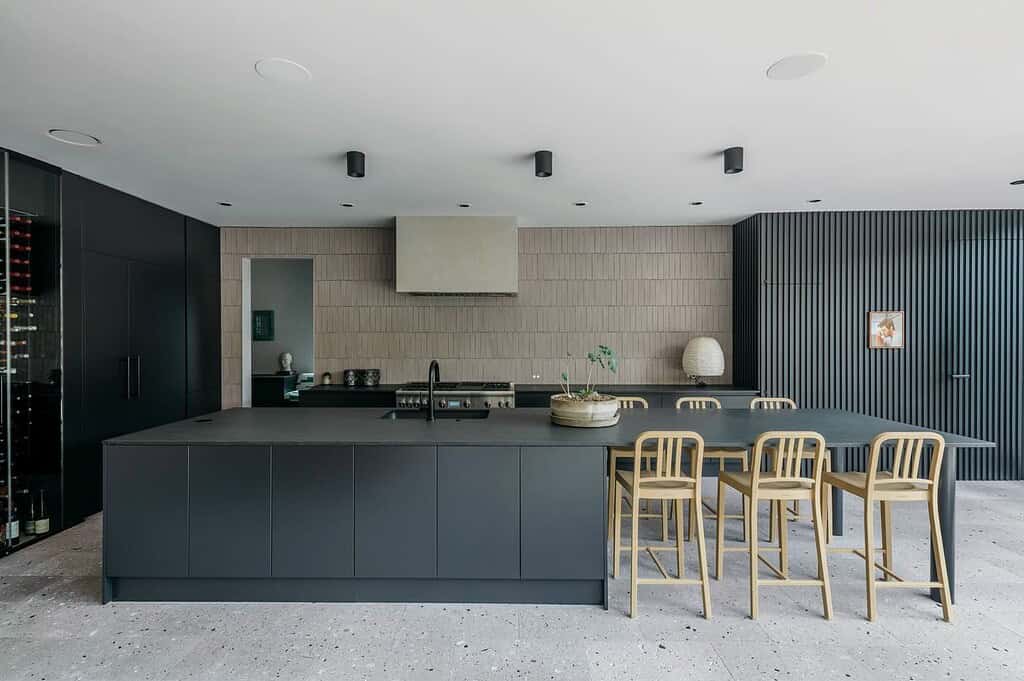
When planning a kitchen renovation, one of the most common questions homeowners ask is: How many cabinets are in a modern kitchen? The answer depends on size, layout, and whether the kitchen is designed for simple daily function or elevated luxury living.
A compact modern kitchen may include fewer than a dozen cabinets, while a large custom kitchen with an oversized island, beverage station, and prep pantry can easily exceed 40 or more. In luxury kitchen design, cabinet count is less about quantity and more about how storage is distributed across key zones.
Here’s how modern and luxury kitchens typically break down by size.
How Many Cabinets Are in a 10×10 Kitchen?
The 10×10 kitchen is the industry benchmark for estimating cabinetry and layout costs. In a modern design, this footprint often includes:
- 5–7 base cabinets
- 4–6 wall cabinets
- 1–2 tall pantry cabinets
- 1 sink base cabinet
- 1 drawer bank or specialty storage cabinet
Average total: 12–18 cabinets
In contemporary kitchens, upper cabinetry may be reduced in favor of open shelving, integrated storage walls, or larger full-height pantry units. That means a sleek luxury 10×10 kitchen may have fewer visible cabinets but greater storage efficiency.
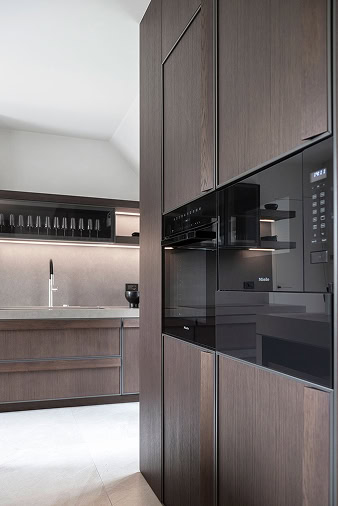
Cabinet Count by Common Kitchen Sizes
Kitchen size has the biggest influence on total cabinet count. Here’s what homeowners can expect in modern and luxury layouts.
8×10 Kitchen (Compact Modern Kitchen)
Smaller kitchens prioritize efficiency and streamlined storage.
Typical cabinetry includes:
- 4–5 base cabinets
- 3–5 wall cabinets
- 1 sink base
- 1 narrow pantry or utility cabinet
- Optional small island storage
Average total: 10–14 cabinets
Modern European kitchens in this size often rely on deep drawers, appliance garages, and minimal upper cabinets.
10×10 Kitchen (Standard Layout)
A balanced size for many homes.
Typical cabinetry:
- 5–7 base cabinets
- 4–6 uppers
- 1–2 tall pantry cabinets
- Drawer banks
- Corner storage
- Trash pull-out
Average total: 12–18 cabinets
This size works well for L-shaped, galley, and U-shaped layouts.
12×12 Kitchen (Mid-Size Kitchen)
A 12×12 layout creates room for more specialized storage.
Typical cabinetry:
- 7–9 base cabinets
- 5–7 wall cabinets
- 2 pantry or tall utility cabinets
- Additional drawers and appliance housing
- Small island cabinetry
Average total: 16–24 cabinets
Luxury kitchens at this size often include integrated refrigeration panels and full-height cabinetry.
12×16 Kitchen (Large Family Kitchen)
This is where kitchens begin to feel expansive and highly customized.
Typical cabinetry:
- 8–12 base cabinets
- 6–8 wall cabinets
- 2–4 tall pantry/storage cabinets
- Larger island storage
- Appliance walls
- Specialty cabinets
Average total: 20–32 cabinets
Many premium homes use this footprint for entertaining and dual-prep functionality.
14×18+ Kitchen (Luxury Open-Concept Kitchen)
High-end open kitchens can become architectural centerpieces.
Typical cabinetry:
- 12–16+ base cabinets
- 6–10 wall cabinets or floating shelves
- 4–8 tall cabinets
- Large appliance walls
- Double islands or oversized islands
- Dedicated beverage or pantry zones
Average total: 30–50+ cabinets
Estate-scale kitchens with prep kitchens or secondary storage can exceed that range.
What’s Typically Included in a Modern Kitchen?
Modern kitchen design organizes cabinetry around function rather than simply filling walls.
Base Cabinets
These anchor most kitchens and often include:
- Sink base
- Cooktop base
- Trash pull-out
- Drawer banks
- Corner storage
- Pot and pan storage
Wall Cabinets
Although modern kitchens often minimize upper cabinets, they’re still common for:
- Everyday dishware
- Glassware
- Dry goods
- Decorative balance
Luxury kitchens frequently replace smaller uppers with fewer oversized, ceiling-height units.
Tall Cabinets
Tall cabinetry has become essential in premium design.
These often house:
- Pantry storage
- Built-in ovens
- Refrigeration panels
- Pull-out larders
- Appliance storage
Instead of adding multiple small cabinets, luxury kitchens often consolidate storage vertically.
Kitchen Island Cabinet Breakdown
The island dramatically affects total cabinet count.
Small Island (5–6 Feet)
Typically includes:
- 2–3 cabinets
- Seating overhang
- Optional microwave drawer
Medium Island (7–9 Feet)
Often includes:
- 3–5 cabinets
- Sink base
- Pull-out trash
- Dish storage
- Deep drawers
Large Luxury Island (10–14+ Feet)
Usually includes:
- 5–8+ cabinets
- Prep sink
- Wine storage
- Hidden outlets
- Appliance drawers
- Specialized serving storage
In luxury kitchens, islands often function as prep zone, social hub, and hidden storage center.
Bar, Beverage Station, and Coffee Bar Cabinetry
Modern homes increasingly include secondary storage zones outside the main perimeter.
Wet Bar or Beverage Station
Typical count:
- 3–6 cabinets
Often includes:
- Sink base
- Glass uppers
- Under-counter refrigeration
- Wine drawers
Coffee Bar
Typical count:
- 2–4 cabinets
Often includes:
- Appliance garage
- Mug storage
- Drawer organization
Butler’s Pantry or Prep Pantry
Typical count:
- 6–12+ cabinets
May include:
- Tall pantry storage
- Secondary sink
- Counter prep space
- Small appliance storage
- Open shelving
- Refrigeration drawers
This additional zone significantly increases cabinetry in high-end kitchens.
Modern Kitchens vs. Luxury Kitchens: Cabinet Count Differences
A standard modern kitchen may appear minimal, but hidden storage often offsets visible cabinetry.
Modern Kitchen
Typical total:
10–22 cabinets
Characteristics:
- Flat-panel cabinetry
- Minimal uppers
- Integrated appliances
- Open shelving
- Efficient vertical storage
Luxury Kitchen
Typical total:
20–50+ cabinets
Characteristics:
- Ceiling-height cabinetry
- Appliance walls
- Oversized islands
- Butler’s pantry
- Bar zones
- Hidden appliance garages
- Refrigeration walls
- Secondary prep areas
Luxury kitchens typically prioritize zoning and seamless storage over visual clutter.
So, How Many Cabinets Are in the Average Modern Kitchen?
For most homes, the average number of cabinets in a modern kitchen falls between 12 and 25 cabinets, depending on size and layout.
But in luxury custom kitchens, total cabinetry often expands significantly because storage extends beyond the main perimeter into islands, pantry walls, bars, and prep zones.
Ultimately, the right cabinet count is not about fitting in more boxes. It’s about creating intentional storage that supports cooking, entertaining, and daily living—while preserving the clean, architectural feel that defines modern kitchen design.
In premium kitchen design, fewer visible cabinets can still create greater function when layout, scale, and customization are carefully considered.